
Yes. A red light therapy panel emits electromagnetic radiation as its intended red and near-infrared light. Its powered electronics can also create low-frequency electric and magnetic fields, while Bluetooth, Wi-Fi, or other wireless controls may add radiofrequency (RF) emissions.
Those are not interchangeable exposures, and a single "EMF" label cannot describe them all. For a practical purchase or setup decision, the useful question is: What was measured, at what distance, in which operating mode, and does that match how you will use the panel?
A panel's light and its electronics are different EMF questions
Red and near-infrared light are forms of non-ionizing electromagnetic radiation. "Non-ionizing" means the radiation does not have enough photon energy to ionize atoms or molecules, but it does not by itself establish an appropriate treatment dose, eye precaution, session length, or suitability for an individual user. ICNIRP's overview of frequency ranges also makes clear that different parts of the electromagnetic spectrum are evaluated differently.

A panel therefore has more than one kind of emission to consider:
| Emission type | Likely source | The useful question |
|---|---|---|
| Red and near-infrared optical radiation | LEDs at the treatment face | Is the optical output, treatment distance, duration, heat, and eye guidance appropriate? |
| Extremely low-frequency magnetic fields | Current in drivers and internal wiring | What magnetic-field level was measured at the treatment distance? |
| Near-field electric fields | Powered electronics and wiring | Was an electric-field reading provided, and in what unit? |
| RF emissions | Bluetooth, Wi-Fi, or other wireless functions | Does the model have wireless hardware, and was it enabled during testing? |
The therapeutic light is intentional. Low-frequency electric and magnetic fields arise from the electronics that power and control the panel. AC current in wiring and drivers can contribute to magnetic-field readings, but the level depends on the panel's design and how it is operating.
A wired panel may have little RF relative to a wireless-equipped model, but do not assume that from the word "wired" alone. Check whether the exact model includes Bluetooth, Wi-Fi, an app, or another wireless control.
Why "zero EMF" is not a complete specification
"Low EMF" and "zero EMF" are marketing descriptions unless the manufacturer explains their scope.
For example, a reading in microtesla or milligauss describes a magnetic field. It does not automatically describe electric fields, RF emissions, or the panel's red and near-infrared optical output. Similarly, optical irradiance and magnetic-field measurements use different units and may be taken at different distances; one cannot be inferred from the other.

A meaningful report should identify:
- Field type: magnetic field, electric field, RF, or more than one
- Unit: magnetic field may be reported in microtesla or milligauss; electric field may be reported in volts per meter
- Distance and location: from the treatment face, rear housing, driver, or power supply
- Operating mode: full power, dimmed, continuous, pulsed, or another setting
- Wireless status: enabled, disabled, or absent
- Test method: meter or probe used and calibration
- Driver design: AC vs. DC
Without those details, two numbers may look comparable but describe entirely different tests.
A magnetic-field claim of "under 1 mG at 6--12 inches" is commonly used in panel marketing, but it is not a universal safety threshold. It is only potentially useful when the field type, distance, meter, and operating conditions are stated.
BestQool's website currently lists "EMF emission: 0.0 μT @ 6 inches" across its models, alongside irradiance figures reported at 3 inches. That magnetic-field figure is not, by itself, evidence of zero electric-field, RF, or optical emission; the listed claim does not provide a meter, detection limit, operating mode, test protocol, or independent verification. See the BestQool product information as a starting point, then request model-specific technical details if they are not available.
Distance and operating mode change the interpretation
Distance matters. A reading taken one inch from a panel's rear housing, driver, or power connection should not be compared directly with a competitor's reading measured six or 12 inches from the treatment face.
Magnetic fields from electrical equipment can drop substantially as distance increases, but there is no universal shortcut for estimating a panel's field at a new distance. The panel's layout, power supply, wiring, and measurement position all matter. Use the manufacturer's measurement at, or close to, your intended treatment distance whenever possible.

Operating conditions matter too. Driver type and pulsed versus continuous operation may affect low-frequency readings, but broad design claims are not substitutes for measurements of the specific panel and setting you plan to use.
Health evidence should also be kept in proportion. Population research has not established a consistent association between non-ionizing-EMF sources and childhood cancer, although pooled analyses have reported a slight elevation in childhood-leukemia risk at ELF exposures of at least 0.3--0.4 μT. Those findings concern population-level, longer-term exposure patterns; they do not calculate risk from a particular panel or a short treatment session. The National Cancer Institute's ELF EMF fact sheet provides that context.
Do not use RF comparisons to settle a low-frequency magnetic-field question. RF power density and cellphone specific absorption rate are different measurements, expressed in different units, and cellphone limits are not a compliance test for a red light panel.
Keep optical safety separate from non-light EMF
A low magnetic-field reading does not tell you whether a light session is appropriate. Optical use has its own practical considerations:

- Follow the device's instructions for treatment distance and duration.
- Treat irradiance, dose, heat, and eye exposure as separate questions from non-light EMF.
- Do not assume that a panel with higher optical output has higher or lower non-light EMF.
- Do not infer a panel's magnetic-field performance from an irradiance specification, or vice versa.
If you use a panel close to the body, ask for measurements at that actual distance. If you use pulsing, dimming, or wireless controls, ask whether the test included those settings.
A calm checklist before you buy or use a panel
Before relying on a "low EMF" or "zero EMF" claim, check the following:
- Match the test distance to your use. A six-inch result is most useful if you plan to treat at about six inches.
- Confirm what was measured. Look separately for magnetic-field, electric-field, and---where applicable---RF information.
- Compare like with like. Same units, same distance, same operating mode, and similar measurement location.
- Identify wireless features. Confirm whether Bluetooth, Wi-Fi, or app connectivity exists and whether it can be disabled.
- Ask about the driver design (AC vs. DC) and whether it was included in the measurement.
- Keep optical instructions in view. EMF documentation does not replace guidance on distance, duration, heat, or eye precautions.
- Pause for medical questions. If you have an implanted electronic medical device, are pregnant, or have a medically complex condition, consult your clinician and the implant-device manufacturer before use.
You do not need to make a decision from a marketing label alone. Review the documentation for the exact BestQool model you are considering, or contact support for missing measurement details. If a medical concern is part of the decision, get guidance from your clinician and, where relevant, your implant-device manufacturer.


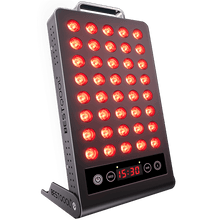
 Small
Small

 Moderate

 Moderate

 Moderate

 Full
Full

