
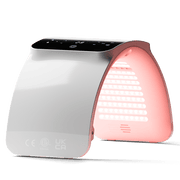
Irradiance for red light therapy on acne-prone or inflamed skin should be interpreted conservatively. Published acne LED research reports approximately 8–100 mW/cm², but that span is a research range, not a universal safe setting. For calm or mildly sensitive acne-prone skin, use the lower end only as a conditional starting point when the device reports irradiance at the facial treatment distance and its instructions support that exposure. If the skin is painful, broken, infected, rapidly worsening, or affected by a diagnosed inflammatory condition, pause and seek appropriate professional guidance instead of choosing a lower number yourself.

What Irradiance for Red Light Therapy Should You Start With for Acne-Prone or Inflamed Skin?
Published acne LED research includes red-light power densities of about 8–100 mW/cm², while home LED studies vary in light source, fluence, and treatment duration. That variation makes the range useful for context, not a personal prescription or a definition of safe irradiance levels for facial red light therapy. The 8–100 mW/cm² acne research range and varied home LED acne protocols do not establish one setting for every device or skin condition.
| Current skin scenario | Measured irradiance at the skin and session assumptions | Starting action and change condition |
|---|---|---|
| Calm acne-prone skin | Use a device-specific reading within the published research context of about 8–100 mW/cm². Match the stated facial distance, wavelength configuration, mode, and session instructions. | Favor the lower end as a conservative starting direction. Follow the device’s documented session length, and change only one exposure variable if you need to reassess tolerance. |
| Mildly sensitive or reactive skin without concerning symptoms | Use the actual facial irradiance rather than a maximum output listed at an unspecified distance. Treat duration as part of the exposure. | Start conservatively at the lower end only when the device instructions support facial use. Reduce exposure through a documented mode, distance, or duration rather than inventing a new numeric threshold. |
| Painful, broken, infected, rapidly worsening, or medically diagnosed inflammation | No separate numeric range is supported by the supplied evidence for this situation. | Do not choose an irradiance from the acne research range. Pause and seek appropriate professional guidance, particularly when photosensitivity or medication may be involved. |
Irradiance is only one part of the exposure. Distance, session time, wavelength mix, operating mode, coverage, and the device’s measurement conditions can change how a listed number applies to the face. There is no evidence here for a single best irradiance for inflamed skin, and a lower number is not automatically appropriate for skin that needs clinical assessment.

For practical advice on adjusting intensity to tolerance, use sensitive-skin intensity guidance.
How Distance and Session Time Change the Exposure
A device’s irradiance describes power delivered per unit area. Fluence adds time, so a longer session can produce more total energy per area even when the irradiance stays the same. Use the device’s measured output at the position of your face, then interpret the session duration separately.
Distance at the Face
Use irradiance measured at the actual facial distance or treatment surface. A number reported at an unspecified distance, in a different operating mode, or under a different wavelength configuration cannot be assumed to describe the exposure your skin receives.
This matters when comparing a mask, handheld device, and panel. A mask may sit against or close to the face, while a handheld device or panel may be positioned several inches away. Compare the formats only when the output measurement conditions are clear and the wavelength, mode, facial coverage, and intended treatment position are comparable. LED count, wattage, and a maximum-output label are not substitutes for measured facial irradiance.
The same principle applies when adjusting a setup. Keep the documented treatment position stable while you assess the session. If the device provides no usable facial measurement, the missing number is a fit limitation, not a reason to estimate from its bulb count or electrical wattage.
For practical context on this variable, read about face treatment distance and duration.
Time, Fluence, and One-Variable Changes
When units are consistent, fluence in J/cm² = irradiance in W/cm² × time in seconds. This is a unit-conversion relationship, not proof that two devices with the same calculated fluence will produce the same biological or comfort outcome. Wavelength, coverage, heat, mode, and measurement conditions can still differ. The fluence relationship and its unit requirements are described in the dermatology literature.
Illustrative calculation: Suppose a device is measured at 70 mW/cm² at the facial treatment position and runs for 10 minutes. Convert 70 mW/cm² to 0.07 W/cm², and convert 10 minutes to 600 seconds:
0.07 W/cm² × 600 seconds = 42 J/cm²
The result is an illustrative calculated fluence, not a recommended acne dose. It shows why both irradiance and time belong in the comparison. If a reaction occurs, change one variable at a time, such as session duration or documented distance, so you can identify which exposure condition changed. Do not raise intensity simply because the skin has not shown a visible change.
If scheduling is the question, use this separate session spacing guidance rather than treating a longer or more frequent session as a substitute for measured irradiance.
How to Choose a Device Setting for Sensitive Facial Skin
Choose a setting only when the device gives you a usable facial irradiance measurement and enough context to interpret it. The most useful comparison is measured output at the intended treatment position, paired with wavelength, mode, duration, coverage, heat, and facial-use instructions.
| Device format | Specification to verify | How to apply the starting direction |
|---|---|---|
| LED mask | Irradiance at the face or treatment surface, wavelength configuration, programmed session length, and facial-use instructions | Use the documented facial program. If output is reported only as a maximum or at an unclear position, do not map it to the research range by guesswork. |
| Handheld device | Output at the distance you will hold it, active mode, wavelength, treatment area, and timer | Keep the treatment distance consistent and use the lower-end, conservative direction only when the measured output and instructions support facial use. |
| Panel | Irradiance at the intended facial distance, active wavelengths, mode, coverage, heat, and recommended session instructions | Compare the measured facial value and duration, not the panel’s LED count or wattage. A larger coverage area does not establish a different acne setting. |
A product page that omits facial distance, wavelength configuration, mode, or session conditions does not provide enough information for a reliable setting comparison. The same is true when two pages report irradiance under different test conditions. Treat the missing field as unresolved and choose a device with clearer facial-use documentation rather than filling the gap with a marketing number.
Regulatory documents also have a limited role. For example, an FDA document for a specific over-the-counter acne mask describes that device’s intended use and parameters for mild-to-moderate facial acne. It does not establish a universal irradiance for every mask, handheld device, panel, or inflamed-skin scenario. Regulatory status is therefore device-specific evidence, not a substitute for checking delivered facial output.
When to Back Off or Stop Using the Device
Pause treatment when your skin becomes persistently or increasingly irritated, painful, swollen, blistered, unusually sensitive to light, or otherwise concerning. Review the device instructions and exposure conditions, but change one variable at a time instead of increasing intensity to force a result.
The American Academy of Dermatology notes that temporary mild pain or irritated skin can occur with home red light therapy. It also identifies photosensitivity, photosensitizing medication, and existing skin disease as reasons for extra caution. AAD safety guidance supports this conservative boundary. Persistent, painful, severe, worsening, or unusual symptoms warrant professional advice rather than continued self-adjustment.
The usable rule is narrow but actionable: interpret 8–100 mW/cm² as the published acne-research context, use the lower end conditionally for calm or mildly sensitive skin only when facial output and instructions match, and treat concerning inflammation as a pause-and-assess situation. Before buying or using a device, obtain the measured facial irradiance and its wavelength, mode, distance, and duration instructions. If those details or your skin response create a clinical boundary, seek professional guidance.
FAQs
These questions clarify how to interpret irradiance for red light therapy, compare delivered exposure, and respond to concerning skin changes.
What is a reasonable starting irradiance for red light therapy on acne-prone skin?
Published acne research reports roughly 8–100 mW/cm², but that is not a universal prescription. For calm acne-prone skin, the lower end is a defensible starting direction only when the device reports output at the facial treatment position and gives matching instructions. If symptoms are concerning or worsening, pause rather than choosing a number from the range.
Does visibly inflamed skin need a lower irradiance than acne-prone skin?
The supplied evidence does not establish a separate numeric range for visibly inflamed skin. The important distinction is the action, not a guessed lower setting: painful, broken, infected, rapidly worsening, or diagnosed inflammatory skin calls for pausing and seeking appropriate professional advice.
How do I compare irradiance between an LED mask and a panel?
Compare irradiance measured at the skin or at the same treatment distance, with the same wavelength and mode information available. Then account for session duration. LED count, wattage, and maximum power do not provide an interchangeable measure of facial exposure.
What should I do if red light therapy makes my face red or hot?
Pause instead of increasing intensity. Review the treatment distance, mode, duration, wavelength configuration, and other recent skincare changes one at a time. Persistent, painful, severe, or worsening redness, heat, stinging, swelling, blistering, or suspected photosensitivity is a reason to seek professional advice.


