
For some adults, an awake, conservative red-light session before bed may be reasonable. But red light therapy is not a proven sleep treatment, and it should not be left on or used while you are asleep. Red light is generally less disruptive to circadian signaling than blue-rich light, yet brighter red light can still suppress melatonin.
The practical distinction is simple: treat a therapy device as an active session, not as bedroom lighting or part of sleeping in bed.
A Dim Red Night-Light and a Therapy Device are Different Exposures

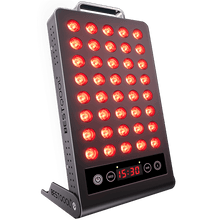
A dim red light used briefly to navigate a dark bedroom is not the same as sitting in front of a bright LED panel, wearing a face mask, or using a handheld red/near-infrared device.
| Situation | Sensible Before-Bed Approach |
|---|---|
| Dim red ambient light | May be a lower-circadian-impact alternative to blue-rich room light when light is needed. |
| Red or red/near-infrared therapy device | Use only for an awake session and follow the exact device instructions for placement, timing, and eye safety. |
| Device running during sleep | Do not use it this way. It is not a substitute for a dark sleep environment. |
The eye's circadian receptors respond more strongly to blue and blue-adjacent wavelengths than to red wavelengths. That is why red light is generally less likely than blue light to reduce melatonin. In one 2025 healthy-adult LED comparison at 80 lux, the red condition had a melanopic equivalent daylight illuminance of 1 lux, compared with 847 lux under the blue condition in the same setup. The LED study's circadian-light comparison illustrates how strongly spectrum can change circadian-light measures.
That comparison does not tell you that every red-light panel, mask, or handheld device has the same effect. It also does not establish a universal safe distance, session length, or eye-protection rule for home therapy devices.
Visible red light also should not be confused with near-infrared light. Near-infrared is invisible, and a device may use it alongside visible red light. Check your specific device's instructions rather than assuming that a red glow describes the full exposure.
If Sleep is the Priority, Finish Earlier Rather Than at Lights-Out
Darkness remains the ideal light condition before sleep. Red light may be a preferable choice to blue light when light exposure cannot be avoided, including around two hours before bed, but that is not evidence that a red-light therapy session improves sleep.
Red light does not stimulate melatonin production. And although it is less likely than blue light to interfere with melatonin, brighter red light can still suppress melatonin production and release. Sleep guidance on red light and melatonin also notes that the effectiveness of red light therapy for sleep is not confirmed.
A cautious evening decision looks like this:
- Reasonable tonight: You can complete an awake session earlier in the evening, according to your device manual, and turn the device off before your normal wind-down period.
- Reconsider tonight: The session would add bright light right at bedtime, tempt you to use the device while lying down to sleep, or make your bedroom less dark than usual.
- Skip the session: You notice that the light leaves you more alert, gives you a headache, causes eye discomfort or skin irritation, or is followed by worse sleep.
If you are trying red light as part of an evening routine, do not interpret one good night or one poor night as proof. Keep the setup consistent, track how you fall asleep and how you feel the next day for several nights, and stop if your sleep worsens.
Keep Eye Exposure Deliberate

Do not stare into LEDs or assume that every red or near-infrared device has identical eye-safety requirements. Device design, beam direction, intensity, and intended use matter.
Follow the manufacturer's official instructions for your exact device, including any eye-related directions. If you have questions about whether eye exposure is appropriate for you, consult an optometrist before using red light therapy for sleep-related purposes. Readers comparing facial devices and panels may also find this guide to eye-safety differences between LED masks and red-light panels useful.
Use the Bedroom as a Treatment Space, Not a Sleeping Setup

If you choose an evening session, use the device while awake in a stable, instruction-compliant setup. Avoid treating in a way that makes it easy to fall asleep with the device on, blocks ventilation, or leaves cords where they could interfere with getting into or out of bed.
An awake, conservative evening session may be reasonable for some adults. It should not be used during sleep or treated as a cure for insomnia. Verify your device's official instructions, monitor your response for several nights, stop if sleep or symptoms worsen, and seek optometrist guidance when eye exposure is a concern.


 Small
Small

 Moderate

 Moderate

 Moderate

 Full
Full

