
For a deep lower-back muscle target, 850 nm near-infrared light is the more logical wavelength to investigate. It is generally more plausible than 660 nm red light for reaching beyond the upper skin layers toward deeper dermal and subdermal tissue.
That is not proof that 850 nm produces better recovery in deep lumbar muscles. Light still has to pass through skin, variable amounts of fat, fascia, and other tissue before it could reach a lumbar muscle at a useful dose. Direct clinical comparisons of 660 nm versus 850 nm for deep lower-back muscle recovery are lacking.
Use 850 nm as a depth-oriented starting point. Consider 660 nm as potentially useful for superficial tissue coverage, and consider a mixed-wavelength device only for broader coverage---not because the combination is proven superior for lumbar recovery.
Why 850 nm is the Better Starting Point for a Deep Lumbar Target

The practical difference is relative tissue depth.
- 660 nm red light is visible and is more strongly absorbed in the epidermis and superficial dermis. It may be relevant when superficial skin and tissue layers are part of the goal.
- 850 nm near-infrared light is invisible and is described as reaching deeper dermal and subdermal tissue than 660 nm. That makes it the more plausible choice when the intended target is a deeper lumbar paraspinal muscle.
"More plausible" is the important phrase. It does not mean that 850 nm reliably reaches every deep lower-back structure, nor that it delivers enough energy to change muscle recovery. Lower-back anatomy varies substantially from person to person, especially with differences in body composition and the depth of the target tissue.
For post-exercise soreness centered in the muscles beside the spine, 850 nm therefore makes more sense as the primary wavelength to investigate. But it should not be treated as a treatment for a disc problem, spinal stenosis, nerve compression, or another structural cause of back pain.
Where 660 nm Still Fits
A deep-muscle goal does not make 660 nm irrelevant. The lower back includes skin and superficial soft tissue overlying the paraspinal muscles, and 660 nm may contribute at those more superficial layers.
The limitation is that available evidence does not establish that 660 nm alone adequately reaches deep lumbar musculature through all of the overlying tissue. If your goal is specifically deep muscle recovery, choosing 660 nm alone means prioritizing a wavelength characterized more strongly by superficial absorption.
A simple way to frame the choice:
| Primary Goal | More Logical Option | What It Does Not Establish |
|---|---|---|
| Deep lumbar muscle target | 850 nm | Proven deep-muscle recovery or pain relief |
| Surface and superficial tissue coverage | 660 nm | Adequate delivery to deep lumbar muscle |
| Broad surface-to-deeper coverage | 660 nm plus 850 nm | A clinically proven advantage over 850 nm alone |
Mixed 660 nm and 850 nm is a Coverage Choice, Not a Proven Upgrade
A device that combines 660 nm and 850 nm can be a reasonable option if you want to cover superficial and deeper tissue layers in the same lower-back session. The wavelengths are often presented as complementary.
However, there is no demonstrated lower-back-specific outcome advantage for a 660 nm-plus-850 nm combination over a single wavelength. A mixed device should not be assumed to provide better deep lumbar-muscle recovery simply because it contains two wavelengths.
Exercise-recovery research does not resolve that question. A systematic review of photobiomodulation and exercise recovery included varied muscles, devices, wavelengths, doses, and protocols rather than a uniform lower-back routine. Some studies used multiple wavelengths, so any observed benefit cannot show whether 660 nm, 850 nm, or their combination produced the result.
In that review, many trials reported favorable performance or recovery-related findings, often when light was applied before exercise. Those findings should not be converted into a validated home protocol for a lumbar strain or sore lower back after training.
Position the Device for Lumbar Paraspinal Coverage

For ordinary post-exercise muscle soreness, focus on the muscles on either side of the lumbar spine rather than treating the spine itself as the target.
A Practical Lower-Back Placement Map
- Expose the lower-back skin. Positioning over bare skin is more consistent than placing a device over thick clothing.
- Start with the painful or worked side. For one-sided soreness, center the active area of a panel, wrap, or handheld device over the paraspinal muscles beside the spine on that side.
- Cover the opposite side separately if needed. Bilateral soreness may require a wider panel or separate placements so both sets of paraspinal muscles receive coverage.
- Use a central placement only as overlap coverage. If the device is narrow, reposition it to cover the central lower-back area and the tissue immediately beside the spine. Do not assume this route reaches every deep spinal structure.
- Follow the device-specific distance instructions. One lower-back protocol in the available material places a device over the L4--L5 region on bare skin at 1--6 inches away, but that range is not validated for every panel, wrap, or handheld device.
Do not use front-of-body placement as a shortcut to reach deep back muscles unless a clinician or the device manufacturer gives area-specific guidance. The fact that a target is deep does not make an alternate route automatically more effective or safer.
Let Verified Output Set the Session, Not a Generic Timer
There is no reliable universal session length for deep lower-back muscle recovery.
Surface light dose depends on irradiance---also called power density---and exposure time. Practical delivery also changes with distance from the skin, coverage area, output mode, and individual tissue factors. A device's wavelength label alone cannot tell you the dose reaching the skin, much less the dose reaching a deep lumbar muscle.
More is not necessarily better. Photobiomodulation has a biphasic dose response, meaning different doses may stimulate or inhibit relevant metabolic and cell-signaling pathways. Extending a session simply because 850 nm is intended for a deeper target is not a sound default.
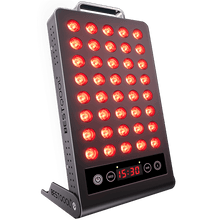
Before using a BestQool or any other light device on the lower back, verify:
- The stated wavelengths and whether 850 nm is actually included
- Irradiance at the distance you plan to use
- The recommended treatment distance and coverage area
- Whether the device is intended for contact, near-contact, or non-contact use
- The manufacturer's session limits, heat guidance, and safety instructions
- Whether the active treatment area is wide enough to cover the left and right lumbar paraspinals without excessive overlap
Start conservatively within the device instructions. Mild warmth or tingling can occur, but uncomfortable heat, skin irritation, or worsening symptoms are reasons to stop---not signs that a stronger session is working.
Keep Recovery Expectations Realistic
Light therapy may be considered an adjunct for uncomplicated post-exercise lower-back muscle soreness or a recovery-focused routine. It should not replace assessment, movement guidance, or treatment for persistent, severe, or unexplained back symptoms.
The available exercise evidence is not lower-back-specific, and many favorable findings involved pre-exercise use rather than treatment after a strain. It cannot promise faster recovery of a deep lumbar muscle.
Evidence in chronic low-back pain is also not a reason to self-diagnose or self-treat. In a 148-participant randomized trial, photobiomodulation was not meaningfully better than placebo after four weeks for chronic nonspecific low-back pain. That study does not answer whether light helps post-workout lumbar soreness, but it reinforces an important boundary: a wavelength choice is not a substitute for determining why the back hurts.
Light therapy also cannot mechanically repair structural spinal problems. It should not be expected to reverse advanced disc changes, correct spinal narrowing, or resolve a condition involving nerve compression.
When to Stop Self-Treatment and Seek Assessment
Do not manage lower-back pain with home light therapy alone if symptoms are worsening, unexplained, or suggest more than ordinary muscle soreness.
Seek prompt medical assessment for:
- Pain after significant trauma
- Pain that radiates with numbness or weakness
- Progressive leg weakness
- New bowel or bladder changes
- Numbness in the saddle area
- Fever, unexplained weight loss, or severe unremitting pain
- Symptoms that are severe, persistent, or getting worse rather than settling
Also get clinician or manufacturer guidance before treating the lower back if you have an active malignancy or known tumor site, active infection, impaired sensation in the treatment area, an implanted device such as a pacemaker, or pregnancy-related abdomen or pelvis exposure. Avoid thyroid exposure. Do not look directly at an operating device or allow light to reach the eyes; use protective eyewear whenever eye exposure is possible.
For a deep lower-back muscle target, investigate 850 nm first because it is the more depth-oriented option. Treat mixed 660 nm and 850 nm as a broad-coverage choice rather than a proven upgrade, and let verified irradiance, safe paraspinal placement, tolerable heat, and the device manual guide conservative use. Check your device specifications before starting, and seek medical evaluation rather than continuing self-treatment for red-flag, severe, worsening, or unexplained lower-back symptoms.


 Small
Small

 Moderate

 Moderate

 Moderate

 Full
Full

