

Keep your red light therapy device out of the bathroom during showers, let the room ventilate fully before use, and ensure every light-emitting surface is clean and dry. These habits help maintain clear light output while reducing moisture-related damage to electronics, coatings, vents, and connectors.
Does your red light panel or face mask turn cloudy when a hot winter shower fills the bathroom with steam? Moving the device to a dry room and allowing it to reach room temperature can prevent recurring fog, reduce cleaning time, and protect its working surfaces. The following routine can help control condensation before, during, and after each session.
Why Red Light Devices Fog Up in Winter

Condensation forms when warm, moisture-filled air touches a cooler surface. During winter, a red light device stored near an exterior wall, cold cabinet, window, or unheated room may remain noticeably cooler than the bathroom air. Once a hot shower raises the room’s humidity, water vapor can collect on the device as tiny droplets.
The visible haze is more than an inconvenience. Moisture and residue can reduce the clarity of an LED lens, mask window, or panel cover. Oils, dust, makeup, and water spots may also scatter or obstruct emitted light, making exposure less consistent across the treatment area.
That consistency matters because red light therapy depends on a defined combination of wavelength, output, distance, and exposure time. Commonly used red and near-infrared wavelengths reach different depths and have different applications, while the effective dose varies with device output and positioning. Information about red and near-infrared light supports following device-specific distance and treatment instructions rather than assuming every system delivers light in the same way.
Condensation does not necessarily mean the device has failed. It does indicate that the environment is too humid, the device is too cold, or both.
Use a Dry-Room Setup

The most reliable prevention method is to treat the bathroom as a temporary high-humidity zone rather than a permanent home for your device. Store and operate the unit in a bedroom, home gym, office, or another climate-controlled room whenever possible.
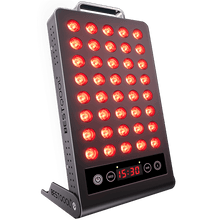
This is particularly important for large panels with cooling vents, fans, power switches, and exposed connections. Even when the front lens appears sealed, the complete unit may not be designed to resist steam. A panel that costs several hundred dollars or more is better protected by moving it 10 ft down the hall than by repeatedly wiping condensation from its surface.
Apply the same principle to a face mask or handheld wand. Keep it in its case outside the bathroom, complete your shower and skincare preparation, dry your skin, and then move to the treatment room. Clean, dry skin is generally preferable because makeup, sunscreen, sweat, and skincare products may interfere with light reaching the treatment area.
At-home LED therapy is generally considered noninvasive, but proper device use and maintenance remain important. Manufacturer instructions should take priority because water resistance, cleaning methods, treatment distances, and eye-protection requirements vary by product.
Let the Bathroom Dry Before Bringing in the Device

If the bathroom is your only practical treatment space, wait until the steam has cleared before bringing the device inside. Run the exhaust fan during the shower and leave it on afterward. When privacy is no longer needed, open the bathroom door so moist air can mix with the drier air in the rest of the home.
A clear mirror is a useful visual checkpoint, although it does not provide a precise humidity measurement. If the mirror is still fogged or the walls feel damp, the room is not ready for an electrical wellness device.
In a small bathroom, waiting 20–30 minutes instead of using the device immediately can make a substantial difference. The exact drying time depends on the shower’s length and water temperature, the exhaust fan’s performance, the room’s size, and the home’s indoor humidity. A long, hot shower in a compact bathroom requires more ventilation than a brief, lukewarm shower in a large room.
A small digital hygrometer provides a more objective measurement. Rather than relying on a universal cutoff that may not appear in the product manual, compare the bathroom’s humidity with the normal level in the rest of the home. If the bathroom remains dramatically more humid, continue ventilating it.
Warm the Device Gradually
A cold device is more likely to collect moisture when moved into warm, humid air. Allowing it to adjust to room temperature before use can reduce fogging, but the sequence matters.
Bring the device from a cold storage area into a dry indoor room while it is turned off. Leave it there until the housing and light-emitting surface no longer feel cold. Do not warm it with a hair dryer, space heater, heating vent, or direct sunlight. Concentrated heat may distort plastics, weaken adhesives, damage battery components, or create uneven temperatures inside the housing.
Consider a portable mask stored in a 55°F entryway and then carried directly into a steamy bathroom. Its cool surface may fog almost immediately. Placing it in a dry 68°F bedroom first allows the entire unit to warm without exposing it to steam.
If condensation has already formed, do not turn on the device to dry it. Powering electronics while moisture may be present around vents, seams, ports, or internal components creates an unnecessary risk.
What to Do When the LED Surface Is Fogged
Turn off the unit, unplug it, and move it to a dry, ventilated room. If it was operating, allow it to cool before cleaning. Gently blot or wipe only the approved exterior surfaces with a clean, soft, lint-free microfiber cloth.
Do not spray cleaner directly onto the light-emitting surface. Liquid can enter seams, switches, charging ports, fans, or LED openings even when the exterior appears relatively well sealed. Do not rinse the device under a faucet or place it near a sink where it could be splashed.
Cleaning instructions vary by product. Some manufacturers permit a slightly damp cloth or 70% isopropyl alcohol on selected surfaces, while others warn that alcohol can cloud plastics, degrade coatings, weaken adhesives, or damage sensitive LED windows. Follow the cleaning method specified in the device manual.
If the haze remains after the exterior has dried, condensation may be beneath a cover or inside the housing. Stop using the device and contact the manufacturer. Internal fogging, repeated shutdowns, flickering, unusual odors, unexpected heat, or moisture around the power connection should not be treated as ordinary cosmetic cleaning problems.
Build a Winter Treatment Routine
A consistent sequence prevents most moisture problems without adding much time to your day. Shower first, run the exhaust fan, and dry yourself thoroughly. Once your skin and hair are no longer dripping, leave the humid bathroom and complete the light session in a dry room.
Use the device on clean, completely dry skin unless the manual instructs otherwise. For example, some at-home LED instructions recommend removing makeup, sweat, and skincare products to prepare clean, dry skin before treatment. Apply moisturizers or serums afterward when that order matches the device instructions and your skincare plan.
Follow the specified exposure time and distance rather than extending a session because the surface was briefly fogged. Red light therapy may produce a biphasic response: too little exposure may be ineffective, but more exposure is not necessarily better. Device format and output also matter; masks sit close to the skin, while many panels are designed to operate several inches away.
After treatment, turn off the device and unplug it when applicable. Remove skin oils or fingerprints using the approved cleaning method, allow every surface to air-dry, and return the unit to a dry storage location.
Bathroom Use Versus Dry-Room Use
Consideration |
Bathroom After a Shower |
Dry Bedroom or Home Gym |
Condensation risk |
High until the steam clears |
Usually low |
Electrical exposure |
Greater around sinks, steam, and wet hands |
Easier to control |
Surface clarity |
More likely to fog or develop water spots |
Easier to keep clear |
Convenience |
Close to the shower and skincare supplies |
Requires moving the routine |
Best use |
Only after complete ventilation and drying |
Preferred for regular sessions |
Bathroom treatment may feel convenient, particularly when using a face mask as part of a skincare routine. Its main disadvantage is the combination of wet hands, steam, hard surfaces, sinks, and electrical equipment. A dry-room setup requires one extra transition but provides more stable conditions and is generally easier on the device.
Store the Device Away From Hidden Moisture
A bathroom cabinet is not necessarily dry. Steam can enter when the door opens, and trapped humidity may linger around towels, plumbing, or poorly ventilated shelves. Storage beneath a sink also exposes the device to potential leaks and splashes.
Choose a cool, dry closet, shelf, protective case, or original box away from direct sunlight and heating equipment. Keep heavy objects off flexible masks and pads, and coil power cords loosely rather than wrapping them tightly around the unit.
For a panel, keep cooling vents unobstructed and check them periodically for dust. For a rechargeable device, inspect the charging port before connecting the cable. If the port appears damp, allow more drying time and follow the manufacturer’s instructions.
Winter heating can dry the skin, but it does not keep every part of a home at low humidity. Bathrooms experience sharp humidity spikes, while cold windows, exterior walls, and unheated storage spaces can keep device surfaces cool enough for condensation to form.
Frequently Asked Questions
Can I Use a Red Light Therapy Mask While Taking a Bath?
Unless the manufacturer expressly approves such use, do not operate an electrical red light device in a bathtub or shower. Water immersion, splashes, wet hands, and charging connections create hazards that ordinary exterior cleaning cannot address.
Can I Cover the Device Before Showering?
A cover may protect against splashes, but it can also trap humid air around a cold device. Removing the unit from the bathroom is more dependable. If it must remain there, keep it powered off in a manufacturer-approved protective case and inspect it carefully before use.
Will Condensation Permanently Reduce Light Output?
A temporary film on the exterior may clear without causing permanent harm once the surface is properly dried. Recurring water spots, residue, coating damage, corrosion, or moisture inside the housing are more concerning. Because output can vary among devices and across an LED panel, visible damage or persistent internal haze warrants evaluation by the manufacturer.
Should I Increase the Session Time After Fogging?
No. Do not compensate for an unclear surface by improvising a longer exposure. Follow the distance and timing specified in the manual. Evidence for red light therapy is promising for selected applications but remains incomplete for many marketed claims, and excessive exposure may cause irritation or other unwanted effects.
The safest winter habit is simple: keep the device dry, allow it to reach room temperature, use it only after bathroom humidity has cleared, and never power it while condensation is present. A clear treatment surface and a stable routine protect both the equipment and the consistency of each session.


 Small
Small

 Moderate

 Moderate

 Moderate

 Full
Full

