

Night-time wakefulness is a reality for many people: nurses on rotating shifts, first responders, truck drivers, students cramming for exams, and parents soothing a baby at 3:00 AM. As a red light therapy wellness specialist, I am often asked a very specific question: can red light help you stay alert at night without wrecking your sleep and hormones the way bright blue-white light does?
The short answer from current evidence is cautiously optimistic. Red light appears able to boost alertness and performance at night while having far less impact on melatonin and circadian rhythms than blue-rich light. But it is not a magic fix, and the details matter: wavelength, brightness, timing, and how you integrate it with the rest of your lifestyle.
In this article, I will walk you through what we actually know, what is still emerging, and how to use red light strategically if you need to be awake when your body would rather be asleep.
How Light Controls Alertness and Sleep
Your brain runs on a roughly 24‑hour timing system known as the circadian rhythm. Deep in the hypothalamus, a master clock takes its main cues from light entering the eyes. When this timing system and your environment line up, you tend to feel alert in the day and sleepy at night. When they do not, you get the familiar mix of fatigue, fogginess, and “jet lagged” nights.
Research from the National Institute for Occupational Safety and Health (NIOSH) stresses that light reaching the retina is the primary synchronizer of this clock. The circadian system is especially sensitive to short‑wavelength, blue light. Blue-rich light at night strongly suppresses melatonin, the hormone your brain makes in darkness to prepare you for sleep. That melatonin suppression can be useful when you intentionally want to shift your clock, but it can also contribute to long-term circadian disruption if you routinely work against your natural timing.
Red light behaves differently. Long‑wavelength red light has what NIOSH calls a “negligible” circadian effect. In field studies, red light at night did not measurably suppress melatonin, even when it was bright enough to see clearly. Interestingly, both blue and red light, when sufficiently bright, can acutely increase alertness for the time you are exposed. That means there is a separation between two things: the immediate “wake-up” feeling you get while under a light and the deeper circadian and hormonal shifts that carry over into your next sleep period.
For someone awake at 2:00 AM, that distinction is crucial. The dream scenario is to increase alertness enough to reduce errors and stay safe without pushing your biological clock further off track than it already is.

What Red Light Therapy Actually Is
Red light therapy, also called low-level light therapy or photobiomodulation, uses specific red and near‑infrared wavelengths to stimulate cells. Instead of working through the circadian system, these wavelengths are absorbed by structures inside your cells, especially mitochondria. Mitochondria act as cellular power plants, producing ATP, the energy currency that powers repair and function.
Multiple medical and wellness sources, including clinical centers and major health systems, describe a consistent mechanism. Red and near‑infrared light in the roughly 600–900 nm range penetrates tissue, is absorbed by mitochondrial enzymes such as cytochrome c oxidase, and can increase ATP production. That extra energy appears to support tissue repair, reduce inflammation, and potentially modulate signaling molecules like nitric oxide and various growth factors.
Red light therapy has been explored and, in some situations, integrated into care for issues like wound healing, pain, joint problems, skin aging, and oral mucositis after cancer treatment. The U.S. Food and Drug Administration has cleared certain photobiomodulation devices for pain relief and oral mucositis, which confirms a low risk profile when used properly, though it is not the same as broad proof of effectiveness for every advertised use.
For brain and mental function, clinics that use brain-directed photobiomodulation report patient experiences of improved mental clarity, mood, and sleep. Research summaries from centers focused on brain health describe studies where transcranial red and near‑infrared light appeared to improve working memory, attention, and sleep quality in people with mild cognitive impairment or traumatic brain injury. One small case series in chronic mild traumatic brain injury used 633 and 870 nm LED cluster heads on the scalp for 18 sessions over six weeks and found statistically significant improvements on specific cognitive tests, with no reported adverse events. These results are promising but early, and they were not specifically about night-time use.
In other words, red light therapy is not just “colored light.” It is a biologically active stimulus that can influence cellular energy and, in some contexts, cognitive performance. That gives us a plausible scientific basis for thinking about alertness as well as sleep.

Evidence: Red Light and Night-Time Alertness
Shift-work field trials with red light glasses
The most directly relevant evidence for night-time alertness comes from hospital-based shift-work studies that tested red and blue light via wearable glasses.
In a NIOSH-coordinated study involving hospital nurses on day and night shifts, participants wore personal light glasses for 30 minutes at the beginning, middle, and end of their shifts. The glasses delivered one of three conditions during intervention weeks: circadian-effective blue light, circadian-ineffective red light, or dim white light as a control. Researchers tracked salivary melatonin and cortisol, computer-based performance tests, self-reported sleepiness, and sleep quality.
The melatonin results were clear. Only blue light suppressed nighttime melatonin compared with red light, dim light, and baseline. Red light did not appreciably alter melatonin levels at night, supporting the idea that long‑wavelength light is circadian-ineffective at the doses used.
Performance results were mixed but encouraging. There were indications that red light improved some performance outcomes at the end of day shifts and mid‑night shifts, the times when workers were likely most fatigued, although missing data limited firm statistical conclusions.
Sleep outcomes added an interesting twist. For night-shift nurses, both red and blue light improved sleep measures compared with dim control lighting, and blue light was associated with the best reported sleep quality. This aligns with the idea that, for some workers, using blue light strategically at night might actually better align their circadian rhythms with their work schedule, even though it suppresses melatonin acutely.
However, because many night-shift workers rotate back to daytime schedules, frequent strong blue light at night raises concerns about long‑term circadian disruption. That is where red light becomes attractive: the study was reported as the first field evidence that red light can improve sleep and some aspects of performance in real-world shift work without suppressing nighttime melatonin.
A second field study, conducted with hospital staff and reported in a scientific journal, used custom light glasses that delivered 630 nm red light at about 50 lux or 460 nm blue light at the same visual brightness. The blue condition had a high circadian stimulus (a measure derived from melatonin suppression models), whereas the red and dim white conditions had circadian stimulus values close to zero. Workers wore the glasses for 30 minutes in the first, middle, and final hours of their shifts.
Preliminary data showed that both red and blue light improved response times on performance tasks compared with dim light. Accuracy and hit rates did not change significantly. Blue light, but not red light, also improved self-reported sleep disturbances, which is consistent with its stronger circadian effect. The authors concluded that red light is a promising non-pharmacological countermeasure to maintain alertness and response speed in shift workers while minimizing melatonin suppression, and they called for more research on hormonal, sleep, and long-term health outcomes.
Taken together, these field trials suggest that red light at the eye level can sharpen reaction time and support functioning during night shifts while sparing melatonin. Blue light may confer additional circadian benefits in some patterns of shift work, but it comes with a greater risk of disrupting the clock in others.
Near‑infrared indoor lighting and chronic drowsiness
Most people in industrialized societies spend around 85 percent of their waking hours indoors, often under lighting that is dim and limited to the visible spectrum. Modern window coatings also block much of the near‑infrared portion of sunlight. That means our brains and bodies are getting very different light exposure than they evolved for.
A double‑blind, randomized, placebo‑controlled study investigated whether enriching indoor lighting with 850 nm near‑infrared light could help adults with mild sleep-related complaints. Participants had sleep deficits or reduced sleep quality with daytime complaints. They were exposed to different doses of near‑infrared light, delivered through regular-looking indoor fixtures, for several weeks. Outcomes included composite scores of well-being, mood, drowsiness, and sleepiness.
The headline finding was nuanced. When results were pooled across seasons, there was no significant overall benefit of near‑infrared exposure. But when researchers separated winter and summer, the highest-dose condition, around 6.5 J/cm², improved well-being and mood in winter compared with placebo, and it significantly reduced chronic daytime drowsiness over several weeks. These benefits were not seen in summer. Shorter-term and momentary sleepiness ratings did not change, and some analyses suggested that people with lower body mass index experienced a greater increase in perceived “need for recovery” at the highest dose.
In practical terms, this study suggests that systemic near‑infrared light, delivered through ordinary room lighting, may gradually reduce feelings of drowsiness and improve mood for people with mild sleep issues in darker months. It did not look directly at acute night-time alertness during work, but it reinforces the idea that long‑wavelength light can influence both how energized and how sleepy you feel, with effects that depend on season, dose, and individual characteristics.
Dim red light as a placebo in seasonal depression
Another line of evidence comes from seasonal affective disorder (SAD) research, where dim red light is often used as a placebo comparison for bright white light therapy. In a randomized crossover trial of adults with winter-type SAD, participants underwent one hour of very bright white light and one hour of dim red light on different days. Bright light was delivered at 10,000 lux, while dim red light was only about 42–50 lux, far too low to have a strong circadian effect.
Mood ratings improved under both light conditions after the first hour, indicating substantial nonspecific effects of simply sitting in a calm environment with some light exposure. However, when data from both periods were pooled, bright light produced a statistically greater reduction in depression scores than dim red light, particularly during the second hour of exposure.
For our purposes, this SAD study shows two things. First, dim red light is a suitable physiological placebo for circadian studies, because its effect on melatonin and circadian phase is minimal. Second, spending time in low-level red light can still feel better than doing nothing at all, likely because of psychological factors, subtle sensory stimulation, and expectation. When people say they “feel better” sitting in a softly lit red room at night, those experiences may reflect both biological and contextual effects.
Brain-directed photobiomodulation and mental clarity
A different set of studies focuses on red and near‑infrared light directed to the head rather than at the eyes. These protocols, sometimes called transcranial or intranasal photobiomodulation, aim to deliver light through the scalp and skull to brain tissue. They typically use wavelengths around 633–870 nm.
In a small case series of adults with chronic mild traumatic brain injury, eighteen transcranial LED sessions over six weeks were associated with significant improvements in executive function and verbal memory on standardized tests. Participants and their family members also reported functional gains, such as being able to manage bills, read more complex material, and return to work or household responsibilities. There were no reported adverse events, but the study lacked a control group and had a small, heterogeneous sample.
Clinical programs focused on brain health report similar patterns. Summaries from occupational therapy clinics and integrative medical centers describe improved mental clarity, reduced brain fog, better attention, and better sleep in clients with conditions like Parkinson’s disease, mild cognitive impairment, long COVID, or post‑concussion symptoms when photobiomodulation is added to broader care plans. A 2022 review in a neurology journal concluded that transcranial low-level laser therapy is a promising adjunct in neurological rehabilitation, though it emphasized the need for more rigorous trials.
These brain-directed therapies are usually not used primarily to keep people awake at night. However, the fact that red and near‑infrared light can measurably support attention and cognitive function in clinical populations adds weight to the idea that red light may be able to enhance mental performance in less extreme situations, including night work. It also reinforces the point that the brain responds directly to these wavelengths, not just through the eyes.

Blue Versus Red Light at Night: A Quick Comparison
To clarify how different nighttime lighting choices trade off alertness, hormones, and sleep, it helps to compare typical effects described in the shift‑work and circadian research.
Night-time light type |
Melatonin effect at night |
Alertness and response time |
Sleep outcomes in studies |
Potential long‑term trade-offs |
Bright blue‑rich light (for example, 460 nm at 50 lux with high circadian stimulus) |
Strong suppression of melatonin during exposure |
Clear improvements in response time and some performance tasks |
Improved sleep quality and alignment for some night-shift workers compared with dim light |
May increase overall circadian disruption if used frequently in rotating schedules; long‑term metabolic and cancer risks are concerns in shift work broadly |
Long‑wavelength red light (for example, 630 nm at similar visual brightness with very low circadian stimulus) |
No measurable melatonin suppression in field trials |
Improvements in response time compared with dim light; some performance gains at high fatigue times |
In some studies, improved sleep versus dim light; in others, less impact on sleep disturbance than blue light |
Appears to support alertness with minimal circadian disruption; long‑term health effects still need more study |
Dim white or very low‑level red light |
Minimal melatonin effect but also minimal stimulation |
Baseline performance; slower response times than red or blue light in shift workers |
Often associated with worse sleep quality and more subjective sleep disturbance in rotating-shift nurses |
Provides safety from circadian disruption but may leave workers too fatigued, increasing error and injury risk |
This comparison reflects group data from small to moderate-sized studies. Individual responses vary, and the best strategy for a specific person depends on their work pattern, health status, and goals.
Benefits and Limitations of Red Light for Night Wakefulness
From an evidence-based wellness perspective, red light offers several potential benefits for people who must be awake at night.
Because long‑wavelength red light has negligible circadian potency in the tested ranges, it is far less likely than blue-rich light to suppress melatonin or shift circadian phase during nighttime exposure. Field studies show that red light can still sharpen reaction time and, in some conditions, improve sleep quality compared with very dim lighting. Near‑infrared indoor lighting has been shown to reduce chronic drowsiness and improve mood over weeks in people with mild sleep complaints in winter, suggesting that long‑wavelength light can make people feel less sleepy without major circadian side effects.
Red and near‑infrared light also engage the photobiomodulation pathway, potentially boosting mitochondrial function, supporting cerebral blood flow, and reducing neuroinflammation. Small clinical studies in brain injury and dementia suggest improvements in cognitive performance and attention, which are highly relevant to night-time functioning even if the sessions themselves happen in the daytime.
At the same time, there are important limitations and cautions.
Most of the shift‑work studies are relatively small and have methodological constraints, such as missing data or limited follow‑up. Few trials directly compare long‑term health outcomes, such as metabolic profiles or cardiovascular events, under different lighting strategies. The near‑infrared lighting study found benefits only in winter and only at a specific higher dose, with a complex interaction with body mass index and perceived need for recovery. Brain-directed photobiomodulation studies are early-phase, often uncontrolled, and focused on clinical populations rather than healthy workers.
In addition, major medical centers emphasize that, while red light therapy looks promising for several conditions, the overall effectiveness for many advertised uses remains uncertain. Many studies are small, vary in protocols, or lack robust controls. Long‑term safety of chronic, frequent at-home or workplace exposure is still being characterized, although short-term use appears low risk when devices are used properly and do not overheat tissue or expose unprotected eyes to intense beams.
Finally, red light is not a substitute for sleep. It may help you function more safely and comfortably when you must be awake at biologically odd hours, but it does not erase the health risks associated with chronic short sleep, rotating shifts, or misaligned circadian rhythms.
Practical Ways to Use Red Light During Night Wakefulness
With all of those caveats in mind, there are thoughtful ways to integrate red light into your night-time routine if you need to stay awake.
Shaping your lighting environment
If you are working or studying at night, aim to minimize blue-heavy light sources while maintaining enough illumination to see clearly and work safely. This usually means keeping overhead white lighting as low and warm as possible and adding targeted red light where you need it.
Study protocols for shift workers used red light at eye level for about 30 minutes at several points in the shift, delivered through specialized glasses. At home, people often emulate this by using red desk lamps or small panels positioned so that light enters the eyes indirectly while illuminating the work surface. Because the circadian system responds to light at the eye, not just light on the skin, the most important factor for alertness is that the light is visible, not that it is intensely bright.
For phone and computer screens, consider enabling red-shifted or “night mode” displays and further dimming the screen. Research articles aimed at general wellness even suggest switching phone screens to mostly red tones in the evening to reduce eye strain and lessen the impact on sleep-related hormones compared with standard blue-rich displays.
Timing exposure around your shift or task
In field trials, nurses received 30‑minute light exposures at the beginning, middle, and end of their shifts. That pattern may not be practical for everyone, but it does suggest that repeated, shorter doses of red light spaced across the night can help maintain alertness rather than relying on a single long exposure.
If you are on a night shift, one practical strategy is to use a period of moderately bright red light in the first part of your shift to push back drowsiness, another dose in the middle when you normally hit a slump, and then taper lighting intensity down as the end of the shift approaches so that your brain can start preparing for sleep. A similar pattern can be adapted for students or drivers facing long nighttime tasks: use red light to support alertness during active work, then shift to dimmer, warmer lighting as you wind down.
Because individual responses vary, it is reasonable to treat this as an experiment. Track how you feel, how you sleep after the shift, and whether your reaction times and error rates seem to change. If you find that even red light close to bedtime makes it harder for you to fall asleep, you may need to end your brightest exposure earlier and rely on very low-level light for the last hour.
Protecting your sleep after night-time exposure
Even if red light itself does not suppress melatonin significantly, staying in any bright environment—answering messages, moving around, solving problems—can keep your nervous system activated. To protect your sleep, it helps to pair red light strategies with robust sleep hygiene.
When you are ready to sleep after a night of wakefulness, keep the bedroom as dark as possible. Use blackout curtains, cover or turn off indicator lights on electronics, and if you need a nightlight for safety, choose a very dim red one positioned low to the ground. Keep your sleep space cool and quiet, and give yourself enough time in bed to make up for the biological strain of being awake during the night.
For rotating-shift workers, coordinating red light use with your schedule can be tricky. Some people may benefit from targeted blue light to shift their circadian phase on longer runs of night shifts, followed by very strict darkness when they are trying to sleep, and then a return to bright morning light exposure when they rotate back to days. In those cases, it is wise to work with an occupational health provider or sleep specialist to design a plan that uses both blue and red light intentionally rather than haphazardly.

Choosing Red Light Tools for Night-Time Alertness
The red light landscape ranges from full-body spa beds to portable devices. For the specific goal of staying alert at night while limiting circadian disruption, certain formats are more relevant than others.
Device type |
Typical use |
Strengths for night alertness |
Limitations |
Light glasses with red LEDs |
Worn like eyewear, emitting light toward the eyes |
Directly replicates shift‑work study designs; keeps hands free; gives consistent dose each session |
Style and comfort vary; brightness may feel unusual at first; device quality and wavelengths differ by brand |
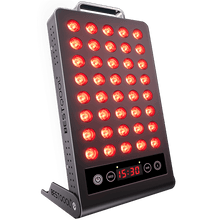
Small red desk or wall panels |
Placed near workspace to illuminate face and task area |
Easy to integrate into existing setups; can double as skin or wellness device; adjustable distance |
Harder to know exact dose at the eye; placement matters; may tempt users to use brightness levels higher than needed |
Full‑body red light beds or large panels |
Used in clinics or home for whole-body wellness |
Supports broader recovery, inflammation, and mood; some users feel more energized after morning sessions |
Less practical specifically for night-shift alertness; cost and space requirements are higher; usually not positioned for sustained eye-level exposure at a desk |
Near‑infrared enriched room lighting |
Ceiling or wall fixtures with added 850 nm LEDs |
Blends into normal indoor lighting; can reduce chronic drowsiness and improve winter well-being; no need to “do a session” |
Technology is still emerging; dosing is harder to individualize; benefits are gradual rather than acutely stimulating |
Regardless of device, safety and quality matter. Medical and wellness organizations advise looking for devices that specify their wavelengths and power densities, avoiding products that overheat or deliver unverified energy levels, and following manufacturer instructions carefully. For facial or eye-level devices, eye protection may be recommended depending on intensity. People with photosensitive conditions, certain skin diseases, or those taking photosensitizing medications should consult their healthcare provider before starting any light therapy.
It is also worth remembering that many consumer devices, especially home-use products, are less powerful than clinical units. That is not necessarily a downside, because it may increase safety, but it does mean that results can be subtler and require consistent use over time.
Integrating Red Light Into a Healthy Night-Shift Lifestyle
Workers on night or rotating shifts face elevated risks of metabolic disorders, cardiovascular disease, some cancers, depression, and workplace accidents. National data suggest that more than 16 percent of full‑time U.S. workers are on evenings or nights, with over 10 million people exposed to these patterns. Healthcare workers on rotating shifts, in particular, have higher accident rates, including a documented increase in needlestick injuries when they work overtime or nights.
No light therapy can erase the underlying strain of chronic circadian disruption. That is why I always talk about red light as one tool within a broader “core” approach to health that includes nutrition, physical activity, emotional and mental health, and sleep, with genetics and personal history shaping the details.
For someone who must be awake at night, thoughtful red light use can fit into a larger plan. During work, red light can support reaction time and help you feel less drowsy without pushing melatonin down as much as blue light. During off hours, near‑infrared or red light given at appropriate times may support mood, energy, and recovery. Outside of light, strategies like consistent sleep windows on days off, a cool and dark bedroom, balanced meals, movement breaks during shifts, and social support for the emotional side of night work are just as important.
If you are considering substantial changes to your schedule or adding more powerful photobiomodulation devices, especially brain-directed systems, it is wise to bring your primary care clinician, sleep specialist, or occupational health provider into the conversation. They can help you weigh potential benefits against your personal medical risks and medications.
Frequently Asked Questions
Does red light at night keep me awake the way my phone screen does?
Red light and blue-rich phone or computer screens affect your body differently. Blue-heavy light, even at relatively modest brightness, strongly stimulates the circadian system and suppresses melatonin, which can delay sleep and shift your body clock when used at night. Long‑wavelength red light, at comparable visual brightness, has negligible circadian effect in field studies and does not measurably reduce nighttime melatonin. Both can feel stimulating while you are exposed, but red light appears less likely to disturb your hormonal night signal. That said, if you use any light while doing mentally engaging tasks at night, you are still being mentally activated, so it is wise to transition to a darker, calmer environment before trying to sleep.
Is it safe to use red light every night?
Short‑term studies and clinical experience suggest that low‑level red and near‑infrared light are generally safe when devices are used as directed, with no ultraviolet radiation and low heat output. Photobiomodulation has been cleared by regulators for certain pain and oral side-effect indications, and trials in skin aging, hair loss, and brain conditions have reported few adverse events. However, comprehensive long‑term safety data for nightly, year‑round home or workplace use are still limited. Overuse of light that is too intense or placed too close can cause skin irritation or, in the case of very bright sources near the eyes, potential eye strain or damage without protection. People who are pregnant, have serious eye disease, a history of skin cancer, photosensitive epilepsy, or are on photosensitizing medications should seek medical guidance before starting red light therapy.
If red light does not suppress melatonin much, how does it increase alertness?
Alertness is influenced by multiple systems. Melatonin is one, but so are direct neural pathways from the eyes to arousal centers, and local cellular energy within the brain. Bright light of almost any color can send a “wake up” signal through non‑visual brain pathways, increasing subjective alertness while you are under the light. Red and near‑infrared light can also support mitochondrial energy production and blood flow in brain tissue, which may help you think and react more quickly even without large hormonal changes. Studies in shift workers show that red light can speed response times compared with dim light, even though melatonin levels stay relatively unchanged. That combination—higher alertness without strong circadian disturbance—is exactly why red light is being explored as a safer night-time countermeasure.
Staying awake and clear-headed at night while protecting your long-term health is a delicate balancing act. Red and near‑infrared light are not cures for sleep loss or shift-work strain, but the current evidence suggests they can be valuable allies: helping you stay alert when you must be awake, nudging drowsiness and mood in a better direction, and doing so with far less impact on melatonin than conventional blue-white lighting. Use them thoughtfully, in partnership with healthy routines and professional guidance, and they can become a practical, compassionate part of your night-time wellness toolkit.
References
- https://pmc.ncbi.nlm.nih.gov/articles/PMC4043367/
- https://blogs.cdc.gov/niosh-science-blog/2020/12/18/lighting-shift-work/
- https://healthcare.utah.edu/the-scope/mens-health/all/2024/06/176-red-light-therapy-just-fad
- https://my.clevelandclinic.org/health/articles/22114-red-light-therapy
- https://www.gundersenhealth.org/health-wellness/aging-well/exploring-the-benefits-of-red-light-therapy
- https://www.uclahealth.org/news/article/5-health-benefits-red-light-therapy
- https://212medspa.com/6-ways-red-light-therapy-can-improve-your-health/
- https://burickcenter.com/photobiomodulation-and-mental-clarity-unveiling-the-power-of-red-light-therapy/
- https://www.carbonworldhealth.com/blog/five-benefits-of-red-light-therapy-for-your-health
- https://occupationaltherapybrisbane.com.au/red-light-therapy-brain-health/


 Small
Small

 Moderate

 Moderate

 Moderate

 Full
Full

