

Use red light therapy before yoga to prepare stiff muscles for movement or afterward to ease post-session tension. If you want both effects, brief sessions before and after yoga may be reasonable when they follow your device’s instructions.
Do your hips resist the first forward fold, or do your shoulders remain tense long after you roll up the mat? A consistent, well-timed routine can help you assess whether light exposure makes warming up easier or recovery more comfortable without treating red light therapy as a cure-all.
The Short Answer: Before for Preparation, After for Recovery

The best timing depends on what you want to achieve.
Before yoga, the goal is muscle preparation. A brief treatment may support circulation and cellular activity, potentially helping stiff areas feel ready for controlled movement. This approach can be useful before an active Hatha, Vinyasa, or strength-focused flow, especially if you tend to begin practice feeling cold or restricted.
After yoga, the goal shifts to recovery. Light exposure can serve as a passive cool-down while your breathing settles and the muscles used during standing poses, balances, or long holds begin to relax. It may be particularly appealing after Power Yoga or a lower-body-intensive flow that tends to leave your quadriceps, calves, or glutes sore the next day.
Evidence has not established a universally superior timing strategy for yoga. Small exercise studies suggest that treatment shortly before demanding activity may affect muscle performance and soreness, but research protocols vary considerably. Evidence for workout recovery remains promising rather than conclusive, and most studies have examined exercise rather than yoga specifically.
What Red Light Therapy Does

Red light therapy, also called photobiomodulation, exposes tissue to low-level red or near-infrared light. Consumer and clinical devices commonly use wavelengths of roughly 630 to 850 nanometers, although wavelength, intensity, treatment distance, coverage, and exposure time vary widely.
The proposed effect begins when cellular components associated with mitochondrial function absorb light. Mitochondria help produce adenosine triphosphate, or ATP, which cells use for normal activity and repair. This mechanism may help explain why researchers are studying light therapy for inflammation, pain, tissue recovery, and exercise performance.
A plausible mechanism does not guarantee results. Evidence for clinical benefits remains incomplete, and many studies are limited by small samples, inconsistent doses, short follow-up periods, or inadequate control groups. Red light therapy may complement yoga, hydration, sleep, and appropriate nutrition, but it cannot repair a torn ligament, stabilize a joint, or replace medical care for persistent pain.
Using Red Light Therapy Before Yoga

When Pre-Yoga Treatment Makes Sense
A pre-session treatment is the more practical option if you feel stiff at the beginning of practice, plan to perform demanding poses, or want to prepare a specific muscle group.
For example, before a 45-minute Vinyasa session, you might expose your hips and thighs to the light. The treatment should not replace a physical warm-up. You should still begin with relaxed breathing, pelvic movements, Cat-Cow, gentle lunges, and gradually deeper ranges of motion.
Research on muscular photobiomodulation has explored light exposure as preconditioning before exercise. Some studies have reported improvements in workload, repetitions, fatigue resistance, or biochemical markers of muscle stress, while others have found little or no benefit. Results appear to depend heavily on dose, wavelength, treatment coverage, device type, and the activity performed.
A Practical Pre-Yoga Routine
Begin with the shortest exposure recommended by the device manufacturer. For many home devices, this may be about 10 to 15 minutes, but the official instructions should take priority because a powerful panel and a small handheld unit deliver different doses.
Treat the areas that will work hardest. Before a hip-opening flow, these may include the glutes, hamstrings, hip flexors, and inner thighs. Before an upper-body practice, focus on the shoulders, upper back, and chest.
After treatment, confirm that you feel comfortable rather than unusually hot, flushed, or overstimulated. Then complete a normal progressive warm-up. If your first low lunge feels smoother while remaining controlled, the timing may suit you. If the light makes you feel loose enough to force a deeper pose, scale back. A temporary sense of flexibility does not prove that a joint is ready for end-range loading.
Advantages and Limitations Before Yoga
The main advantage is that pre-session treatment aligns with muscle preparation. It is also easy to assess: compare how your body feels during the first 10 minutes of similar yoga sessions with and without light exposure.
However, perceived flexibility may not represent a structural change in mobility. A muscle that feels warmer or more comfortable can still be overloaded. Pre-yoga treatment also takes extra time, and a poorly positioned panel, unstable stand, or loose power cord can create a tripping hazard.
Using Red Light Therapy After Yoga
When Post-Yoga Treatment Makes Sense
Post-session treatment is often a better fit when yoga functions as exercise rather than gentle mobility. It may be useful after repeated lunges, long Chair Pose holds, arm balances, or a demanding hot-yoga class.
After practice, a light session can support a deliberate transition into recovery. Instead of immediately checking your cell phone or rushing to another task, sit or lie comfortably, allow your breathing rate to return to normal, and expose the muscles that worked hardest.
Researchers are investigating red light therapy for muscle and joint discomfort, but pain relief remains a complementary use. Do not use it to mask sharp pain, increasing swelling, loss of strength, or pain that changes how you walk or perform daily activities.
A Practical Post-Yoga Routine
Cool down first, particularly after hot yoga. Drink water, allow heavy sweating to stop, and move to a dry, well-ventilated area before using an electrical panel. Red light therapy is not the same as infrared heat, but using a warm device while your body is already overheated may be uncomfortable.
A simple approach is to treat the primary working area for approximately 10 to 20 minutes, provided that duration follows the manufacturer’s directions. After a leg-focused flow, you might treat your quadriceps and calves while resting comfortably. After a shoulder-heavy sequence, position the panel toward your upper back while keeping your neck neutral.
Treatment does not need to begin as soon as Savasana ends. Some recovery professionals suggest using it within a few hours of exercise, but direct yoga research has not identified a precise recovery window. Consistency and appropriate dosing are more defensible priorities than meeting an unproven deadline.
Advantages and Limitations After Yoga
The main advantage is convenience: your muscles are already warm, and the exposure can provide quiet recovery time. This timing also avoids creating a false sense of looseness before challenging poses.
Evidence for reducing delayed-onset muscle soreness is mixed. Some exercise trials report less soreness or better preservation of strength, while others find no meaningful difference from a placebo. Post-session treatment may feel relaxing without measurably changing tissue recovery, so track both immediate comfort and next-day function.
Before Versus After: A Practical Comparison
Your Main Goal |
More Practical Timing |
How to Use It |
Reduce initial stiffness |
Before yoga |
Use a short exposure, then complete a gradual movement-based warm-up |
Prepare for active Vinyasa or strength-focused yoga |
Before yoga |
Target the main working muscles without forcing a deeper range |
Unwind after a demanding flow |
After yoga |
Treat the muscles that worked hardest while resting comfortably |
Support recovery after hot yoga |
After cooling down |
Rehydrate first and use the device in a dry, ventilated space |
Combine preparation and recovery |
Before and after |
Keep both exposures conservative and within device limits |
Manage unexplained or persistent pain |
Neither as a first step |
Seek an appropriate professional evaluation |
Using Red Light Therapy Before and After Yoga
Using light on both sides of a session may be reasonable, but more exposure is not necessarily better. A combined routine could include a short pre-yoga treatment for a stiff area and another conservative exposure afterward for recovery.
For example, before a 60-minute Hatha class, you might use 10 minutes of light on your hips and thighs, followed by a normal warm-up. After class, you might use another 10 to 15 minutes while resting. This is a wellness-oriented example, not a universal prescription. A device’s intensity, recommended distance, and treatment limits may require substantially shorter or longer sessions.
If you are new to red light therapy, test one timing first. Use it before three comparable sessions or after three comparable sessions while keeping your yoga intensity reasonably consistent. Record your starting stiffness, ease of movement, post-session tension, next-morning soreness, and any skin or eye irritation. This comparison is more informative than changing the timing, duration, distance, and intensity simultaneously.
How Yoga Style Should Influence Timing
Gentle Hatha and Yin Yoga
Before a slow Hatha or Yin practice, light exposure may make the transition into movement more comfortable. However, Yin poses involve long holds and substantial passive tension, so feeling relaxed does not justify pulling harder on joints or connective tissue.
Post-session treatment may also work well when your objective is quiet relaxation. Choose the timing that helps you maintain body awareness rather than pursue maximum flexibility.
Vinyasa and Power Yoga
Before an energetic flow, light therapy may complement your warm-up. Follow it with progressive movement before performing deep lunges, binds, jumps, or arm balances.
Afterward, a passive light session may be preferable when muscle recovery is your main concern. If you have time for only one treatment, use it before practice for readiness or afterward for recovery rather than dividing the time into two inadequate sessions.
Restorative Yoga
During or around restorative yoga, light therapy may be practical if the equipment can be positioned safely. The panel should not obstruct movement, shine directly into unprotected eyes, or create excessive warmth.
Keep your expectations realistic when practicing near bedtime. A randomized study of 114 participants found that one hour of exposure to 625-nanometer red light before bed increased subjective alertness and produced mixed effects on sleep compared with white light and darkness. Red light exposure before bedtime should not automatically be considered calming or sleep-promoting for everyone.
Safety Considerations for Home Use
Properly directed, short-term treatment is generally considered noninvasive and low risk, but excessive exposure can irritate the skin or injure unprotected eyes. Follow the device’s instructions for distance, session length, frequency, eye protection, and exposed skin.
Do not assume that every red-colored lamp provides therapeutic wavelengths. Decorative bulbs, infrared heaters, tanning devices, and photobiomodulation panels produce different outputs and carry different risks.
Consult a qualified healthcare professional before using red light therapy if you take photosensitizing medication, have a light-sensitive condition or significant eye disease, are pregnant, have reduced heat sensation, or are managing an active medical or orthopedic condition. Recurring swelling, joint instability, numbness, unexplained bone pain, or progressively worsening pain requires evaluation rather than repeated self-treatment.
Stop treatment if you develop eye discomfort, headache, dizziness, unusual agitation, skin redness, swelling, or blistering. Red light therapy should feel uneventful; discomfort does not mean a stronger treatment is working.
How to Choose the Best Timing
Choose pre-yoga treatment if stiffness during the opening portion of practice is your main obstacle. Choose post-yoga treatment if muscle fatigue, lingering tension, or next-day soreness is the greater concern. Consider a conservative before-and-after routine only after learning how your body responds to one exposure.
The most useful outcome is not a dramatic sensation under the lights but a repeatable improvement in comfort, movement quality, or recovery that does not encourage you to ignore pain or exceed your normal limits. Treat red light therapy as an optional wellness tool, maintain your physical warm-up and cool-down, and let consistent observations—not marketing claims—guide your timing.


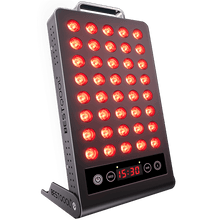
 Small
Small

 Moderate

 Moderate

 Moderate

 Full
Full

