
Yes, you can include red light therapy and foam rolling in the same post-workout routine. But there is no established protocol showing that doing both at the exact same time works better than using them separately.
For most active adults managing ordinary training-related tightness or soreness, the simpler default is to foam roll gently first, then use red light therapy while resting in a stable position. This makes it easier to follow your device's instructions for placement, distance, duration, and eye safety.
Choose a Sequential Post-Workout Routine

Foam rolling while under a red light panel or using a handheld device is not automatically a problem. Still, rolling changes your body position, the angle of the treatment area, and your distance from the light. That can make the exposure setup harder to repeat consistently from one session to the next.
The available evidence does not establish a dose or timing protocol for using photobiomodulation therapy---often called red light therapy---simultaneously with foam rolling after exercise. That absence does not mean the combination is ineffective or inherently unsafe; it means there is no demonstrated advantage to making your routine more complicated.
A practical default:
- Finish your workout and cool down as needed.
- Foam roll gently on areas that feel appropriate for routine self-care.
- Stop rolling and get into a comfortable, stable position.
- Use red light therapy according to your specific device's setup and safety instructions.
This approach is especially practical for runners after a long run, lifters after leg day, and gym-goers who want a repeatable recovery ritual without trying to hold a treatment position while moving on a roller.
Keep Expectations Realistic
Red light therapy and foam rolling can fit into a recovery routine, but neither should be treated as a guaranteed way to eliminate soreness or restore performance immediately.
A 2025 systematic review and meta-analysis of 19 randomized trials involving 672 healthy adults found that photobiomodulation therapy used before exercise was associated with reduced muscle soreness and improved muscle performance 24 hours after exercise-induced muscle damage. However, the certainty of the evidence was low, and the research did not test red light therapy after foam rolling, during foam rolling, or as part of a combined post-workout protocol. It also did not establish a universal device setting, treatment duration, distance, wavelength, or dose. The systematic review and meta-analysis should therefore be read as limited support for PBMT in a different timing scenario---not proof that a post-workout combination routine will produce the same result.
A useful mindset is to treat both practices as optional self-care tools. They can be part of a broader recovery plan, but they do not replace appropriate training load, rest, nutrition, hydration, sleep, rehabilitation, or assessment of a meaningful injury.
Make the Light Session Easy to Control
Once you finish rolling, set up the red light session so you can remain still and use the device as intended. Stable positioning is the practical advantage of separating the two activities.
Before starting, check the instructions for your own device, including:
- Recommended treatment position and distance
- Session duration and any setting-specific guidance
- Whether the intended body area should be uncovered
- Eye-protection or eye-exposure instructions
- Skin and heat-related precautions
Avoid assuming that another person's session length or setup will apply to your device. Light output, treatment area, and instructions can vary.
If you are sweaty after training, focus on getting comfortable and setting up the treatment area according to the device guidance rather than trying to improvise a rolling-and-light session in motion.
When to Skip the Routine and Get Assessed
A routine post-workout session is not the right setting to self-manage severe, worsening, or unexplained symptoms. Do not use foam rolling or red light therapy as a substitute for evaluation of a suspected injury or persistent pain.
Pause the routine and seek professional assessment when pain is severe, symptoms are getting worse, or the problem does not resemble your usual post-training soreness. Review your device's safety guidance before use if you have relevant medical concerns or take medicines that may affect light sensitivity.
A Simple Post-Workout Template
For routine self-care after training:
- Foam roll gently if it feels appropriate.
- Finish rolling before beginning light exposure.
- Use red light therapy in a stable position and follow the instructions for your device.
- Keep the routine optional rather than relying on it to push through significant pain.
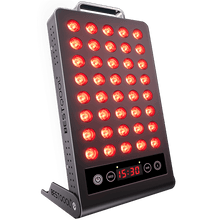
For a controlled, low-fuss post-workout habit, foam roll first and use red light therapy second. Review BestQool's device safety and setup guidance before adding it to your routine, and seek professional assessment for severe, worsening, or unexplained symptoms.


 Small
Small

 Moderate

 Moderate

 Moderate

 Full
Full

