

Staying healthy enough to train is often harder than pushing through a tough workout. As a red light therapy wellness specialist, I routinely meet dedicated runners, lifters, and weekend competitors who can tolerate pain but are worn down by recurring strains, lingering soreness, and nagging tendons that never quite heal. They are not just looking to bounce back after an injury; they want to stop the revolving door of injuries in the first place.
Red light therapy has entered that conversation in a serious way. It is being used in sports medicine clinics, pro team facilities, and increasingly at home. At the same time, experts in sports medicine and academic centers caution that the evidence is promising but still mixed, especially when it comes to performance and injury prevention. In this article, I will walk you through what is actually known, where the uncertainties lie, and how to integrate red light therapy into a proactive, realistic injury-prevention strategy.
What Red Light Therapy Is – And What It Is Not
Red light therapy is a form of photobiomodulation. It uses low-level red and near-infrared light to influence cellular processes without burning or damaging tissue. In the sports context you will also see terms like low-level laser therapy and LED therapy; these all refer to similar ideas, with different types of light sources.
Dermatologists first used red light as part of photodynamic therapy to treat certain precancerous skin lesions by combining specific red wavelengths with a drug. A Stanford Medicine overview points out that red light alone does not destroy skin cancers, but lower-dose red and near-infrared light can nudge cells toward survival, collagen production, and better blood flow. That “gentle nudge” is what sports and rehab professionals are trying to harness for muscle and joint health.
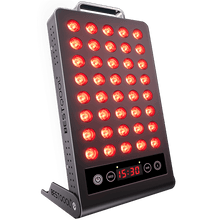
Unlike tanning beds, red light therapy does not use ultraviolet radiation and produces very little heat at therapeutic settings, as summarized by WebMD and other clinical sources. Devices range from small handheld wands and pads to wall-mounted panels and full-body beds. Many home devices are less powerful than systems used in clinics and research labs, which means real-world results may be smaller than what you see in tightly controlled trials.
How it works at the cellular level
Across multiple reviews in sports science and rehabilitation, the main target for red and near-infrared light appears to be the mitochondria, the structures that generate energy inside cells. Light in specific bands is absorbed by mitochondrial chromophores such as cytochrome c oxidase. Reviews in journals summarized by sports medicine organizations describe several downstream effects:
Red and near-infrared light can increase the production of adenosine triphosphate, the molecule your muscles use for fuel. In some lab models, cellular energy output rises substantially after exposure. A physical therapy clinic focused on athletic recovery highlights research suggesting that certain wavelengths may boost cellular energy production by up to about twofold, although that figure comes from controlled conditions, not whole-body performance tests.
Photobiomodulation can modulate reactive oxygen species and antioxidant defenses. A narrative review of more than forty human studies on muscle photobiomodulation emphasizes that light exposure can dampen oxidative stress from hard exercise and increase protective enzymes that help limit cell damage.
Light exposure can alter nitric oxide dynamics, improving local blood flow. Several sources, including exercise science articles and clinic reports, describe improved vasodilation and oxygen delivery to muscle when red or near-infrared light is used appropriately, which is one reason it is investigated as a recovery tool.
These mechanisms are biologically plausible. A research group at a major medical center even reported that long-wavelength red environmental light reduced inflammatory markers and blood clot formation risk in experimental models by altering immune and metabolic pathways. However, the light in that work was directed through the eyes over long exposure periods and is not the same as targeted sports devices used for muscles and joints. It does, however, reinforce the idea that specific light wavelengths can meaningfully affect human physiology.
Red versus near-infrared: reaching deeper tissues
Athletic and rehab sources consistently distinguish red from near-infrared light. They sit next to each other on the spectrum but penetrate to different depths.
Type of light |
Typical wavelength range (approximate) |
Primary reach in the body |
Common athletic focus |
Red light |
about 630–660 nanometers |
more superficial tissues such as skin and near-surface tendons |
skin health, wound healing, tendinopathies near the surface |
Near-infrared light |
about 810–850 nanometers |
deeper tissues including larger muscles, fascia, tendons, ligaments, and even some bone |
large muscle groups, deeper joint regions, post-exercise recovery |
Sports rehab centers describe using red light to influence skin, scars, and shallow structures, and near-infrared to target deeper areas like quadriceps, hamstrings, Achilles tendon, and spinal extensors. Many athletic devices combine both types so that the same session reaches a range of depths.
How Sports Injuries Develop: Inflammation, Overload, and Recovery
To understand how red light therapy may help with prevention, you need to understand how most sports injuries accumulate.
An article from a sports-focused red light manufacturer outlines inflammation as the body’s programmed response to damage or strain. When you train hard, you create microscopic damage, especially in muscles and connective tissues. The term “damage” sounds alarming, but those tiny tears are exactly what your body rebuilds to make you stronger and more resilient.
That early response is acute inflammation. It contains immune cells, fluid, and chemical messengers that initiate repair. You feel it as soreness, warmth, or stiffness after a new or intense session. When you allow enough time and resources—sleep, nutrition, appropriate load management—that acute inflammation resolves and your tissues come back a little stronger.
The problem for many athletes is that they never quite finish healing from one bout before starting the next. Chronic or repeated overload, especially when combined with life stress and poor recovery habits, can push that acute response toward chronic inflammation. A performance and recovery article from a red light manufacturer frames this as a vicious cycle: you are always half-recovered, collecting small strains while still carrying old ones.
Sports medicine professionals often look at pain and inflammation as the two key indicators when deciding whether an athlete is ready to return to play. If you are constantly in a mildly inflamed state, your tissue quality declines, your movement compensations increase, and your risk of more serious injury rises. This is where modalities that help you resolve inflammation and repair tissue more completely may offer an advantage.
What the Science Says About Red Light Therapy and Athletic Performance
There is a lot of marketing noise around red light therapy in sport. To separate signal from noise, it helps to look at the types of outcomes researchers actually measure.
A narrative review in a photobiology journal examined more than forty human studies where red or near-infrared light was applied to muscles before or after exercise. Exercise science groups and independent reviewers such as Examine.com, the American Council on Exercise, and TrainingPeaks have also summarized this work. Their conclusions are remarkably similar: there are intriguing benefits, but results depend heavily on dose, timing, and population, and they are far from guaranteed.
Short-term performance and fatigue
Several randomized trials have used red or near-infrared light on muscles immediately before a workout. In some of these, participants performed more repetitions to failure or maintained exercise longer before exhaustion. Examples include elbow flexion tests and lower body work to fatigue, where active light treatment prior to exercise increased total repetitions or time to exhaustion compared with sham treatment.
The Examine.com review notes that slightly higher repetition counts in eccentric exercises, like biceps curls and knee extensions, have been observed, especially in studies on young male volleyball players conducted by a single research group. This is a narrow population, and the concentration of positive results within one group is a classic reason for caution.
Sports science summaries also point to improved performance in some anaerobic tests such as cycling or running to exhaustion when light is applied before exercise, but the effect does not appear consistently. Other trials show no measurable improvement in performance output despite using seemingly similar protocols.
TrainingPeaks analyzed these data and concludes that, overall, red light therapy remains an interesting but unproven performance tool. Even when improvements are detected, they are often small and not always clinically meaningful for athletes.
Muscle soreness and recovery markers
Recovery is where many athletes hope red light therapy will shine. Research groups have measured delayed onset muscle soreness, creatine kinase, C‑reactive protein, and other damage or inflammation markers after intense exercise with and without photobiomodulation.
The narrative review of muscle photobiomodulation reports a mixed picture. Some protocols applied after muscle-damaging exercise appeared to reduce soreness, limit loss of isometric force, or lessen range-of-motion restrictions over the next day or two. Other protocols showed no meaningful differences in soreness or function compared with placebo.
An exercise professional article from the American Council on Exercise highlights studies where photobiomodulation reduced markers of inflammation and muscle damage and sometimes reduced soreness, even suggesting that, in certain situations, it could outperform cryotherapy for post-exercise recovery. However, that same article emphasizes that devices and dosing vary widely and that there are still no agreed-upon guidelines for frequency, intensity, time, and type. In other words, some regimens may help, while others may do very little.
Examine.com and other reviews echo this caution, noting that across multiple trials, red light therapy has not reliably reduced muscle soreness in the days following a workout.
Strength, hypertrophy, and long-term adaptations
A key question for prevention is whether red light therapy can improve long-term tissue resilience by enhancing training adaptations. The evidence here is sparse and inconsistent.
Examine.com notes that only a couple of longer-term resistance training studies have combined regular strength work with red light therapy. One study in young men found that applying light before strength training led to greater gains in muscle size and strength compared with training alone. In older men, a similar approach did not produce additional benefits. In older women, using red light therapy after strength training also did not increase strength; muscle size was not reported.
AthleticLab highlights performance studies where combining red light therapy with strength and endurance training led to faster improvements compared with controls. Yet a coach-focused review on TrainingPeaks points out that longer-term exposure studies sometimes show changes in muscle architecture and gene expression without corresponding improvements in real-world performance tests.
Taken together, these findings suggest that there may be windows where light therapy supports adaptation, but its effects depend heavily on age, training status, timing, and dose, and they are not reliably large.
Sleep, pain, and whole-athlete recovery
Not all benefits would show up directly on a stopwatch or barbell. AthleticLab discusses a study in basketball players where evening red light exposure improved sleep quality and nighttime melatonin levels compared with placebo. Morning exposure has also been associated with reduced grogginess after waking and better short-term alertness. Better sleep is one of the strongest protectors against overtraining and injury, so even modest improvements in sleep quality could matter over a season.
Beyond performance, clinical reviews compiled by major hospitals report that red light therapy can reduce pain and improve quality of life in people with acute and chronic musculoskeletal conditions, including tendinopathies and fibromyalgia, when used as an adjunct. A WebMD summary of multiple trials notes low to moderate quality evidence that red light therapy can reduce tendon pain and improve function, though it is not a cure and works best alongside rehab.
For an athlete, reduced pain from chronic tendinopathy or joint irritation can make it easier to maintain proper form, tolerate strengthening exercises, and stay consistent with training, all of which are key elements of prevention.
Reality check on bold performance claims
It is important to keep marketing in perspective. A Stanford Medicine article reviewing red light therapy notes that claims about dramatic improvements in athletic performance, sleep, and various complex conditions are largely speculative, and that high-quality human data for many of those uses are limited or absent.
The American Council on Exercise and sports medicine suppliers such as Medco Athletics advise health professionals to treat photobiomodulation as a potentially useful but emerging modality. They stress that study quality ranges from good to quite weak, sample sizes are often small, and protocols differ enough that it is difficult to generalize. TrainingPeaks goes even further, suggesting that given the cost of many commercial devices and the modest, inconsistent outcomes, red light therapy is not yet a compelling investment purely for performance gains.
When you put the independent critiques alongside the more enthusiastic clinic reports, a picture emerges: red light therapy is not magic. At best, it offers incremental gains in energy metabolism, circulation, and pain modulation that might add up over time, especially when combined with solid training and recovery habits.
Connecting Red Light Therapy to Sports Injury Prevention
Sports injury prevention is rarely about any single tool. It is about stacking small advantages in your favor: robust strength, smart programming, quality sleep, responsive coaching, and recovery strategies that keep tissues healthier over months and years.
Inflammation: friend, foe, and injury risk
The red light company article on inflammation in sport describes acute inflammation as essential for muscle repair and growth. The trouble comes when acute bouts of inflammation are stacked on top of each other without full resolution. That leads to chronic low-grade inflammation, persistent pain, and restricted function.
Sports medicine practitioners often assess pain and inflammation when judging readiness to return to play. If these markers stay high, athletes are more likely to develop chronic tendinopathies, recurrent muscle strains, or joint problems. Efficiently resolving inflammation after training and minor injuries is therefore a core preventive strategy.
Photobiomodulation’s main promise is that it can help cells produce energy more efficiently, modulate pro- and anti-inflammatory signals, and improve blood flow to healing tissues. Multiple reviews in muscle photobiology, exercise science, and physical therapy note these effects, as well as reductions in biochemical markers of damage in some trials.
If you can nudge an overloaded tendon or muscle from a chronic inflammatory state back toward balance, you are not just treating pain; you are potentially influencing the tissue environment in which injuries occur. That is the theoretical basis for using red light therapy proactively between injuries, not just after a major tear.
How supporting recovery may lower injury risk
Direct trials showing that red light therapy lowers actual injury rates in athletes are lacking. Most research measures surrogate outcomes: soreness, strength recovery, biochemical markers, and performance tests. However, it is reasonable to connect certain dots, with appropriate caution.
Reviews from rehabilitative and sports organizations suggest that red light therapy can, under some conditions, reduce soreness, support faster recovery of strength and range of motion, and improve tolerance to high-intensity training. Clinical reports from sports rehab clinics describe athletes who, over two to four weeks of consistent use, notice better recovery between sessions and less stiffness.
If you recover strength and function more completely between practices, you are less likely to compensate with altered movement patterns that overload other tissues. If chronic tendon or joint pain is reduced enough that you can complete a high-quality strength program, the underlying tissue capacity improves, which is one of the best-proven ways to reduce overuse injury risk. If sleep improves even modestly, you gain another protective factor against overtraining.
None of this makes red light therapy a standalone injury-prevention tool. Instead, it may serve as one of several strategies aimed at helping your body clear each cycle of stress and repair more fully so that small problems do not accumulate into major breakdowns.
What red light therapy cannot prevent
Several medical sources are explicit about the limits. University Hospitals and WebMD both emphasize that red light therapy cannot reverse advanced structural problems such as severe osteoarthritis or completely torn ligaments. In those cases it may ease pain or help surrounding tissues but will not rebuild mechanical structures.
It also cannot prevent traumatic injuries: collisions, falls, awkward landings, or sudden twists that exceed tissue capacity in a single moment. Good technique, appropriate protective gear, sensible scheduling, and rule changes will always matter more for contact and high-risk sports.
In short, think of red light therapy as potentially helpful for the chronic, load-related side of injury risk, not as a shield against major trauma or a replacement for structural treatment when something is torn or degenerated.

Practical Proactive Strategies for Using Red Light Therapy
The most important question I hear from athletes is not “Does it work?” but “How should I actually use this in my real life?” The research does not give us perfect protocols, but it offers enough patterns to guide a cautious, evidence-informed approach.
Choosing an appropriate device
Clinical summaries from WebMD, University Hospitals, and exercise organizations note that in-clinic devices tend to be more powerful and better characterized than many home units. They typically have clearly specified wavelengths, power densities, and dose recommendations. Home devices can still be helpful, but their power and tissue penetration can vary widely.
If you are considering a home device, look for clear labeling of wavelength bands in the red and near-infrared range and transparent information about power output. Some devices have regulatory clearance that primarily speaks to safety rather than guaranteed effectiveness, but it is still reassuring from a risk standpoint. For deeper muscles and joint regions, panels or pads that include near-infrared wavelengths are generally favored in athletic settings.
Integrating red light therapy into your weekly training
Because there are no established exercise-specific dosing guidelines, professional organizations advise treating red light therapy as an experiment that you structure carefully and review over time.
Many athletic protocols use sessions of roughly ten to twenty minutes per body area. Sports physical therapy clinics describe using near-infrared wavelengths for deeper muscle penetration, sometimes about fifteen to thirty minutes before a hard workout to precondition muscles, and then again within a couple of hours afterward to support recovery. A recovery-focused clinic notes that sessions within about two to four hours post-exercise may be particularly effective for recovery, based on their experience and the timing of inflammatory processes.
A strength and conditioning association brief on red and infrared light suggests that research protocols frequently expose target areas several times per week, often in the range of two to five sessions. In my own coaching practice, I encourage athletes to start conservatively, for example using light on key muscle groups and chronic problem areas a few times a week on training days, then adjust based on how their soreness, performance, and sleep respond.
Most performance-focused sources agree that spending longer than about twenty minutes on a single area does not appear to add much benefit and may simply be wasted time. Being closer to the light source increases intensity at the skin, so placing panels within a few inches of the target area often allows shorter exposure times. Strength and conditioning guidance commonly describes positioning LEDs quite close to the skin, often within about four inches, as long as heat is low and the device is used according to instructions.
Targeting common trouble spots
For proactive injury prevention, focus on tissues that are repeatedly stressed in your sport and already show signs of grumbling. Clinical and review articles note that red light is often used on superficial tendinopathies and inflammatory problems near the surface, such as the Achilles tendon, patellar tendon, and certain elbow and shoulder tendons. Near-infrared light can reach deeper tissues such as quadriceps, hamstrings, hip rotators, and lumbar muscles.
A runner with chronic calf tightness might, for example, use near-infrared light on the calves and Achilles region before and after speed sessions, while a swimmer with a history of rotator cuff issues might focus on the shoulder complex around key swimming workouts. These exposures should accompany, not replace, a strengthening and technique program tailored to those tissues.
Combining red light therapy with other evidence-based strategies
Sports rehab experts are unanimous that red light therapy must sit inside a broader plan. A well-known sports rehabilitation clinic that treats many professional athletes describes its three core recovery tools as compression, ice, and healthy light exposure. Exercise organizations encourage integrating red light therapy alongside nutrition, cold-water immersion where appropriate, stretching, compression garments, and carefully progressed exercise therapy.
If you are using red light therapy as a proactive strategy, tie it to existing best practices rather than letting it drift into an isolated ritual. Pair a short light session with a dynamic warm-up, a post-session mobility routine, or a pre-bed wind-down ritual after evening training. That way, even on days when light exposure may or may not be adding much, you are still cementing habits that definitely matter.
Monitoring your response and staying realistic
Because individual responses vary and research is still evolving, it is essential to track meaningful outcomes. Rather than relying on vague impressions, pay attention to specific patterns over several weeks: how sore you feel twenty-four and forty-eight hours after similar workouts, whether you can hit target paces or loads more consistently, whether chronic hot spots feel calmer, and whether your sleep quality improves.
Independent reviewers repeatedly point out that any benefits red light therapy offers are likely to be incremental rather than transformative. Expectation management is part of prevention: if you view a light panel as a magic shield, you may neglect far more powerful levers like training load, strength work, and sleep. If you instead treat it as one small addition to a solid program, you are more likely to notice real, modest gains and avoid chasing unrealistic promises.
Cost matters as well. University Hospitals and TrainingPeaks both note that devices can range from relatively affordable to very expensive. Given the modest and uncertain performance effects, it is reasonable to start on the conservative end of the price spectrum and regard red light therapy as a “nice to have” rather than an essential investment.
Safety, Risks, and Who Should Be Cautious
Clinical reviews from academic and medical centers generally find that red light therapy is low risk when used appropriately. Unlike ultraviolet light, it does not cause tanning or sunburn at therapeutic doses, and serious adverse events are rare.
The main safety concern is the eyes. Several sources recommend protecting your eyes with goggles and avoiding direct staring into high-intensity light sources. Even though red light is less damaging than shorter wavelengths, prolonged exposure from close range is not advisable without protection.
Physiotherapy and dermatology summaries advise caution for people with photosensitive conditions or those taking medications that increase light sensitivity. People with a personal history of skin cancer or serious eye disease should speak with their physician or dermatologist before using home devices, particularly stronger ones.
Safety over active cancer sites and during pregnancy is less well studied. Rehabilitation summaries commonly recommend avoiding direct treatment over known malignancies and using caution over the abdomen in pregnancy. WebMD notes reassuring data from a study of several hundred pregnant women using certain light treatments without clear harm but still characterizes the research as limited. The safest path is to involve your medical team if you are pregnant, have cancer, or have complex health conditions.
Finally, more intense clinic or spa systems can cause transient redness or irritation if used at very high settings or for extended durations. Following manufacturer protocols, starting with conservative exposures, and increasing gradually if tolerated is a sensible way to minimize risk.

Frequently Asked Questions
Can red light therapy by itself prevent sports injuries?
Based on current evidence, the answer is no. Reviews from sports medicine and exercise organizations consistently frame red light therapy as an adjunctive tool. It may help you recover more completely between sessions, manage tendon or joint pain, and support sleep and tissue health, all of which can contribute indirectly to lower injury risk. But it does not replace progressive strength training, smart program design, appropriate rest, or technique work. If you are using red light but ignoring those fundamentals, your prevention strategy will still be fragile.
When is the best time to use red light therapy around a workout?
Many of the performance-focused studies and clinic protocols apply red or near-infrared light shortly before exercise, often in the half hour leading up to a hard session, to precondition the muscles. Others use it soon after training, commonly within the first few hours, to support recovery. A practical pattern, consistent with summaries from rehabilitation and sports clinics, is to use light on targeted muscle groups and tendons before key workouts where you want to maximize performance, and again after those sessions when you want to accelerate recovery. The exact schedule is still experimental, so it makes sense to pick a pattern, stick with it for a few weeks, and adjust based on how your body responds.
Is buying a home red light device worth it for injury prevention?
That depends on your budget, your injury history, and your expectations. Independent experts point out that the evidence for large, reliable improvements in performance and recovery is limited, and that benefits, when present, are usually modest. Medical centers emphasize starting with a device only if it is not a financial strain and treating the purchase as an optional enhancement rather than a core requirement. If you are already consistent with training, sleep, and rehab, and you can afford a device that clearly states its wavelengths and power, it may be reasonable to trial red light therapy as part of a broader prevention plan. If your basics are not yet in place, investing time and resources there will almost always yield a stronger return.
Red light therapy is a promising tool in the modern injury-prevention toolkit, but it is not a shortcut. The athletes I see get the most from it are the ones who use light to support, not replace, good training, sleep, and recovery habits. If you decide to experiment with it, do so with clear goals, careful observation, and guidance from your health or performance team. Your body’s ability to adapt is powerful; red light therapy is best used as one more way to respect and support that process over the long haul.
References
- https://lms-dev.api.berkeley.edu/red-light-tjerapy
- https://studiesforyou.utah.edu/trial_detail.php?trial_id=IRB_00163429
- https://hms.harvard.edu/news/widening-field
- https://epublications.marquette.edu/cgi/viewcontent.cgi?article=1005&context=dentistry_fac
- https://nsuworks.nova.edu/cgi/viewcontent.cgi?article=2599&context=ijahsp
- https://www.medschool.pitt.edu/news/red-light-linked-lowered-risk-blood-clots
- https://pmc.ncbi.nlm.nih.gov/articles/PMC5167494/
- https://med.stanford.edu/news/insights/2025/02/red-light-therapy-skin-hair-medical-clinics.html
- https://www.acefitness.org/resources/pros/expert-articles/8857/red-light-therapy-and-post-exercise-recovery-the-physiology-research-and-practical-considerations/?srsltid=AfmBOook7S6q_f8ojDLxoTUMjBoqduXQGK8oTo88yS-n5DIZhaa5_NbE
- https://www.uhhospitals.org/blog/articles/2025/06/what-you-should-know-about-red-light-therapy


 Small
Small

 Moderate

 Moderate

 Moderate

 Full
Full

