

If you lift seriously, you already know the truth that most gym marketing skips: your progress is limited less by how hard you can push on heavy day and more by how well you can recover before the next session. That is why red light therapy has become such a hot topic in strength circles. Panels and beds now sit beside squat racks and in home gyms, all promising faster recovery, bigger lifts, and less pain.
As a red light therapy wellness specialist, my goal is not to sell you a miracle gadget. It is to help you understand what this technology can and cannot do for strength training, based on the current evidence and real-world experience with lifters who are trying to train hard without breaking down. In this article, we will look at how red light therapy works, what the research actually says for performance and recovery, where it may help weightlifters, and how to use it sensibly alongside a solid training plan.
What Red Light Therapy Actually Is
Red light therapy, often called photobiomodulation or low-level light therapy, uses low-intensity red and near-infrared light to influence how your cells function. Hospitals and academic centers such as Cleveland Clinic and Brown University Health describe it as a noninvasive way to stimulate cellular repair and reduce inflammation using specific wavelengths rather than heat or ultraviolet radiation.
Most devices use light-emitting diodes (LEDs) or low-level lasers that emit red and near-infrared wavelengths roughly in the 630 to 850 nanometer range. That range is not arbitrary. Research reviewed by muscle and sports performance groups shows that these wavelengths can penetrate from the skin into deeper tissues, where they are absorbed by structures inside your cells.
Red light therapy is not the same as a tanning booth. It does not use ultraviolet light, does not tan the skin, and at typical therapeutic levels should not burn. Stanford Medicine dermatology experts point out that red light can either be used in high-energy, cell-killing modes for certain skin cancers when combined with drugs, or in low-energy, cell-modulating modes for healing and cosmetic use. For weightlifting and recovery, we are talking about the low-level, non-heating end of that spectrum.
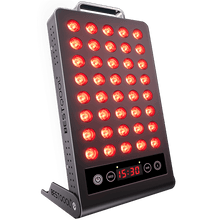
You will see a wide range of devices marketed: face masks, handheld wands, wall-mounted or floor-standing panels, wraparound pads and blankets, and full-body beds. Medical offices generally use more powerful, tightly specified hardware; home devices are usually less intense and may take longer to produce any effect. WebMD and Cleveland Clinic both note that this difference in power is one reason results vary so much between clinic protocols and home use.
How Red Light Therapy Acts On Muscle
Under the skin, red and near-infrared light interact with your mitochondria, the tiny structures often described as your cells' power plants. Multiple reviews, including a systematic review of low-level laser therapy in skeletal muscle and a narrative review of photobiomodulation in human muscle, converge on the same basic mechanism.
First, photons are absorbed by an enzyme in the mitochondrial respiratory chain called cytochrome c oxidase. This absorption appears to improve the enzyme's function, increase production of adenosine triphosphate (ATP), and influence nitric oxide and reactive oxygen species signaling. In simple terms, cells can make more usable energy and manage oxidative stress more effectively.
Second, red light therapy seems to promote vasodilation, or widening of small blood vessels. Gym-focused articles from City Fitness and Stanford Medicine note improved blood flow as a key effect: more oxygen and nutrients reaching muscle, and better removal of metabolic waste. That is exactly what you want around heavy strength work, where micro-tears and metabolic stress are part of the growth stimulus.
Third, photobiomodulation can modulate inflammation. Summaries from physiotherapy and sports recovery sources describe reduced pro-inflammatory cytokines and upregulated anti-inflammatory signals, which can translate into less joint and tendon irritation and a more favorable environment for tissue repair.
Researchers studying bone, cartilage, and tendon have also shown that low-level light can stimulate collagen production and influence gene expression involved in tissue regeneration. That work is not specific to lifters, but it supports the broader idea that light can nudge repair processes in connective tissue, not just in muscle fibers.
One important nuance from both muscle and bone research is the so-called biphasic dose response. At low to moderate doses, red light can be stimulatory. At very high doses, it can become ineffective or even inhibitory. Reviews from Ferraresi and colleagues and other photobiomodulation researchers emphasize that more is not always better. There is a dose window where the biology seems to respond best.

What the Science Says for Strength and Recovery
Marketing often jumps straight from basic mechanisms to bold promises. The reality is more nuanced. We have to balance optimistic gym-centered narratives with more conservative reviews from independent groups such as Examine.com, TrainingPeaks, and academic journals.
Acute Performance and Strength
Several clinical trials have looked at whether shining red or near-infrared light on a muscle before exercise can improve immediate performance. A narrative review of photobiomodulation in muscle, along with sports-focused articles that summarize a 2015 meta-analysis and multiple trials, report the following patterns.
In some studies, pre-exercise treatment of muscles used in the workout led to more repetitions to failure, longer time to exhaustion, higher peak torque, or better maximal voluntary contraction compared with placebo or no treatment. These trials used wavelengths in the red and near-infrared ranges and applied light to multiple points over the working muscle groups.
However, this is not the full story. Examine.com’s overview points out that many of the positive eccentric strength and endurance results come from a single research group working mostly with young male volleyball players. When other labs try similar protocols, results are less consistent. A long-term trial in young men found greater gains in size and strength when red light was applied before strength training, while a similar study in older men did not see any added benefit. In older women who used red light after strength training, strength did not improve beyond training alone.
TrainingPeaks reviewed the same body of work and concluded that, while mechanisms are plausible, robust, clinically meaningful performance improvements have not been demonstrated. Some upper- and lower-body studies show modest biochemical changes after red light, but those changes often do not translate into clear performance gains.
In other words, pre-workout red light therapy may give a small edge in certain contexts, especially under tightly controlled conditions, but it is not a proven universal strength booster.
Delayed Onset Muscle Soreness and Recovery
Delayed onset muscle soreness (DOMS) is a major concern for lifters trying to maintain high training frequency. Here the data are mixed but instructive.
The photobiomodulation review in human muscle describes DOMS studies that used both lasers and LED clusters applied before or after eccentric exercise. Some elbow flexor trials found no meaningful difference in pain, range of motion, or peak torque compared with placebo, even when light was applied at standard red and near-infrared wavelengths. Other trials found that post-exercise illumination of biceps reduced soreness within 48 hours and limited loss of force and range of motion over the next several days.
Sports recovery summaries from Platinum Therapy Lights highlight studies where post-exercise red light reduced DOMS severity, improved strength and range of motion up to 96 hours, and improved sprint performance in athletes who had undergone a punishing training bout. A 12-week treadmill study with seventy-seven volunteers found that using red light both before and after workouts led to the biggest improvements in time to exhaustion and oxygen uptake, and also greater fat reduction than other timing strategies.
At the same time, Examine.com notes that across multiple studies, red light therapy does not reliably reduce muscle soreness. Some protocols help; others do not. The differences often come down to variables such as wavelength, total energy delivered, timing relative to exercise, and how many sites are treated.
The evidence taken as a whole suggests that red light can sometimes reduce DOMS and speed functional recovery, but it is not a guaranteed way to avoid soreness.
Injury Healing and Joint or Tendon Pain
For lifters, chronic tendon pain and irritated joints are often bigger problems than pure muscle soreness. Several medical sources look at these issues more directly.
WebMD’s review of red light therapy concludes that it can provide short-term relief of pain and morning stiffness in rheumatoid arthritis but appears less helpful for osteoarthritis overall. A review of seventeen clinical trials in tendinopathy found low to moderate quality evidence that red light therapy can reduce pain and improve function. University Hospitals sports medicine clinicians report early promise for tendinopathies and superficial inflammatory problems near the skin, though they emphasize that more research is needed.
Broader clinical sources such as Cleveland Clinic and Brown University Health describe red light therapy as potentially useful for joint and muscle pain, carpal tunnel symptoms, ankle and knee issues, and other musculoskeletal complaints, while stressing that most trials are small and results are modest.
Crucially, orthopedic experts interviewed by University Hospitals remind patients that red light cannot repair mechanical problems like ligament tears or reverse advanced osteoarthritis. It is best thought of as an adjunct that may help manage inflammation and pain during the recovery process, not as a stand-alone fix for structural damage.

Potential Benefits for Weightlifters
With those caveats in mind, where might red light therapy realistically help someone who trains hard with weights?
For some lifters, using red or near-infrared light around training may provide slightly faster restoration of strength between sessions, a bit less soreness, or a smoother return to baseline after unusually hard or high-volume work. Photobiomodulation reviews and athletic recovery articles describe improvements in fatigue resistance and time to exhaustion in certain pre-conditioning protocols. This can translate into being able to maintain session quality more consistently, especially during demanding training blocks.
Red light may also support ongoing muscle growth indirectly. Weightlifting creates micro-tears and inflammatory stress that need to be repaired. Gym-focused content from Greentoes Tucson and other performance articles notes that red light can enhance mitochondrial energy production and may upregulate markers associated with muscle hypertrophy when combined with resistance training. Some human trials in trained men have observed greater muscle thickness and strength gains with red light plus lifting compared with lifting alone. Other trials, especially in older adults, have not seen this effect, so this remains a possibility rather than a guarantee.
Many athletes are interested in red light for nagging aches. Evidence summarized by WebMD, University Hospitals, and Brown University Health suggests that red light therapy can relieve certain types of musculoskeletal pain, particularly in tendinopathies and inflammatory conditions, and may improve quality of life in chronic pain disorders. While these studies are not all in weightlifters, the mechanisms are relevant for issues like persistent elbow tendinopathy from heavy pressing or knee pain from squatting.
Finally, broader wellness benefits may indirectly support lifting. Articles from City Fitness and Arsenal Health describe improvements in circulation, hormonal balance, mood, and sleep quality with regular red light therapy, including suggestions that evening sessions can help reinforce circadian rhythm. A stronger sleep routine is one of the best recovery tools a lifter can have, and any intervention that nudges you toward deeper, more consistent sleep may improve recovery even if the effect on muscle tissue is modest.
The picture is not black-and-white. Some lifters experience noticeable improvements; others feel nothing at all. The research matches this variation.
A Snapshot of Pros, Cons, and Evidence Strength
To bring the research into focus, it helps to compare potential benefits with how strong the supporting evidence is.
Area |
How it may help lifters |
Evidence snapshot |
Acute performance |
Slightly more reps or longer time to exhaustion in some pre-exercise trials |
Small studies, often from a single research group; mixed replication; effects are modest at best |
Long-term strength and size |
Possible extra gains in young men when used before training |
One positive long-term study in young men; no benefit in a similar study in older men |
DOMS and recovery |
Less soreness and quicker strength recovery after very hard sessions |
Some trials show reduced DOMS and faster recovery; others show no difference |
Joint and tendon pain |
Reduced pain and improved function in tendinopathy and some arthritis cases |
Low to moderate quality evidence; good safety profile; works best as an adjunct to standard rehab |
Better sleep quality and mood, less stress |
Supported by small clinical and wellness studies; mechanisms plausible but data are still emerging |
|
Fat loss and body sculpting |
Small temporary reductions in circumference in treated areas |
Changes appear cosmetic and short-lived; no good evidence for meaningful, lasting weight loss |
Limits, Risks, and Common Myths
Because red light therapy devices are easy to sell online, the marketing often outruns the data. Several independent groups, including Examine.com, TrainingPeaks, Cleveland Clinic, Stanford Medicine, and Brown University Health, emphasize the same key points.
First, red light therapy is not a miracle strength hack. The ergogenic effects on exercise performance are small, population-specific, and not reliably replicated. TrainingPeaks concluded that, given current evidence and device cost, it is hard to justify a red light panel purely to boost performance.
Second, it is not a cure for structural injuries. Orthopedic sports medicine specialists stress that ligament tears, major cartilage defects, and advanced osteoarthritis will not be reversed by light. Red light can sometimes help manage pain and inflammation around these issues, but it does not replace appropriate imaging, rehab, or surgery when those are indicated.
Third, claims about weight loss and cellulite reduction are not supported. WebMD notes that while some providers use red light for body contouring, any reduction in circumference is likely temporary and not due to true fat loss. Cleveland Clinic explicitly states that there is no scientific evidence supporting red light therapy for weight loss.
Fourth, there are real but limited risks. Properly used, red light is generally safe, noninvasive, and does not expose you to ultraviolet radiation. Clinical sources report that side effects are usually mild: temporary redness, warmth, or tightness of the skin. At very high intensities, early-stage trials have seen blistering and significant redness. Direct exposure of bright LEDs or lasers to the eyes can be harmful, so medical centers and dermatology clinics routinely require protective goggles.
Finally, there is what one University Hospitals physician calls the risk to your wallet. Devices sold for home use commonly cost from under one hundred dollars into the hundreds or thousands, and sessions at clinics or spas can run around eighty dollars or more per visit. Red light therapy is rarely covered by insurance for recovery or performance goals. Even when benefits are real, they tend to be incremental, not life-changing.

How To Use Red Light Therapy Around Your Strength Training
If you decide to explore red light therapy as part of your recovery toolkit, it helps to model your use on what has actually been studied, while still respecting that home devices are not identical to research-grade hardware.
Choosing a Device
Medical and academic sources suggest focusing less on brand and more on verifiable specifications. Devices should clearly state the wavelengths they emit, typically in the 630 to 660 nanometer red range and the 800 to 850 nanometer near-infrared range. Research in muscle and connective tissue has used wavelengths across roughly 600 to 1,000 nanometers with energy doses in the single to tens of joules per square centimeter. These numbers are mainly for researchers, but they underscore that not just any red-colored light will do.
Dermatology and pain specialists also emphasize safety testing. Some at-home products are cleared by the US Food and Drug Administration, which primarily addresses safety rather than effectiveness, but it is still one useful signal. Brown University Health recommends choosing products with clear technical documentation, realistic claims, and appropriate eye protection.
Panels and beds cover large areas and are practical if you want to address whole legs or the front and back of the body. Smaller panels, wrap pads, or wands are more suitable for targeted areas such as knees, shoulders, or elbows. Clinics offer higher-powered equipment but at higher ongoing cost.
Timing Relative to Lifting
Sports recovery articles and muscle research frequently distinguish between pre-conditioning (before exercise) and post-exercise use.
Some of the stronger performance findings come when red or near-infrared light is applied shortly before a workout. Physical therapy and athletic recovery content describes using light on the main muscle groups fifteen to thirty minutes before intense exercise to prime mitochondria and reduce metabolic stress. Several trials summarized by Platinum Therapy Lights report improved time to exhaustion, greater repetitions, and higher peak power when light is used in this pre-exercise window.
For recovery and DOMS, post-exercise applications are more common. Studies in elbow flexors and lower body muscles have used light immediately after or within a few hours of training and observed reduced soreness and better strength recovery in some protocols. Other trials have found no meaningful difference, reinforcing that timing is only one part of the equation.
One twelve-week treadmill study found that using red light before and after sessions produced the largest gains in time to exhaustion and oxygen uptake, along with greater fat reduction, compared with pre-only, post-only, or no light. That suggests that both timing strategies may have value, at least for certain endurance-style protocols.
For a lifter, a pragmatic approach is to use red light on key muscle groups before particularly demanding sessions when you care about acute performance, and after those sessions when your priority is recovery, while keeping your total exposure within manufacturer guidelines.
Session Duration and Frequency
Consumer-focused and wellness-oriented sources offer practical guidance on session length and frequency. Articles aimed at weightlifters note that typical sessions involve ten to twenty minutes in front of a red and infrared panel for the muscles you want to target, with minimal clothing over those areas. Another recovery guide suggests twenty to thirty minutes per target area up to several times per day during more intense healing phases, then two or three times per week for maintenance.
Medical reviews such as those from Cleveland Clinic and WebMD emphasize that red light therapy usually requires multiple sessions per week over many weeks, and sometimes months, before benefits are noticeable, and that ongoing treatments may be needed to maintain gains, such as in hair growth applications.
Because of the biphasic dose response reported in both muscle and bone photobiomodulation research, it is wise to respect the principle of starting with moderate exposures rather than very long sessions. Overshooting the optimal dose may reduce or negate potential benefits and increase the chance of skin irritation.
Integrating With Your Recovery Plan
Every physiotherapy-oriented source on this topic makes the same core point: red light therapy should be an adjunct, not a replacement, for foundational recovery practices.
For weightlifters, those foundations include well-structured programming with appropriate deloads, gradual progress in load and volume, sufficient sleep, adequate protein and calorie intake, hydration, stress management, and active recovery such as light movement and mobility work. Articles from Poll to Pastern and Physio-Pedia stress that light therapy belongs alongside, not instead of, evidence-based exercise and rehabilitation.
If you are already consistent with training and recovery basics, red light therapy can be a gentle extra lever at the margins. It may help you tolerate high-volume blocks more comfortably, manage persistent tendon or joint soreness alongside targeted rehab, or sleep a bit more deeply when combined with good sleep hygiene. If those foundations are not in place, light alone will not fix stalled progress or chronic fatigue.
Who Should Talk To a Clinician First
Most healthy lifters can experiment with red light therapy safely if they follow device instructions. That said, several groups should involve a healthcare professional before starting.
Clinical guidance from Brown University Health, WebMD, Cleveland Clinic, and University Hospitals recommends caution for people taking medications that increase light sensitivity, those with photosensitive conditions, a history of skin cancer, or eye disease. For these groups, light exposure may carry extra risks.
Pregnancy is another area where data are limited. One study summarized by WebMD followed hundreds of pregnant women who received certain laser light treatments and did not find harm to parent or fetus, but the authors still call for caution because red light therapy protocols differ. In this situation, it is prudent to get explicit clearance from your obstetric provider.
Anyone with a significant orthopedic issue, such as a known ligament tear, advanced osteoarthritis, or unexplained swelling, should not use red light therapy as a substitute for proper evaluation. University Hospitals' sports medicine specialists are clear that while light can help with superficial inflammatory issues and pain, it does not correct mechanical problems. If your joint catches, locks, gives way, or swells dramatically, that is a reason to see a physician, not just another reason to turn on a panel.

FAQ for Strength Athletes
Is red light therapy worth it if my budget is tight?
Independent reviewers like TrainingPeaks and Examine.com emphasize that, for performance and recovery, the evidence is interesting but still limited and inconsistent. At the same time, medical centers such as University Hospitals describe red light as low-risk and suggest that the main downside is financial. If your budget is limited, investing in high-quality food, coaching, or sleep improvements will almost certainly give you more return for your training than an expensive light panel. Red light becomes more reasonable when you already have your basics covered and you are comfortable allocating some discretionary money to a tool that may provide modest extra help.
Should I focus on a full-body bed or a smaller, targeted device?
There are no large head-to-head trials comparing device formats for lifters. Dermatology and pain clinics typically choose devices based on the area being treated. Full-body beds or large panels can be useful if you want broad exposure, for example during a high-volume full-body phase. Smaller panels, pads, or wands make more sense if you mainly want to address specific joints or muscle groups, such as knees, shoulders, or elbows. Stanford Medicine experts and WebMD both note that clinic equipment is usually more powerful than at-home devices, so a targeted clinic session may have different effects than a short home treatment. In either case, clear wavelength information, realistic claims, and good eye protection matter more than the exact form factor.
How long until I might notice any difference?
Across skin, hair, pain, and performance studies, one consistent pattern is that red light therapy is not instant. University Hospitals and Cleveland Clinic clinicians emphasize that several treatments are usually needed before changes are noticeable, and that regular use is important if benefits are to persist. Some pain studies and performance trials evaluate outcomes after weeks of repeated sessions. In practical terms, if you are going to test red light therapy for weightlifting recovery, evaluate it over at least a few weeks of consistent use while tracking your soreness, session quality, and joint comfort, rather than expecting a dramatic change after one or two exposures.
Red light therapy is a real biological tool, not a magic shortcut. For weightlifters, it sits in the same category as compression, massage, and other recovery aids: potentially useful, especially when your training and recovery fundamentals are already dialed in, but not a replacement for hard work, smart programming, and respectful listening to your body. Used thoughtfully, with evidence and safety in mind, it can be one more way to support the strength and resilience you are building under the bar.
References
- https://healthsciences.arizona.edu/news/stories/exploring-phototherapy-new-option-manage-chronic-pain
- https://ui.adsabs.harvard.edu/link_gateway/2022Photo...9..618S/PUB_HTML
- https://pmc.ncbi.nlm.nih.gov/articles/PMC5167494/
- https://aichat.physics.ucla.edu/Download_PDFS/publication/YCvxS1/AriWhittenRedLightTherapyRecommendations.pdf
- https://www.buffalo.edu/ubnow/stories/2023/03/light-therapy-aging-hearts.html
- https://dspace.mit.edu/bitstream/handle/1721.1/109162/Ferraresi-2012-Low-level%20laser%20%28lig.pdf?sequence=1&isAllowed=y
- https://med.stanford.edu/news/insights/2025/02/red-light-therapy-skin-hair-medical-clinics.html
- https://genomicsworkshop.isr.umich.edu/wp-content/uploads/ninja-forms/tmp/nftmp-zpdzD-dermadreamredlighttherapycommercialjwmtyu3h.pdf
- https://www.brownhealth.org/be-well/red-light-therapy-benefits-safety-and-things-know
- https://my.clevelandclinic.org/health/articles/22114-red-light-therapy


 Small
Small

 Moderate

 Moderate

 Moderate

 Full
Full

