
Possibly---but as a cautious add-on, not a solution to a screen-work setup. Photobiomodulation, often called red or near-infrared light therapy, has been studied for nonspecific neck pain and may provide short-term pain relief for some people. That does not prove it treats screen-related "tech neck," corrects posture, or resolves the work habits behind end-of-day tightness.
For remote workers, students, gamers, and office professionals whose neck and upper shoulders feel tense after a long day at a screen, the practical order is simple: improve the desk conditions first, build in opportunities to change position, then consider light therapy only if it fits a comfortable after-work routine and your device's instructions.
What the Research Can---and Cannot---Tell You
Research reviews of low-level laser therapy and photobiomodulation suggest that it may reduce pain in the short term for people with nonspecific neck pain. That makes light therapy a potentially reasonable adjunct for mild, familiar end-of-day discomfort.
However, the available evidence does not establish that light therapy specifically treats tension caused by laptop work, forward-head posture, a poorly placed monitor, or long periods spent in one position. Feeling better after a session also does not mean the source of the strain has changed.
Think of it as a comfort-support tool rather than a posture fix. If the same screen angle, glare, and work pattern are still encouraging you to crane, lean, or squint toward the display, a light session alone is unlikely to change that daily pattern.
Address the Desk Conditions First

Ergonomics is intended to help prevent work-related injury and discomfort, according to the CDC's ergonomics guidance. For screen workers, that means looking closely at the conditions that make a neutral, comfortable viewing position harder to maintain.
Start with a short end-of-shift check:
- Notice whether you are leaning toward the screen. If you routinely move closer to read, see whether screen visibility, lighting, or glare is contributing.
- Reduce reflected light. Excessive lighting and glare can force awkward postures while people try to see a display. OSHA workstation guidance identifies positioning a monitor at right angles to windows or other light sources as one way to manage glare.
- Check overhead reflections. A slight downward monitor tilt may help reduce reflection from overhead light.
- Change position during the workday. Do not wait until your neck feels tight at 6 p.m. to leave the viewing position you have held all day. Use natural transitions---between tasks, calls, classes, or game sessions---to step away from the screen and reset your position.
These changes are not a treatment for existing neck pain. They are practical ways to reduce awkward viewing conditions before deciding whether a recovery tool is helping.
Put Light Therapy After Work, Not in Place of Breaks

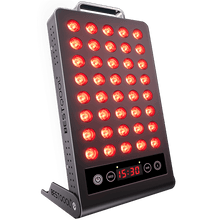
For a desk worker, an after-work or early-evening session is usually the most sensible place to consider red light therapy. It separates the session from the screen time that may be contributing to the tension and makes it part of a wind-down routine rather than another reason to remain at the desk.
A simple sequence might look like this:
- Finish work and move away from the workstation.
- Make one desk or lighting adjustment for the next day.
- Take time to change position and let the neck and shoulders settle.
- If you choose to use red light therapy, use it according to your specific device instructions.
- Notice whether your comfort changes over repeated uses alongside the workstation changes.
Do not copy treatment settings from a study or another person's routine. Photobiomodulation outcomes can depend on variables such as wavelength, dose, and frequency of use, and there is no universal home protocol for neck tension. Follow your device's eye-protection, setup, and use instructions, and check with a clinician if you take photosensitizing medication or have a light-sensitive condition; stop use if it seems to cause headache or skin irritation. If bright light near bedtime seems to affect your sleep, move the session earlier.
The useful question is not, "Did the light erase today's soreness?" It is, "Am I more comfortable over time while also improving the screen-work conditions that may be driving the tension?"
Know When Not to Self-Manage
Mild, familiar tightness after a demanding screen day is different from symptoms that may need assessment. Stop treating the issue as a routine desk-tension problem and seek clinical evaluation if symptoms are persistent, worsening, or follow an injury.
Prompt assessment is especially important for neck discomfort accompanied by numbness, tingling, arm pain, progressive weakness, severe headache, dizziness, or other neurological symptoms.
For the typical end-of-day screen worker, begin with the workstation: reduce glare, make viewing more comfortable, and change position throughout the day. If mild tension remains, red light therapy may be worth considering as a device-guided after-work adjunct---not as a replacement for the habits and environment that support a more comfortable workday.


 Small
Small

 Moderate

 Moderate

 Moderate

 Full
Full

