

Red light therapy has moved from space research and dermatology clinics into living rooms and bathrooms across the country. If you are using an at-home device, you probably care about two things more than anything else: how long should each session actually be, and how soon will you see real results. As a red light therapy wellness specialist, I have seen the same pattern again and again. People either underuse their device and give up too early, or they push far beyond recommended times and wonder why their progress stalls or their skin feels irritated.
This guide is designed to help you find that practical “sweet spot” for session duration and frequency, based on the best available evidence and on-the-ground experience with at-home panels, wraps, and LED masks. You will see what research, dermatology sources, and device manufacturers suggest for different concerns such as aging skin, acne, dark spots, scars, psoriasis and eczema, and pain. You will also learn why more time under the light is not always better, and how to adjust your routine safely over the weeks and months it usually takes to see steady improvements.
What Red Light Therapy Actually Does
Red light therapy, also known as photobiomodulation or low-level light therapy, uses specific wavelengths of visible red and near‑infrared light to nudge your cells into a healthier pattern of activity. Most therapeutic devices emit red light in roughly the 630–700 nanometer range and near‑infrared light in about the 700–900 nanometer range, though some systems extend beyond that. Unlike tanning beds, there is no ultraviolet light involved, so the treatment does not cause sunburn or increase UV‑related skin cancer risk when used correctly.
On a cellular level, the light is absorbed by chromophores, especially in the mitochondria, the structures often called the “powerhouses” of the cell. Research summarized by organizations such as the PBM Foundation and Everyday Health suggests this leads to more ATP (cellular energy), improved cell signaling, better blood flow, and changes in inflammatory pathways. Device makers and clinical reports link these changes to several benefits: quicker wound healing and post‑surgical recovery, reduced pain and inflammation in joints and muscles, improved circulation, and support for collagen and elastin production in the skin.
Red wavelengths tend to act more at the surface where they can help with fine lines, wrinkles, sun damage, and general skin tone. Near‑infrared light penetrates deeper into muscles, joints, connective tissue, and sometimes even bone, and is often used for arthritis, sports injuries, or chronic pain. Dermatology and wellness sources such as Cleveland Clinic and Verywell Health also describe uses for acne, psoriasis, eczema, hair thinning, and certain oral and dental issues. Across these areas, the theme is the same. Red light therapy is non‑invasive and drug‑free, but it works cumulatively and requires smart dosing over weeks rather than dramatic one‑time exposure.

Why Session Time Matters More Than You Think
When we talk about how long a red light therapy session should last, we are really talking about dose. In photobiomodulation research, dose is the combination of how strong the light is at the skin and how long you are under it. The strength is called irradiance and is usually measured in milliwatts per square centimeter, while dose over time is often expressed in joules per square centimeter. In simple language, a high‑powered panel close to your skin will deliver a lot of energy very quickly. A weaker device farther away may need much longer sessions to give your cells the same total dose.
Importantly, red light therapy follows what researchers describe as a biphasic dose response. This means there is a “Goldilocks zone” where the dose is just right. Very low doses do not stimulate the cells enough to trigger meaningful change. Very high doses can actually flatten or even reverse some of the beneficial effects and may cause temporary side effects such as headaches, skin warmth, or irritation. Several overuse cautions from brands and medical writers, including Infraredi, BlockBlueLight, Hypervibe, and Health.com, point to this same pattern. Too much light for too long on the same area, especially from high‑power panels, can be counterproductive.
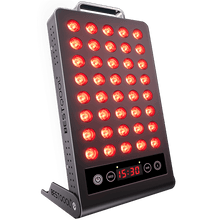
Device power varies dramatically. Some full‑body systems tested by manufacturers deliver well over 100 milliwatts per square centimeter at about 6 inches from the panel. Mid‑range or budget devices often produce closer to about 30–100 milliwatts per square centimeter at similar distances, while many LED masks use comparatively low irradiance because they sit directly on the face. Specialists who work with panels and masks use this difference all the time. A high‑output system might give you an effective skin dose in three to five minutes at a comfortable distance, while a weaker mask may require 10–20 minutes to reach an equivalent dose.
Distance from the device is another key factor. Engineers and educators in this space, such as the team behind Lumebox, have shown that moving a panel from about 6 inches to a foot or more can drop irradiance substantially. That can be very useful. For sensitive facial skin you might step back to soften the light and extend the time. For sore muscles or joints you might move closer for a stronger but shorter session. This is why manufacturer charts usually specify both distance and time, and why your personal plan should always honor both.
The bottom line is that “How long should my session be?” can never be answered in isolation. It depends on the goal, your device’s power, your distance from the light, and your sensitivity. That said, the research notes point to clear, practical ranges that most at‑home users can start from safely.

Typical Session Lengths for Common Goals
Anti‑Aging and General Skin Rejuvenation
For facial aging concerns such as fine lines, wrinkles, and loss of firmness, red light therapy aims to stimulate collagen, elastin, and even hyaluronic acid in the skin. A consumer study reported by Lumi Visage used an LED mask twice a week for about 12 minutes per session. After one to three months, participants saw meaningful drops in crow’s feet depth and improvements in skin firmness, density, and texture, and every participant reported that the at‑home mask significantly improved their overall skin quality. The benefits persisted for about a month after treatment stopped, though aging is ongoing, so many people opt for continued maintenance sessions.
Brand and clinic guidelines summarized in the research notes converge on similar timing. Infraredi and several home‑use guides suggest starting with about 5–10 minutes for the face and neck a few times per week, then building toward roughly 10–20 minutes as tolerated. For anti‑aging specifically, you often see recommendations like 10–15 minutes per session, three to five times per week, or in the case of some LED masks, 10–15 minutes two or three times per week. Devices that sit very close to the skin, such as masks, typically use lower power, while panel users often position themselves around 6–12 inches away for facial work.
Most people notice a subtle “glow” and smoother texture within several weeks if they are consistent. The deeper changes in fine lines, firmness, and sagging often land in the one to three month window reported in the Lumi Visage data. In practice, I have found that people who treat their face regularly for at least six to eight weeks, then switch to two or three sessions a week for maintenance, tend to maintain their gains without overdoing it.
Acne and Breakouts
Acne responds to light differently from simple photoaging because inflammation, oil production, and bacteria are all involved. Some protocols use red light alone, while others combine red and blue light. In one study summarized by Lumi Visage, a combination of blue and red light used for about 20 minutes twice weekly led to mean lesion count reductions of about 46 percent after four weeks and 81 percent after twelve weeks. Sessions were spaced roughly three days apart.
Other home‑use recommendations from brands such as Trophy Skin and Trophy Skin’s timing guide suggest that for mild to moderate acne, 10–15 minutes per area three to four times per week is typical when using red light or a red plus blue combination. That schedule balances enough stimulation to reduce inflammation and support repair, while leaving recovery time between sessions.
Realistically, you should expect early improvements in redness and active breakouts sometime between about two and eight weeks, with the more striking changes often closer to the two to three month mark. Because acne tends to be cyclical, red light therapy works best as a steady part of your routine, not just a temporary “rescue” treatment. However, if you have cystic acne, severe scarring, or are using prescription medications such as isotretinoin, dermatology sources like Cleveland Clinic and Health.com advise working closely with a dermatologist before adding any light device.
Dark Spots and Uneven Tone
Hyperpigmentation, such as melasma and sun‑induced dark spots, takes patience. A study described in the Lumi Visage notes used a clinic‑strength LED device once a week for about five minutes per session over twelve weeks and found a significant reduction in pigmentation. The article then translates that to realistic at‑home guidance, suggesting that consumers can often achieve similar outcomes by using a quality device two or three times per week for about 10–15 minutes per session.
Mechanistically, the red light appears to modulate signaling in melanocytes, the pigment‑producing cells, and to inhibit tyrosinase, a key enzyme involved in melanin synthesis. That means you are not bleaching the skin; instead, you are nudging pigment production toward a healthier balance. From a timing standpoint, the research points to about three months of steady use for noticeable changes in dark spots and overall tone, with some people seeing earlier shifts in brightness and clarity.
If you are treating pigmentation, it is especially important to pair red light therapy with daily sun protection and gentle skin care. Some evidence suggests that skin may be more sensitive after light‑based treatments, and dermatology experts strongly recommend broad‑spectrum sunscreen, hats, and shade whenever possible. This is not just to protect your investment in smoother tone but also to reduce long‑term UV risk.
Scars and Wound Healing
Scars are one of the most encouraging yet misunderstood areas for red light therapy. In a study summarized in the Lumi Visage article, patients were treated with red light for about three weeks and then evaluated at one, three, and six to twelve months. Improvements in scar appearance continued to evolve long after the three‑week treatment window, suggesting that red light helps kick‑start tissue remodeling that the body then continues on its own.
For at‑home use, Lumi Visage and several device manufacturers recommend using red light for about 10–15 minutes per area, two or three times a week for scars, with some improvements visible in as little as three weeks, depending on the type and age of the scar. Infraredi’s dosing guidance is similar, recommending closer distances of about 6–12 inches for wounds, mild scars, and stretch marks, for about 30 seconds to three minutes when using very high‑output devices, and somewhat longer sessions for lower‑power panels or masks.
Across brands, the message is consistent. Red light therapy for scars is not a one‑day fix, but when you combine appropriate session times with months of continued healing, you can see meaningful changes in texture, color, and thickness. The gains are more likely to last, too, because once a scar remodels, it does not “re‑age” in the same way as dynamic wrinkles or active inflammatory conditions.
Psoriasis, Eczema, and Reactive Skin
Chronic inflammatory skin conditions such as psoriasis and eczema tend to flare and settle over time. Red and near‑infrared light appear to help mainly by reducing inflammation, calming redness and itching, and supporting barrier repair. In one cited protocol for psoriasis, a combination of red and infrared light was used for about 20 minutes per session, with two sessions spaced 48 hours apart each week over four to five weeks. Long‑term follow‑up showed improvements ranging from about 60 to 100 percent in that context. Another study described improvements in eczema symptoms using red light once weekly.
The Lumi Visage summary suggests that for psoriasis and eczema, realistic at‑home schedules might look like 20 minute sessions either once a week or with at least 48 hours between sessions, with visible changes often emerging after about four to five weeks. Because these conditions are chronic and often immune‑driven, full resolution is not always possible, but flare intensity and symptom burden can be reduced.
If you have very reactive or sensitive skin, my practical advice is to be especially conservative at the start. Begin with shorter sessions, perhaps toward the 10 minute mark, once or twice a week. Watch carefully for any increase in redness or itch that lasts longer than a day. If your skin responds well, you can slowly build toward the protocols used in the research while staying in close communication with your dermatologist or allergist.
Pain, Muscle Recovery, and Joint Support
For pain and musculoskeletal issues, red and especially near‑infrared light are often applied to deeper tissues. Studies and brand guidelines summarized by Infraredi, Hypervibe, Bestqool, and others commonly recommend session times in the 10–20 minute range per body area. Hypervibe, for example, suggests about 12–15 minutes per area and notes that daily treatments are reasonable during the first one or two weeks, followed by three to five sessions per week for ongoing relief. Infraredi recommends holding high‑power panels about 6–12 inches from the target and using about two to ten minutes per area for chronic pain, muscle injuries, and joint problems, with many users reporting relief within roughly a week of daily use.
Research and clinical reports indicate that some people feel noticeable reductions in pain or muscle soreness within hours of early sessions. However, more stable, long‑term relief tends to require several weeks. Hypervibe’s timing guide, for instance, points to four to six weeks of consistent use to consolidate results for pain and deeper issues such as fat loss support. For athletes and people with heavy training loads, brands like Youlumi also suggest weaving red light sessions into pre‑ or post‑workout routines, using shorter exposures before exercise to prime tissues and longer ones afterward to support recovery, while staying within the same 10–20 minute per area window.
As with skin concerns, more is not necessarily better. Overlapping long treatments on the same area multiple times per day, especially with strong panels close to the skin, can increase warmth and irritation without extra benefit. Health.com and BlockBlueLight both highlight that exceeding manufacturer recommendations, especially going beyond about 30 minutes on one area or stacking two full sessions back to back, has been associated with burns or diminished results in some reports. A safer pattern is one well‑timed session per day per body area, adjusted based on your pain levels and the advice of your healthcare provider.
Weight Management and Body Composition Support
A few wellness brands and reviews, such as Hypervibe and Bestqool, discuss red light therapy as a supportive tool for body composition, especially when combined with calorie‑controlled eating and exercise. In the Hypervibe timing guide, adults seeking weight‑ and fat‑loss support used about 10 minutes of red light on each side of the body three or four times per week for about four to six weeks. The authors emphasize that red light is not a magic bullet. It appears to support cellular energy and circulation in fat and surrounding tissues, but meaningful changes in body composition still depend on nutrition and movement.
From a duration perspective, the important point is that the same dose principles apply. Sessions fall in familiar ranges, usually about 10–20 minutes per area, and programs run for four to eight weeks or longer depending on the goal. If you are working on weight management, you can reasonably layer a red light session onto the front or back end of your workout several times a week while watching for changes in energy, recovery, and how your body feels. Just remember that without attention to diet and activity, light alone is unlikely to make a large difference.

How Long Does Red Light Therapy Take to Work?
One of the clearest messages from the research summaries is that red light therapy begins working at the cellular level right away, but visible results usually take weeks to months. The Lumi Visage analysis of multiple studies suggests that for most skin concerns, you will start to see noticeable change after about a month, with full benefits often appearing between one and three months of regular use. Their LED mask study found progressive improvements at one, two, and three months, with gains in crow’s feet, firmness, density, and oil balance growing over time. The improvements lasted for about a month after stopping, which is encouraging but also a reminder that ongoing maintenance is important for aging skin.
For acne, the combination red and blue light study described by Lumi Visage showed significant improvements between about two and twelve weeks, with more than 80 percent reduction in lesion counts at twelve weeks. For hyperpigmentation, melasma protocols often run for twelve weeks before outcomes are assessed, with meaningful reductions emerging gradually. Scar treatments may show early changes around three weeks but continue to evolve for six to twelve months as collagen remodels.
In pain and musculoskeletal applications, some research summarized by Infraredi and Hypervibe suggests that relief can appear within the first week of daily use or even within hours of a session. However, more durable changes in mobility and function still require four to six weeks or longer. Dermatology sources like Verywell Health and Health.com also point out that for many medical uses, from chronic wounds to joint conditions, red light therapy is delivered repeatedly over months and often in clinical settings.
The realistic takeaway is this. If you are consistent with your device, you can look for early, modest improvements in radiance, pain, or soreness within the first several sessions. Most meaningful cosmetic and therapeutic results emerge between about four and twelve weeks, and chronic or deep conditions may require long‑term, on‑again, off‑again use to maintain benefits.

Designing a Safe, Effective At‑Home Routine
Start Gently and Build Gradually
Most manufacturers and clinical educators agree on one starting principle. Begin at the lower end of the recommended time and frequency, see how your body responds, and increase slowly if you feel well. Infraredi, Hypervibe, Elevate Wellness, and several at‑home guides all suggest beginner sessions of around 5–10 minutes, three or four days per week, on the areas you want to treat. Over a couple of weeks, you can lengthen sessions toward the common “Goldilocks” zone of about 10–20 minutes per area and increase to three to five sessions per week if your skin and energy feel good.
People with very sensitive skin, rosacea, or a history of photosensitivity should be even more conservative. Shorter sessions once or twice a week with careful monitoring are a safer starting place. If you notice lingering redness for more than about 24 hours, a feeling of heat or tightness that does not subside, or headaches that seem tied to your sessions, cut back time or frequency and discuss your plan with a clinician.
Choose Distance and Device Settings Thoughtfully
Because irradiance drops with distance, the space between you and the light is a powerful way to tailor your dose. Infraredi and Elevate Wellness commonly recommend placing home panels about 6–12 inches from the skin for deep tissue work, while some usage guides suggest 8–24 inches for broader, whole‑body exposures. The Lumebox analysis shows that a panel held roughly 6 inches away delivered a moderate intensity that was well suited for skin treatments, and closer distances allowed stronger stimulation for muscles and joints.
Masks sit directly on the skin, so they are designed with lower power. That is why LED mask protocols from sources such as Lumi Visage focus on time, often recommending 10–15 minutes two or three times per week, rather than moving the device closer or farther. Whichever format you use, pay attention to how you feel. If a panel feels uncomfortably hot or glaring at a given distance, step back a bit and extend the time slightly rather than forcing a more intense experience.
Adjustable intensity is a valuable feature at home. Many modern devices allow you to dial power up or down. Sensitive users can choose a lower setting and longer session, while people treating deep pain can use a higher setting with shorter exposure on the painful area, always staying within the ranges set by the manufacturer.
Integrate Red Light into Your Skin and Wellness Routine
You will get more from red light therapy if you weave it into an overall routine rather than treating it as a stand‑alone event. For facial treatments, several sources, including RAM Plastic Surgery and Health.com, recommend cleansing first so your skin is free of makeup, sunscreen, and heavy oils that could block light. After your session, you can apply supportive products such as hydrating serums with hyaluronic acid, antioxidants such as vitamin C or green tea, or peptide‑containing moisturizers. Lumi Visage notes that these ingredients may complement the collagen‑stimulating and barrier‑supportive effects of red light. Retinol and stronger actives are best used cautiously and often on alternate nights, especially if your skin is reactive.
For full‑body or pain applications, consider timing sessions for when you naturally have a few quiet minutes. Some people prefer mornings for an energizing boost, others like evening sessions to unwind after work or exercise. Health.com notes that there may even be sleep and mood benefits from well‑timed light exposure, such as evening use to support sleep quality and morning use to help with alertness and cognitive performance, though research is still early there.
Hydration matters too. Because red light acts on live tissues and can temporarily increase metabolic activity, several wellness writers and clinicians recommend staying well hydrated and using a gentle moisturizer afterward, especially if your skin tends to be dry.
When to Avoid or Modify Red Light Therapy
While red light therapy has an excellent safety record when used correctly and does not involve UV radiation, it is not appropriate for everyone. Dermatology and health sources including Cleveland Clinic, Lumi Visage, Health.com, and Elevate Wellness consistently flag a few important cautions.
If you take medications that make you photosensitive, such as certain antibiotics, isotretinoin for acne, or some psychiatric or cardiac drugs, you should consult the prescribing clinician before using light therapy. People with a history of medical conditions that cause photosensitivity, some autoimmune diseases, or a weakened immune system also warrant close medical supervision. Several sources suggest avoiding at‑home red light therapy on areas that have recently undergone cosmetic surgery or invasive skin procedures, often for around two months, unless your surgeon specifically clears it.
Red light therapy should not be applied directly over irritated, infected, freshly shaved, or badly sunburned skin until the area has calmed. Eye protection is critical when you use panels or bright devices near the face. Regular sunglasses are not enough; purpose‑designed protective goggles that block intense visible and near‑infrared light are preferred. Verywell Health and Health.com both highlight the potential risk of retinal damage if devices are used incorrectly without eye protection.
Finally, if you have a history of skin cancer, especially in the treatment area, or an inherited eye disease, you should speak with a dermatologist, oncologist, or ophthalmologist before using any light‑based therapy. Red light therapy is usually framed as an adjunct, not a replacement, for evidence‑based medical care.

Pros, Cons, and Realistic Expectations
The appeal of red light therapy is easy to understand. It is non‑invasive, painless, and does not require downtime. NASA‑linked research and dermatology literature suggest benefits across wound healing, pain management, and skin rejuvenation. At‑home devices make what used to be clinic‑only technology available in your bathroom or bedroom. When the dose is appropriate, side effects are rare and usually mild, such as temporary redness or a feeling of warmth.
There are trade‑offs, though. High‑quality devices represent an investment, especially larger panels that deliver sufficient power density. Insurance rarely covers cosmetic or wellness‑oriented treatments, so costs are out of pocket. The time commitment is real. Effective protocols often involve ten to twenty minutes per area, several days a week, for at least a month or two. Evidence across many indications is promising but still evolving, with studies often small or using different parameters, and long‑term safety data beyond a couple of years are limited.
Perhaps the most important mindset shift is to view red light therapy as one supportive tool, not a cure‑all. For anti‑aging, you still need sun protection and healthy lifestyle habits. For acne, you often need good skincare and sometimes medication. For pain or weight management, movement, physical therapy, and nutrition remain foundational. When you layer red light onto those basics with a sensible, sustainable schedule, you are much more likely to appreciate its strengths without falling into disappointment or overuse.

Example Session Planning at a Glance
The following table summarizes some of the timing and duration ranges reported in the research notes from Lumi Visage and various device manufacturers. Use it as a starting point, not a rigid prescription, and always align it with your specific device instructions and healthcare guidance.
|
Goal or condition |
Typical session per area |
Typical weekly frequency |
Approximate time to visible results |
|
Aging skin, fine lines |
About 10–15 minutes for the face |
Often twice a week with an LED mask, or 3–5 times a week with panels |
Around 1–3 months |
|
Acne |
About 20 minutes |
Commonly twice a week in red plus blue protocols |
Around 2–12 weeks |
|
Dark spots, hyperpigmentation |
About 10–15 minutes |
About 2–3 times per week |
Around 3 months |
|
Scars and stretch marks |
About 10–15 minutes |
About 2–3 times per week |
From about 3 weeks, evolving over months |
|
Psoriasis and eczema |
About 20 minutes |
Once a week or twice weekly with 48 hours between sessions |
Around 4–5 weeks |
|
Pain, muscles, joints |
About 10–20 minutes per area |
Often daily at first, then about 3–5 times per week |
Some relief within days; more stable change after about 4–6 weeks |
These ranges assume you are using a reputable device at recommended distances, usually somewhere between about 6 and 24 inches for panels and directly on the skin for masks. If your device is much stronger or weaker than typical consumer units, your manufacturer may provide shorter or longer times that still deliver a similar dose.
A Brief FAQ on Session Duration
How long should a typical at‑home red light therapy session last?
Most home‑use guidance summarized from sources such as Infraredi, Hypervibe, Trophy Skin, Health.com, and several device manuals converges on about 10–20 minutes per treatment area as a practical “sweet spot.” Beginners often start with about 5–10 minutes to see how their skin and body respond, then build toward this range if they feel well. Very high‑power devices or face‑only masks may use shorter times, while weaker devices might need the full 20 minutes.
How many times a week should I use red light therapy?
For cosmetic goals such as anti‑aging and general skin health, three to five sessions per week are common recommendations across multiple brand and health sources, with LED masks sometimes used two or three times a week. For pain relief and wound healing, several guidelines, including BlockBlueLight, Hypervibe, and Trophy Skin, allow daily use at first, tapering to about three to five sessions per week for maintenance. Always check your device’s schedule, and if you are unsure, start on the lower end.
Is it safe to do red light therapy every day?
Daily use can be safe for many people, especially for short sessions in the 10–20 minute range on a given area, and is often recommended initially for acute pain. The main risks come from exceeding manufacturer limits, stacking multiple long sessions on the same area, or ignoring early signs of irritation. Several expert and brand sources stress that more is not always better because of the biphasic dose response. A single, well‑planned session per area most days is typically more effective than doubling up.
How do I know if I am overdoing it?
Signs that your dose may be too high include redness that lingers more than a few hours, a sense of heat, tightness, or dryness in the treated area that does not settle, headaches or feeling “wired” after sessions, or worsening of symptoms instead of gradual relief. Reports compiled by Health.com and Lumi Visage also mention rare cases of burns or blisters when people used devices much longer than recommended, such as falling asleep with the light on. If any of these occur, reduce your session time, increase the distance, skip a few days, and talk with a healthcare professional.
Used wisely, red light therapy can be a powerful ally for skin health, comfort, and recovery at home. When you respect the “just right” dosing window, honor your device’s guidelines, and commit to consistent use over weeks rather than chasing overnight miracles, you give your cells a genuine opportunity to respond. My goal as your red light therapy wellness advocate is to help you design a routine that fits your life, feels good to your body, and supports your long‑term health rather than adding one more source of stress.
References
- https://my.clevelandclinic.org/health/treatments/22146-led-light-therapy
- https://www.elevatewellnessak.com/red-light
- https://www.health.com/how-often-should-you-do-red-light-therapy-11735044
- https://www.verywellhealth.com/red-light-therapy-5217767
- https://www.jacuzzi.com/en-us/How-Often-Should-You-Do-Red-Light-Therapy-for-Optimal-Results.html
- https://www.lipotherapeia.com/the-peach-factor-blog/is-10-minutes-of-red-light-therapy-enough
- https://ramplasticsurgery.com/how-often-should-you-do-red-light-therapy/
- https://thecuree.com/how-often-should-you-do-red-light-therapy/
- https://www.bestqool.com/blogs/news/red-light-therapy-session-duration?srsltid=AfmBOoouSzzpWuAG7zSksaj--putIjGzcBn37lLXHq0To6yWHHaGo-v_
- https://www.blockbluelight.com/blogs/news/how-often-can-you-do-red-light-therapy?srsltid=AfmBOooDW0pXteTT9cOXkSqtiGNQ5ilWUbxyjRhvONRkPGCq6kGb-M0F


 Small
Small

 Moderate

 Moderate

 Moderate

 Full
Full

