
For red light therapy for skin anti-aging, two to three sessions per week is a study-informed starting range, provided your device’s directions support it. There is no universal schedule for every mask, panel, or handheld device, so follow the label when it gives a more specific or more conservative frequency. The facial trial behind that range used 21-minute sessions, but that duration applies to the study protocol, not to home devices generally.

Use the selector below to choose a realistic schedule for goals such as improving the appearance of fine lines, texture, or complexion. Then keep the labeled session length and setup consistent as you build a routine.
How Many Days a Week Should You Use Red Light Therapy for Skin Anti-Aging?
Start with the schedule supplied with your device. When that schedule is compatible with the facial research, two or three sessions per week are the most supportable study-informed range, not a universal prescription. Dermatology guidance also emphasizes following the directions supplied with an at-home device because schedules can vary.
A randomized facial-rejuvenation trial compared two or three weekly sessions and found positive outcomes under that specific protocol. Participants used a red LED mask for 21 minutes per session, so the result supports a frequency comparison, not copying the same duration, dose, or distance for another product.

| Reader situation | Conditional weekly frequency and session assumption | When to use or reconsider |
|---|---|---|
| New user or irritation-prone skin | Use the most conservative schedule your device labeling allows. Do not assume daily use. | Begin with the labeled session length and setup. Keep the frequency conservative while you learn how your skin responds. |
| Typical facial anti-aging use with compatible labeling | Two or three sessions per week may be a practical study-informed range. The facial trial used 21 minutes per session, but your device’s duration controls. | Choose this range only when it does not conflict with more specific or more conservative directions. |
| Established user considering more sessions | Keep the current labeled schedule unless a clear, device-supported reason justifies a change. | Review consistency, positioning, coverage, and tolerance before adding a day. More sessions are not established here as a faster route to better anti-aging results. |
If you are separating weekly frequency from session length, use this guide to understand red light therapy duration without treating a general timing discussion as a replacement for your device instructions.
What Changes How Often You Should Use It?
Your device’s intended exposure and directions set the boundary. Its format and your tolerance determine how practical that schedule is. Compare the actual setup rather than assuming that a mask, panel, and handheld device deliver equivalent exposure.
Compare the Device Setup, Not Just the Format
Consumer systems can differ in wavelength, delivered energy, exposure duration, coverage, and positioning, so a schedule from one device may not transfer to another. Consumer red-light systems can have different device parameters, which means the format alone cannot determine your weekly frequency.
| Format | Setup variable affecting planning | Scheduling implication |
|---|---|---|
| Mask | Contact or fixed positioning, facial coverage, built-in timer, and labeled session length | Use the mask’s timer and directions. Do not apply a panel or handheld schedule to it. |
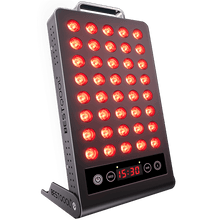
| Panel | Distance, coverage area, positioning, timer, and exposure duration | A panel may require a different setup from a mask. Keep its labeled distance and session length rather than assuming they are equivalent. |
| Handheld device | Smaller treatment area, movement or positioning, and session instructions | Follow the device’s treatment sequence and duration. A smaller coverage area does not automatically justify extra days. |
For readers comparing facial options, this overview of red-only facial panels can help frame the format question. It should not override the schedule or setup specified for a particular device.
Adjust for Tolerance and Starting Experience
Use a conservative, compatible schedule when you are new to red light therapy or have irritation-prone skin. Change one variable at a time so you can tell whether a response relates to frequency, session length, positioning, or another part of the routine.
- Start with the most conservative applicable labeled schedule.
- Keep the device’s session length and setup stable while observing tolerance.
- If use has been inconsistent or results seem slow, correct the routine before adding sessions.
- Never add exposure to compensate for a missed session or a disappointing early result.
A more ambitious goal, such as reducing the appearance of fine lines, does not automatically justify more weekly sessions. Changes in texture, complexion, or overall appearance remain device- and person-dependent.
How Should You Place Sessions on Your Weekly Calendar?
Turn the selected frequency into repeatable days that fit your routine, then preserve the device’s labeled exposure each time. The simplest approach is to use the timer and setup instructions as written, record what you did, and resume normally after a missed session.
- Verify the labeled schedule. Write down the device’s recommended days per week, session length, positioning or distance, and preparation steps. The facial study’s 21-minute session protocol is research context only, not a default duration for your device.
- Choose repeatable days. For a compatible two-session schedule, select two days you can maintain. For a compatible three-session schedule, select three days that leave enough room in your routine to complete the labeled setup without rushing.
- Follow the labeled exposure. Keep the timer, distance or contact position, coverage, and any preparation or eye-protection instructions unchanged. Weekly frequency and session duration are separate decisions.
- Record sessions and responses. Note the date, device setup, session length, and how your skin looked or felt afterward. If you miss a day, resume the planned schedule instead of doubling the next session or stacking back-to-back exposure.
A consistent at-home red light routine is easier to evaluate than an irregular pattern with changing session lengths. The link offers practical routine context, but your device’s own directions remain the controlling source for exposure.
When Should You Keep, Change, or Pause the Routine?
Keep the selected schedule when you are following it consistently and your skin is tolerating it. If results seem limited, compare your actual adherence and setup with the intended routine before changing frequency. Pause rather than escalate when your skin’s response is concerning.
A controlled skin-rejuvenation study used a twice-weekly skin-rejuvenation protocol and reported changes in complexion, skin feeling, roughness, and collagen density under that study’s specific device and course. This supports judging a sustained, consistent routine rather than deciding after only a few sessions, but it does not establish one universal evaluation timeline or transfer its dose and treatment count to another device.
Signs to Pause or Recheck the Schedule
Pause use and review the device directions if you notice new or worsening skin changes after sessions. Persistent, severe, or unusual reactions call for appropriate professional guidance rather than self-directed increases in frequency.
- New or worsening irritation
- Significant discomfort
- Swelling or another concerning change
Signs It May Be Too Early to Judge
A short or inconsistent routine cannot show whether frequency is the problem. First compare your actual dates, session length, positioning, coverage, and preparation with the intended schedule. Then assess your goals separately. Fine lines, texture, and overall appearance may not change in the same way or at the same pace, and visible improvements are not guaranteed.
If the routine is consistent and tolerated but progress remains limited, change only one supported variable at a time. Study results are not interchangeable because researchers use different devices and protocols, so slow results do not by themselves justify adding sessions. For practical session timing, use the timing guidance above while keeping the device label in charge.
The practical answer for red light therapy for skin anti-aging is to follow your device’s labeled schedule, using two to three weekly sessions only as a compatible, facial, study-informed range. Choose repeatable days, keep the labeled session setup, and track tolerance and consistency before making a change. If your skin develops a persistent, severe, or unusual reaction, pause and seek appropriate professional advice instead of increasing exposure.
FAQs
The answers below explain how device directions, consistency, and tolerance shape a weekly red-light routine.
How many times a week should I use red light therapy on my face?
Two or three times per week is a study-informed facial range when your device’s directions support it. If the label specifies a different or more conservative schedule, use that schedule instead. The facial trial’s frequency and 21-minute session protocol do not automatically apply to every home device.
Is it better to use red light therapy in the morning or at night?
Neither morning nor night is established here as universally better for anti-aging. Choose the time you can repeat consistently while following the device’s preparation, positioning, timer, and eye-protection directions. If evening skincare makes you more likely to skip sessions, a repeatable morning slot may be the better practical choice.
Can I use red light therapy every day for wrinkles?
Daily use is not a universal rule for wrinkles or other facial goals. Use it every day only when the specific device labeling supports that frequency and your skin tolerates the routine. Otherwise, stay with the compatible labeled schedule rather than adding days to chase faster results.
What should I do if red light therapy irritates my skin?
Pause the routine and review the device directions instead of increasing exposure or pushing through the reaction. Seek appropriate professional advice when the reaction persists, is severe, or seems unusual, or when you are unsure whether the device is suitable for you.


 Small
Small

 Moderate

 Moderate

 Moderate

 Full
Full

