

Why UV Confuses So Many Red Light Therapy Users
If you are exploring red light therapy for skin rejuvenation, joint pain, or recovery, it is very natural to worry about ultraviolet light. Many people I work with ask some version of the same question: “Is this just like a tanning bed?” or “Am I secretly getting UV exposure that could cause cancer?”
Those concerns are understandable. We are all told to protect our skin from the sun, tanning booths, and other UV sources, and at the same time we see red light panels and “light beds” marketed for beauty and wellness. The overlap in language can be confusing.
The encouraging news is that the best evidence from major medical centers, along with careful device testing, shows that properly designed red light therapy (photobiomodulation) does not rely on ultraviolet (UV) wavelengths. In fact, researchers and clinicians go out of their way to avoid UV when they are designing red light protocols.
In this article, speaking as a red light therapy wellness specialist and health advocate, I will walk you through what red light therapy actually is, how UV light differs from therapeutic red and near-infrared light, what leading hospitals say about safety, and how to choose at-home devices that minimize UV risk while maximizing potential benefits.

What Red Light Therapy Actually Is
Red light therapy is a form of photobiomodulation, sometimes also called low-level light therapy or low-level laser therapy. It uses low-intensity red and near-infrared wavelengths, typically in the neighborhood of 600 to 1,000 nanometers, delivered by LEDs or low-power lasers.
Multiple sources in your research notes describe the same basic mechanism. Brown Health, Cleveland Clinic, MD Anderson Cancer Center, and UCLA Health all note that these wavelengths are absorbed primarily in the mitochondria, the “powerhouses” of your cells, and in other signaling molecules. By boosting mitochondrial function and modulating cell signaling, red and near-infrared light can:
- Increase production of ATP, the energy currency cells use to repair and regenerate.
- Stimulate fibroblasts in the skin to make more collagen and elastin, which can firm and smooth wrinkles.
- Improve local circulation, bringing more oxygen and nutrients to tissues.
- Modulate inflammatory pathways, often reducing pro-inflammatory mediators and supporting anti-inflammatory ones.
Cleveland Clinic, WebMD, Baylor Scott & White, West Dermatology, and others describe a similar range of applications. In dermatology, red light is used or studied for fine lines and wrinkles, acne and acne scarring, rosacea, sun damage, stretch marks, and some types of hair thinning or hair loss. In pain and rehabilitation settings, MD Anderson, University Hospitals, and several musculoskeletal reviews report that photobiomodulation is being used or explored for joint pain, tendonitis, knee osteoarthritis, fibromyalgia, post-surgical recovery, and oral mucositis from cancer treatments.
At the same time, these institutions are very clear about the limits of our knowledge. Brown Health and Cleveland Clinic emphasize that many studies are small and short, with varying devices and protocols, so the overall evidence is still developing. Stanford dermatologists go further, noting that while there is solid support for some skin and hair uses, claims that red light therapy improves athletic performance, sleep, erectile function, chronic pain, or dementia are not yet backed by robust, validated clinical data. UCLA Health and MD Anderson describe red light therapy for pain or cognitive conditions as promising but still investigational.
What matters for the UV discussion is that all of these protocols, whether for skin, pain, or recovery, are built on red and near-infrared wavelengths, not ultraviolet.
UV Light 101: How It Differs From Therapeutic Red and Near‑Infrared
Ultraviolet light sits on the higher-energy side of the spectrum, with wavelengths shorter than visible light. You cannot see UV, but your skin certainly “feels” it: sunburn, tanning, and much of what we call photo-aging are driven by UV exposure.
Researchers at the University of Arizona’s Comprehensive Center for Pain and Addiction, who study phototherapy for chronic pain, stress that light itself must be treated like a drug. They point out that ultraviolet light at certain intensities and wavelengths can damage DNA and cause cancer, which is why UV-based treatments are prescribed and dosed very carefully rather than used casually at home. This is the same reason dermatologists and public health organizations warn us about overexposure to sunlight and tanning booths.
Red and near-infrared light are fundamentally different. Brown Health, UCLA Health, and MD Anderson describe photobiomodulation as using longer, non-ionizing wavelengths, typically around 600 to 1,000 nanometers. WebMD and Baylor Scott & White highlight that red LED devices do not emit ultraviolet radiation, do not tan or burn skin the way tanning booths do, and do not share UV’s DNA-damaging mechanism.
Where UV’s main impact is to excite and break chemical bonds in DNA and proteins, red and near-infrared light primarily influence mitochondrial enzymes such as cytochrome c oxidase and signaling pathways that regulate inflammation, cell growth, and repair. That difference in energy level and biological target is exactly why clinicians are comfortable delivering quite a bit of red light in a controlled way, but are very cautious with ultraviolet.
If you mix meaningful amounts of UV into what is supposed to be a red light therapy device, you change the intervention. You are no longer simply doing photobiomodulation; you are adding an exposure that behaves more like unfiltered sun or a tanning booth, with its own risk profile.
Does Red Light Therapy Emit UV?
This is where the evidence is reassuring. Across multiple independent sources, medical red light therapy is defined by what it does not include: ultraviolet.
Cleveland Clinic describes red light therapy as noninvasive, non-toxic, and specifically notes that it does not use cancer-causing ultraviolet light when properly delivered. Baylor Scott & White echoes that red light penetrates the skin without the DNA damage risks of UV. WebMD explicitly states that red LED panels do not emit UV radiation and therefore do not tan or burn the skin like tanning booths.
UCLA Health adds a broader safety perspective. After reviewing studies across skin aging, hair loss, acne, cognitive function, and pain, they conclude that low-level red and near-infrared devices appear to provide short-term benefits for some people with few reported adverse effects and no evidence of causing cancer, in contrast to ultraviolet. They also emphasize that the ideal dose and long-term effects still are not fully defined.
Laboratory testing of devices supports these clinical impressions. A prospective, randomized trial of red and polychromatic photobiomodulation for facial rejuvenation, published in 2012, carefully measured ultraviolet emissions. The devices in that study used either a red-focused band around 611 to 650 nanometers or a broader spectrum from 570 to 850 nanometers. Investigators reported that the devices emitted almost no erythemogenic UV radiation: the minimal erythema dose was not reached even after several hours of operation. In other words, UV output was so low that it did not produce the kind of redness associated with UV exposure.
Across hospitals and clinics, the wavelengths they report for red light therapy cluster consistently in the visible red and near-infrared ranges. MD Anderson mentions 630 to 700 nanometers in their pain and aesthetic devices. Brown Health and UCLA Health describe photobiomodulation as using approximately 600 to 1,000 nanometers. None of these protocols depend on ultraviolet wavelengths.
Taken together, this means that if you are using a reputable red light therapy device whose specifications list red and near-infrared wavelengths and that has been designed for medical or cosmetic use, any ultraviolet emission should be negligible from a clinical standpoint. The therapeutic effects being studied and documented are due to red and near-infrared light, not hidden UV.

When UV Is Used Intentionally In Medical Phototherapy
It is important to separate red light therapy from other forms of phototherapy that may use ultraviolet light under tightly controlled conditions.
Pain specialist Dr. Hamid Ibrahim at the University of Arizona defines phototherapy broadly as using different light intensities and colors to change biological functions. He emphasizes that light, including ultraviolet, must be prescribed, dosed, and monitored like a medication. In his own research, he focuses on green light to reduce pain, but he uses UV as a clear example of how light can cause harm if misapplied.
There are several established medical uses of light that fall outside the red light therapy category. Bright white light boxes are used to manage seasonal affective disorder. Blue light is used in newborns with jaundice to help break down excess bilirubin through the skin. Dermatologists employ various wavelengths to treat acne and other skin conditions, sometimes in combinations or with topical medications.
Cancer-related photodynamic therapy is another instructive example. Stanford dermatology experts describe protocols where a photosensitizing drug is applied to precancerous or very thin skin cancers and then activated by specific red wavelengths. In this case, the red light helps trigger the drug to kill abnormal cells. Ultraviolet is not the active therapeutic ingredient, and even red light is carefully timed and dosed.
The common thread is that when UV is used therapeutically, it is under medical supervision with eye protection, limited exposure times, and a clear, evidence-based reason. That is very different from the role of UV in consumer red light panels, where ultraviolet is neither necessary nor desirable.
Safety: What Leading Medical Centers Say About UV And Red Light
For most people, the key questions are simple: “Is this safe for my skin and eyes?” and “Is there any cancer risk?”
Cleveland Clinic and WebMD both emphasize that short-term, properly used red light therapy appears generally safe and does not use ultraviolet radiation. They describe it as noninvasive and non-toxic, and they note that unwanted effects tend to be mild when they occur, such as temporary redness, warmth, or irritation. Both organizations stress the importance of eye protection, especially for facial treatments, because very bright light of any wavelength can strain or injure the eyes if used carelessly.
UCLA Health goes a step further, reviewing multiple studies and concluding that red light therapy has significant short-term benefits in several areas, but that more research is needed to define ideal dosing and long-term effects. They point out that there is no evidence red light causes cancer, unlike UV, yet they advise caution and medical guidance for people with darker skin tones, who may be more prone to hyperpigmentation if treatments are overused or misused.
Stanford dermatologists provide an important counterbalance to marketing hype. They acknowledge convincing evidence that red light can stimulate hair growth and modestly improve wrinkles and skin texture, but they also underline that claims around broad systemic benefits, including many pain and performance claims, are not supported by robust data. Their message is that red light therapy is a real biologic tool, not a panacea.
Meanwhile, the University of Arizona group underlines why ultraviolet is taken so seriously in these discussions. In their pain research, they highlight UV as an example of a light type that can cause DNA damage and cancer if delivered at certain doses, reinforcing the idea that clinicians intentionally avoid UV when designing red light protocols.
In summary, the consensus from major medical centers is that UV has no therapeutic role in standard red light therapy devices. Instead, the safety profile that makes red light attractive depends on its non-UV nature, reasonable dosing, and appropriate eye protection.
UV Versus Red Light Therapy At A Glance
The contrast between ultraviolet-focused treatments and red or near-infrared photobiomodulation becomes clearer when you compare them side by side.
Feature |
Ultraviolet-Focused Therapy |
Red / Near-Infrared Photobiomodulation |
Typical purpose |
Treat specific skin diseases or precancers under dermatologist supervision; tanning booths aim for cosmetic tanning |
Support skin rejuvenation, wound healing, joint and muscle pain, and hair health; sometimes studied for cognitive and pain conditions |
Wavelength range |
Shorter than visible light; higher-energy ultraviolet bands |
Visible red to near-infrared, roughly 600–1,000 nanometers, as described by Brown Health, UCLA Health, and MD Anderson |
Main biological effect |
DNA and protein damage at high doses; can increase cancer risk, so dosing is tightly controlled |
Mitochondrial stimulation, nitric oxide modulation, and cell signaling changes that may boost repair and reduce inflammation |
Skin response |
Sunburn, tanning, and increased photo-aging if overused |
No tanning; typically mild warmth and subtle redness at most when properly dosed |
Cancer risk |
Known to increase risk with chronic, unprotected exposure, as highlighted by University of Arizona pain researchers |
No evidence of increased cancer risk reported by UCLA Health and Cleveland Clinic when UV is absent |
Use at home |
UV for therapy is rarely recommended without medical supervision |
Widely available as at-home panels, masks, and wands; still requires eye protection and adherence to directions |
This comparison captures the core point: what makes standard red light therapy appealing is precisely that it removes ultraviolet from the equation.

How To Choose A Device With Minimal UV Risk
When I help someone design an at-home routine, I start from a simple principle: for red light therapy, you want targeted red and near-infrared wavelengths and essentially no ultraviolet.
One of the most useful tools you have is the device’s technical specifications. Medical centers and research trials describe their devices by wavelength and power. For example, MD Anderson mentions devices in the 630 to 700 nanometer range for skin and pain uses. Brown Health and UCLA Health describe photobiomodulation using light in the 600 to 1,000 nanometer band. The 2012 skin rejuvenation study standardized doses around red wavelengths in the low 600s for facial treatment. Pain and performance studies in the sports literature often use red wavelengths around 660 nanometers and near-infrared bands around 810 to 850 nanometers.
When you look at a consumer device, you should see similar information. If a manufacturer clearly lists red and near-infrared wavelengths and states that the device is UV-free or UV-filtered, that aligns with how clinical devices are configured. If instead you see vague phrases like “full spectrum” without numbers, or heavy emphasis on tanning and “sun-like” effects, you have reason to be cautious, because there may be UV output that is neither necessary nor well controlled.
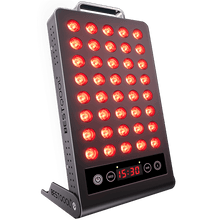
Another practical consideration is matching the device to your goals. UCLA Health and WebMD emphasize that masks and smaller panels are usually designed for facial skin, caps and helmets for scalp and hair, and larger wall panels or beds for whole-body exposure. They recommend choosing devices that are cleared by the US Food and Drug Administration for specific consumer uses when possible, and being wary of products that claim to cure a wide range of unrelated conditions without medical backing.
Cost is also part of the picture. Baylor Scott & White notes that home devices often range from about $100 to $1,000 depending on size and power. University Hospitals reports that handheld devices typically start just under $100, while more advanced systems can be several hundred to several thousand dollars. WebMD points out that in-office treatments may cost around $80 or more per session, and those devices are usually more powerful and more tightly controlled than at-home tools. None of these higher price tags are about adding ultraviolet; they are paying for better engineering, quality control, and consistency.
Whatever device you choose, it is essential to follow directions. Across the literature, effective protocols almost always use short sessions, often around 10 to 20 minutes per area, several times per week, for weeks or months. UCLA Health notes that benefits tend to be gradual and require repeated use, and that pain often returns when therapy stops, suggesting that ongoing maintenance may be necessary. Turning the device up to maximum intensity, stacking multiple daily sessions, or combining it with UV tanning is not supported by evidence and may increase risk without improving results.

Pros And Cons Of UV‑Free Red Light Devices
Potential Benefits
When devices deliberately avoid ultraviolet and deliver controlled red and near-infrared light, you gain access to a range of potential benefits documented in clinical and laboratory research.
For skin, the 2012 randomized trial of red and polychromatic photobiomodulation for facial rejuvenation found statistically significant improvements in self-rated skin complexion and feel, reductions in skin roughness, and increases in collagen density on ultrasound imaging. Blinded reviewers also saw visible wrinkle improvements. Because the devices were non-ablative and emitted almost no erythemogenic UV, participants avoided the downtime and higher risk profile associated with ablative lasers or more aggressive procedures. Dermatology and health systems including Cleveland Clinic, West Dermatology, and Baylor Scott & White describe similar patterns: with consistent use, many patients see modest smoothing of fine lines, better texture, more even tone, and improvements in certain scars.
Hair is another area with encouraging evidence. Stanford dermatologists trace a long history, dating back to the 1960s, of red light unexpectedly stimulating hair growth in laboratory animals. Subsequent human studies and real-world use of caps and combs that deliver red wavelengths to the scalp show increased hair thickness and density in hereditary or hormonal hair loss while treatment continues. However, they emphasize that red light does not revive completely inactive follicles in fully bald areas and that gains tend to fade once treatments stop.
In musculoskeletal health and sports performance, reviews of photobiomodulation in muscle tissue report that red and near-infrared light can, in some studies, reduce markers of muscle damage and inflammation and improve performance metrics such as repetitions to fatigue or time to exhaustion. A comprehensive review of low-intensity laser and LED therapy for common musculoskeletal pain conditions found meaningful pain reduction and improved function in several trials, especially in knee osteoarthritis and post–hip replacement pain, when recommended dosing ranges were used. At the same time, other trials in the same review showed no benefit when doses or parameters were suboptimal, highlighting how sensitive outcomes are to protocol design.
For chronic pain conditions such as fibromyalgia, evidence again is mixed but noteworthy. A large clinical trial using multi-wavelength photobiomodulation over tender points in women with fibromyalgia documented substantial reductions in pain and tender point counts, especially when combined with exercise, while smaller trials have found little difference from placebo. That pattern—promising but inconsistent—is why experts position red light therapy as a supportive option within a comprehensive pain and rehabilitation plan rather than a stand-alone cure.
Limitations And Unknowns
The most important limitation is the quality and consistency of the evidence. Cleveland Clinic and Brown Health both stress that many published red light therapy studies involve small sample sizes, short follow-up, and variable device settings. Stanford dermatologists underline that for several heavily marketed indications, including sports performance, sleep, sexual function, chronic pain, and dementia, the body of data is not yet robust enough to justify strong claims, even though early signals are interesting.
Another limitation is that red light improves biology but does not change mechanical problems. University Hospitals is very clear that red light therapy should not be expected to heal structural issues such as significant ligament tears or advanced osteoarthritis. In those conditions, mechanical repair, surgery, or joint replacement may be necessary, and red light therapy can at best help manage inflammation and discomfort around the underlying problem.
A third limitation is the lack of long-term safety data. UCLA Health and MD Anderson both note that while there is no evidence that red light without UV increases cancer risk, and short-term adverse effects are rare, long-term, high-frequency use over many years has not been studied comprehensively. They recommend sensible precautions, including eye protection, adherence to dosing guidelines, and consultation with qualified clinicians for people with complex medical histories.
Finally, the absence of ultraviolet is not a magic shield. Red and near-infrared devices can still cause eye strain or injury if you stare directly into them, and they can cause skin irritation or pigment shifts if overused, particularly in individuals with darker or more reactive skin types. UV-free does not mean consequence-free.
Special Considerations For Sensitive Groups
Some people need to be extra cautious with any form of light therapy, even when UV is not involved.
Brown Health and WebMD highlight important precautions for individuals with known photosensitive conditions, seizure disorders, or a history of skin cancer, as well as for those taking medications that increase sensitivity to light. For these individuals, even red and near-infrared wavelengths might trigger unwanted reactions, and any use should be supervised by a medical professional.
People living with or recovering from cancer deserve particular attention. MD Anderson integrates low-level red light therapy into care for some patients, for example to reduce the severity of oral mucositis caused by cancer treatments, but they regard its broader role in pain management as investigational. They individualize protocols and always use eye protection. If you have a current or past cancer diagnosis, self-prescribing intensive light therapy over tumor sites or lymph node regions is not advisable without direct input from your oncology and pain teams.
Pregnancy is another area where data are limited. WebMD notes that available information from several hundred pregnant women exposed to certain laser procedures has not shown harm to mothers or fetuses, but research remains sparse. Most clinicians take a precautionary approach. If you are pregnant or trying to conceive, discuss red light therapy with your obstetric provider before starting, and avoid devices that include ultraviolet output.
For children and adolescents, the absence of long-term safety data argues for a conservative approach. Red light therapy may be reasonable when there is a clear medical indication and a specialist involved, but casual cosmetic or performance use in younger people is difficult to justify at this stage.

FAQ: Common Questions About UV And Red Light Therapy
Can red light therapy give me a tan or help with vitamin D?
Red light therapy panels and masks are not designed to tan your skin or boost vitamin D production because they do not emit ultraviolet wavelengths. WebMD specifically notes that red LED devices do not produce UV radiation and therefore do not tan or burn the skin like tanning booths. If you notice tanning, you are either dealing with a device that is emitting UV or with abnormal pigment changes that should be evaluated by a dermatologist.
Is a device that combines UV and red light more effective?
There is no convincing evidence that adding ultraviolet to red light therapy improves outcomes for skin rejuvenation, joint pain, or muscle recovery. In the 2012 skin rejuvenation trial, broader-spectrum light that included a wide band of visible wavelengths did not outperform red-only treatments, and both were engineered to emit almost no erythemogenic UV. Major health systems highlight red and near-infrared light specifically because they can modulate biology without UV’s DNA damage. Until well-controlled clinical trials prove that mixed UV–red devices are safer and more effective for specific, doctor-supervised indications, it is wise to avoid ultraviolet in at-home devices.
How can I tell whether my current device emits UV?
Start with the printed specifications or product manual. Look for stated wavelengths in nanometers. If you see red and near-infrared numbers such as 630, 660, 810, or 850, and the manufacturer states that the device is UV-free or UV-filtered, you are likely in the photobiomodulation range. If the documentation is vague, emphasizes “full-spectrum” output, or leans heavily on tanning or bronzing language, that is a sign that ultraviolet may be involved. In that case, it is reasonable to contact the manufacturer with specific questions and, if you are still unsure, to ask a dermatologist or other knowledgeable clinician to review the device before you continue using it.
If red light is safer than UV, can I use my device as much as I want?
The absence of UV does not mean unlimited use is safe or helpful. Clinical studies and expert recommendations almost always use defined doses and schedules, often involving brief sessions several times per week. UCLA Health emphasizes that the ideal dosing schedule is still unknown, and University of Arizona pain researchers remind us that light should be prescribed and dosed like a medication. Cleveland Clinic and MD Anderson advise following manufacturer instructions, protecting your eyes, monitoring your skin, and working with a healthcare professional if you are using red light therapy for chronic pain, complex skin disease, or in combination with other treatments.
Red light therapy’s promise lies in its ability to harness non-UV wavelengths to nudge your cells toward repair, not in exposing you to ultraviolet. If you choose UV-free devices with clearly stated red and near-infrared wavelengths, use them consistently but not excessively, and keep your dermatologist or other trusted clinician involved in your plan, you can explore at-home red light therapy with both curiosity and confidence while respecting the very real lessons we have learned about UV.
References
- https://healthsciences.arizona.edu/news/stories/exploring-phototherapy-new-option-manage-chronic-pain
- https://pmc.ncbi.nlm.nih.gov/articles/PMC3926176/
- https://med.stanford.edu/news/insights/2025/02/red-light-therapy-skin-hair-medical-clinics.html
- https://www.brownhealth.org/be-well/red-light-therapy-benefits-safety-and-things-know
- https://www.mdanderson.org/cancerwise/what-is-red-light-therapy.h00-159701490.html
- https://my.clevelandclinic.org/health/articles/22114-red-light-therapy
- https://www.gundersenhealth.org/health-wellness/aging-well/exploring-the-benefits-of-red-light-therapy
- https://www.uclahealth.org/news/article/5-health-benefits-red-light-therapy
- https://www.aad.org/public/cosmetic/safety/red-light-therapy
- https://www.uhhospitals.org/blog/articles/2025/06/what-you-should-know-about-red-light-therapy


 Small
Small

 Moderate

 Moderate

 Moderate

 Full
Full

