

Red light is generally better for surface-level skin goals, while near-infrared light is better suited to muscles, joints, and deeper recovery. If your device combines both wavelengths, using both is often practical—provided you follow its dosing instructions.
Waking up with a stiff back, tired-looking skin, or legs that still feel heavy from yesterday’s workout can make choosing the right light setting surprisingly confusing. A consistent morning session matched to your goal can support skin care or physical recovery without unnecessarily extending treatment time. The key is to choose the appropriate wavelength, use it safely, and distinguish photobiomodulation from bright-light treatment for your body clock.
Choose the Light Based on Your Goal
The time of day does not determine whether red or near-infrared light is better. Your treatment target matters more.
Red light generally uses wavelengths around 630–660 nanometers and is absorbed primarily in the skin’s superficial layers. Near-infrared light, commonly called NIR, often uses wavelengths around 830–850 nanometers in home photobiomodulation devices and may reach deeper tissues. This practical difference makes red light more relevant to skin tone, texture, collagen support, and fine lines, while near-infrared light penetrates more deeply and may be more useful for connective tissue, muscles, circulation, and inflammation-related recovery.
A red-only morning session makes sense when your main concern is facial skin appearance. An NIR session may be more appropriate when you wake up with tight calves after running, stiff shoulders after lifting, or discomfort around a joint. For a full-body routine that includes both skin and recovery goals, a combined red-and-NIR setting is usually more convenient.
Morning goal |
More relevant wavelength |
Practical example |
Skin texture, fine lines, or general appearance |
Red light, commonly 630–660 nm |
Treating clean facial skin before applying moisturizer or sunscreen |
Muscle or post-exercise recovery |
Near-infrared light, commonly 830–850 nm |
Directing a panel toward the thighs after a demanding leg workout |
Joint or deeper soft-tissue support |
Near-infrared light |
Treating a stiff knee or shoulder according to the device instructions |
Broad skin and recovery routine |
Combined red and near-infrared light |
Using both settings during one short full-body session |
Why Morning Can Be Convenient
Morning sessions are useful primarily because they can be easy to repeat. Consistency matters more than finding a supposedly perfect minute on the clock.
For example, a 10-minute session completed four mornings per week provides 40 minutes of structured exposure throughout the week. That is generally more practical than an unpredictable routine in which you complete a long session only when soreness or skin concerns become noticeable.
Morning use also fits naturally before skin products and clothing create physical barriers. Photobiomodulation is normally applied to clean, uncovered skin, so a session after showering and before getting dressed can simplify preparation. If you use red light on your face, complete the session before applying makeup, sunscreen, or thick creams that could block or scatter some of the light.
Some people also find that a bright panel feels stimulating. Red and NIR therapies have not been established as reliable sleep or circadian treatments, but using the device earlier may be a sensible personal adjustment if evening sessions make it harder to wind down.
Red Light for Morning Skin Care

Visible red light is the more targeted choice when your morning priority is skin care.
Red light therapy, also called photobiomodulation, uses selected wavelengths to influence cellular activity without exposing the skin to ultraviolet radiation. Its proposed effects include changes in mitochondrial activity, circulation, fibroblast behavior, and collagen-related processes. Current evidence is strongest for skin rejuvenation and certain hair-regrowth applications, although outcomes depend heavily on the wavelength, device output, treatment schedule, and condition being treated.
A practical facial routine may involve cleansing the skin, completing the manufacturer-specified session, and then applying your usual morning products. The treatment should not replace sunscreen, prescription skin care, or dermatologic care.
Red light is relevant to superficial skin concerns, does not expose the skin to ultraviolet radiation, and is available through convenient masks and tabletop panels. However, visible improvements usually require repeated treatment over several weeks rather than one or two sessions, and consumer devices vary substantially in output.
The evidence for many promoted uses remains insufficient, especially when studies use small samples, animal models, or protocols that do not match home devices. Treat claims of instant wrinkle removal, dramatic healing, or universal anti-aging results cautiously.
Near-Infrared Light for Deeper Recovery

Near-infrared light is invisible, so you may not be able to confirm that the NIR LEDs are active simply by looking at the panel. This is normal and does not necessarily mean the device is malfunctioning.
Because NIR wavelengths can penetrate farther than visible red light, they are generally selected for muscles, joints, connective tissue, and other deeper targets. This makes NIR the more logical morning setting after strenuous exercise or when stiffness is the main concern.
For example, someone who strength-trains in the evening may wake up with tight quadriceps. Red light can reach the skin over the thighs, but NIR wavelengths are better aligned with the deeper recovery goal. The treatment area should remain uncovered, and the user should follow the exact distance and session length specified for the panel rather than moving unnecessarily close to maximize intensity.
NIR offers greater tissue penetration and broader relevance to physical recovery. Its limitations include insufficient evidence for many heavily promoted claims, difficulty visually confirming that the LEDs are operating, and a greater temptation to overuse the device because the light cannot be seen.
Red or NIR therapy should not be used to mask a worsening injury. Persistent swelling, weakness, severe pain, loss of motion, or pain following trauma requires appropriate medical evaluation.
When to Use a Combined Setting
A combined setting can be practical when your treatment goals include both superficial and deeper tissues.
Some research suggests that combining red and near-infrared wavelengths may produce better results for certain skin and inflammation-related outcomes than using either wavelength alone. However, this does not establish combined mode as superior for every condition, device, or person.
Combined mode is most useful when treating a large area that could benefit from both superficial and deeper exposure. A morning panel session directed toward the upper body, for example, may expose the skin to red wavelengths while delivering NIR to the shoulders and upper-back muscles.
A red-only setting remains reasonable for a focused facial routine. An NIR-focused setting may be more efficient when treating a specific muscle group and visible red light does not add a meaningful benefit. More wavelengths are not automatically better, particularly if they encourage longer or unnecessarily intense sessions.
Red Light and Bright-Light Therapy Serve Different Purposes
Morning red light therapy is not the same as morning bright-light therapy.
Bright-light therapy for seasonal depression and circadian timing typically uses a white-light box that produces approximately 10,000 lux. The light reaches the open eyes indirectly to influence retinal signaling and the body’s internal clock. Red and near-infrared photobiomodulation devices are primarily designed to deliver selected wavelengths to the skin and other tissue targets.
Clinical bright-light protocols commonly involve about 30 minutes shortly after waking, and morning bright light may help reset circadian timing. That evidence should not be applied automatically to red-light panels because current research does not reliably support red light as a sleep-enhancement method.
When your goal is circadian support, use a proper bright-light box or morning outdoor light and seek professional guidance when appropriate. Use a red or NIR device when your goal matches photobiomodulation research, such as improving skin appearance or supporting a specific recovery application. A red-light panel should not be treated as a substitute for an established 10,000-lux light box.
How Long Should a Morning Session Last?
There is no universal session length because devices deliver different amounts of energy at different distances. A powerful panel used close to the body may deliver a substantially different dose than a mask, wrap, or low-output handheld device.
Research protocols for aesthetic applications often use sessions of roughly 10–12 minutes, but results depend on wavelength and device strength, as well as exposure time and frequency. Copying another person’s routine can therefore produce an inappropriate dose.
Photobiomodulation appears to have a biphasic dose response, sometimes described as a Goldilocks effect. Too little exposure may have minimal effect, while excessive exposure may reduce the desired response or cause warmth, redness, discomfort, or other unwanted effects. A 30-minute session is not automatically three times as effective as a 10-minute session.
Follow the manufacturer’s instructions for distance, duration, frequency, and eye protection. Do not compensate for missed treatments by stacking several sessions together, and do not extend exposure simply because the device feels comfortable.
A Practical Morning Routine
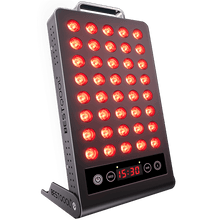
Begin with clean, dry, uncovered skin. Position the device securely at the specified distance, then select red light for surface-level skin goals, NIR for deeper recovery goals, or combined mode when both are relevant.
Complete only the recommended exposure time. During facial or head-area treatment, use the eye protection specified by the manufacturer and avoid staring directly into the LEDs. Although properly administered red light is generally considered low risk, excessive exposure can cause redness or blistering, and inadequate eye protection may create avoidable risks.
After treatment, continue with your normal morning routine. For skin care, apply moisturizer and broad-spectrum sunscreen as needed. For recovery, follow the session with gentle mobility work, breakfast, hydration, or a planned rehabilitation program.
Track one meaningful outcome for at least several weeks. For skin, take photographs under the same lighting and from the same distance. For recovery, record morning stiffness, range of motion, or soreness before treatment. These records provide a more useful comparison than relying on how you feel immediately after a single session.
Who Should Seek Professional Guidance First?
Consult a qualified healthcare professional before home treatment if you take photosensitizing medication, have a light-sensitive condition, are treating an open or postsurgical wound, or have a history of eye or skin cancer. Medical guidance is also appropriate before directing light toward an area affected by cancer or treating persistent pain without a clear diagnosis.
FDA clearance can provide useful information about a device’s intended use and safety, but it does not guarantee every advertised benefit. Choose equipment that discloses its wavelengths, output, recommended distance, treatment duration, warranty, and safety instructions rather than relying on vague promises about maximum power.
The Best Morning Choice
Choose red light when your morning goal is primarily skin-focused, near-infrared light when you want deeper muscle or joint exposure, and combined mode when both are relevant. Morning is a practical time for maintaining consistency, but it has not been proven to make photobiomodulation inherently more effective than treatment at another time of day.
Keep the routine simple: match the wavelength to the target, expose clean skin, follow the device-specific dose, protect your eyes, and evaluate progress over weeks rather than minutes.


 Small
Small

 Moderate

 Moderate

 Moderate

 Full
Full

