
Scent can make an at-home red light therapy session feel more intentional, personal, and spa-like. Used lightly, it becomes a sensory cue that marks the transition into a few uninterrupted minutes of self-care.
It is not, however, part of the red light dose. Fragrance has not been shown to improve red light therapy's biological effects or treatment outcomes. Use scent for atmosphere, not effectiveness.
Scent Helps Create a Ritual, Not a Treatment Upgrade

A spa experience is often less about one feature than about repetition: the same calm corner, familiar chair, uncluttered surface, and a cue that says, "This is my time." A subtle room scent can be one of those cues.
That can be especially useful in a home recovery space, where a red light panel may otherwise share a room with work equipment, laundry, or everyday clutter. A chosen scent can make the space feel distinct without requiring a major redesign.
Aromatherapy generally refers to using plant-derived essential oils by inhalation or by applying diluted preparations to the skin. But its role in this context should stay separate from the device itself. In one controlled study of people under stress, lemon scent had a positive effect on mood, while neither lemon nor lavender changed stress indicators, immune-system biochemical markers, or pain control, as summarized by the National Center for Complementary and Integrative Health.
That is a useful boundary for a red light routine: a scent may feel pleasant or help establish a personal ritual, but it should not be expected to enhance the session's treatment performance.
Choose a Cue You Genuinely Enjoy
There is no universal "best spa scent." Soft floral, herbaceous, citrus, woody, and clean linen-like notes are all aesthetic choices---not treatments.
A practical approach is to choose one mild scent you already associate with comfort, then decide whether it makes the routine easier to return to. If it does not, a fragrance-free setup is just as valid.
Before, During, or After?
Timing is mostly a matter of preference, as long as it aligns with your device's instructions and does not create discomfort.
- Before: Introduce scent as you prepare the room, then let the air settle before the session begins.
- During: Keep any fragrance subtle and separate from the panel, especially in a small room.
- After: Reserve the scent for a post-session transition, such as sitting quietly, changing into comfortable clothing, or taking a warm shower.
For many people, the simplest option is to use scent only before or after the session. That preserves the ritual feeling without making fragrance another variable during device use.
Keep Fragrance Separate From the Device

A spa-like setup should still be a clean, low-distraction device setup. Do not apply concentrated essential oils to a red light panel or let oil-based residue build up on its surfaces; residue can interfere with light transmission and may be difficult to remove.
Use these conservative boundaries when arranging your space:
- Keep oils, sprays, and fragrance containers away from the panel and its surfaces.
- Do not spray toward the device or into its vents.
- Avoid placing fragranced materials where they could transfer residue to the panel, stand, or controls.
- Keep the room comfortably ventilated.
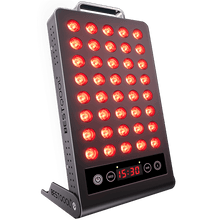
- Review your exact BestQool model's current instructions for placement, cleaning, ventilation, and prohibited materials.
- Treat candles and incense as separate from the device setup because they introduce flame, smoke, and additional indoor-air considerations.
The goal is not to create a stronger scent. It is to create a calm environment without turning the device or surrounding surfaces into part of the fragrance ritual.
Treat Topical Fragrance as a Separate Decision

Room scent and skin-applied fragrance are not interchangeable. Essential oils, perfume, and fragranced skincare can create a different experience from a lightly scented room, particularly around the face and eyes.
Do not apply essential oils, perfume, or fragranced skincare immediately before a session without checking both the product directions and your device guidance. If skincare is part of your routine, review when to use skincare around red light therapy separately rather than assuming fragrance products belong in the session.
If a scent causes eye irritation, headache, breathing discomfort, skin discomfort, or any other unpleasant reaction, stop using it. This matters particularly in shared spaces and for people with fragrance sensitivity, asthma, migraines, allergies, eczema, or scent-triggered symptoms. Children, pets, and other household members also make a low-scent or fragrance-free arrangement worth considering.
Build a Repeatable Spa-Like Corner
You do not need fragrance to make a red light routine feel considered. Choose one modest cue, then keep it consistent:
- A subtle room scent, if appropriate
- Fresh, clean textiles
- Quiet audio or silence
- A comfortable chair or mat
- A cleared surface around the device
- A consistent session time
- A warm shower before or after the session
The most spa-like red light routine is the one you can comfortably repeat. Choose a subtle scent only if it suits your space and sensitivities---or choose a fragrance-free cue---then pair it with a consistent time and a device setup that follows your BestQool model's verified safety guidance.


 Small
Small

 Moderate

 Moderate

 Moderate

 Full
Full

