
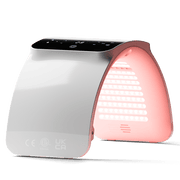
There is no single universal checklist of standards that every red light therapy device must meet to be FDA cleared. For a device that requires 510(k) review, FDA clearance comes through a substantial-equivalence order for a specific device and intended use. The safety evidence FDA may expect depends on the product's classification, design, configuration, claimed use, and risks.
For photobiomodulation (PBM) devices, FDA draft-guidance evidence identifies non-clinical areas that may need to be addressed, including electrical safety, electromagnetic compatibility, biocompatibility where relevant, and optical or photobiological safety. That does not mean every red or near-infrared device must meet the same named IEC or ISO standards.
FDA Clearance is Not FDA Approval, Registration, or a Factory Credential

A red light therapy device described as "FDA cleared" should have a device-specific 510(k) record and an FDA substantial-equivalence order, if that device type requires 510(k) review. In a 510(k) submission, a manufacturer compares its device with a legally marketed predicate device to show it is as safe and effective for its defined use.
FDA clearance is therefore different from FDA approval. It is also different from a company saying that it is FDA registered, that its device is listed with FDA, or that it is made in an FDA-registered facility.
| Marketing Term | What It Does---and Does Not---Tell You |
|---|---|
| FDA cleared | For a device subject to 510(k), FDA issued a substantial-equivalence order for a defined device and intended use. |
| FDA approved | Not the correct term for a 510(k)-cleared device. Approval generally refers to a different FDA pathway. |
| FDA registered | Does not, by itself, show that a particular device has been cleared. |
| FDA listed | Does not substitute for a device-specific clearance order. |
| Made in an FDA-registered facility | Describes a facility-related claim, not clearance of the product being sold. |
A facility claim should not be treated as proof that FDA reviewed the device's safety evidence or intended use. FDA also does not typically perform a facility inspection before granting 510(k) clearance. The meaningful question is whether the exact device has a clearance record that supports the claim being made.
For devices that are subject to 510(k), manufacturers generally cannot market them until FDA issues the substantial-equivalence order. However, some device types may be exempt from 510(k) requirements when they remain within the limits of the applicable exemption. The FDA's 510(k) overview explains both the substantial-equivalence process and the role of exemptions.
The Safety Areas That May be Evaluated

"FDA cleared" does not mean a device passed one universal red-light safety test. A 510(k) submission may need evidence appropriate to the product's particular risks.
For PBM devices within the scope of FDA's draft guidance, the relevant evidence may include the following areas.
Electrical Safety and Essential Performance
Electrical safety may be relevant for a powered device, especially one intended for repeated home or clinical use. The review should account for the device configuration and foreseeable conditions of use.
A manufacturer's statement that a device meets an electrical-safety standard can be useful context, but it should not be treated as a complete regulatory conclusion. The appropriate evidence depends on the device and its intended use.
Electromagnetic Compatibility
Electromagnetic compatibility, often shortened to EMC, concerns whether a device performs as intended around electromagnetic disturbances and whether it produces interference that could affect other equipment.
EMC may be relevant to a powered PBM device, but it is not evidence that the device is appropriate for every user, every setting, or every medical claim.
Optical and Photobiological Safety
Optical or photobiological safety addresses risks associated with light exposure. For a red light therapy device, this is the safety category most directly connected with questions about the eyes and exposure to emitted light.
Do not assume that a device's red or near-infrared wavelength makes direct eye exposure harmless. Follow the model-specific labeling, warnings, and instructions for use, including any direction about avoiding direct exposure or using eye protection. Clearance does not eliminate misuse risk.
Biocompatibility Where Relevant
Biocompatibility may matter when a device or accessory contacts the body in a way that creates material-related safety questions. It is not automatically the same issue for every panel, mask, handheld device, or accessory.
Other Device-Specific Risks
A device's configuration can create additional questions. Depending on its design, a submission may need to address issues such as heat, batteries, software, wireless functions, usability in a home setting, or the PBM component of a combination device.
FDA-recognized consensus standards are voluntary standards for which FDA may accept a Declaration of Conformity in a premarket submission. That is not the same as a rule that every red light therapy device must conform to every recognized standard. The current FDA recognized consensus standards database can help identify standards referenced for a particular device category, but a consumer should still verify model-specific documentation.
Why IEC 60601 and IEC 62471 are Not a Universal Checklist

It is common to see references to IEC 60601 electrical-safety and EMC standards or IEC 62471 photobiological-safety testing. These may be relevant to a particular product's design and risk profile. They are not, however, a consumer shortcut for determining that every red light therapy device is FDA cleared.
FDA's PBM draft-guidance evidence addresses categories of non-clinical testing rather than establishing a blanket list of IEC or ISO standard numbers for every device. A credible manufacturer should be able to explain its documentation for the exact model and intended use, not simply display a generic standards logo or mention a test report for another product.
A practical way to interpret standards language is:
- Start with the device's intended use.
- Identify its configuration: for example, whether it is powered, body-contacting, wearable, battery-operated, or intended for home use.
- Look for risk-relevant evidence and labeling.
- Confirm that any clearance claim applies to the exact product and marketed indication.
Intended Use Controls What a Clearance Claim Can Support
The same broad label---"red light therapy"---can cover very different products and claims. Whether a device needs a 510(k) depends on its classification, whether premarket approval is required, and whether an applicable exemption applies.
FDA's PBM draft-guidance scope includes certain Class II devices regulated under 21 CFR 878.4810, 21 CFR 878.4850, 21 CFR 878.5400, and 21 CFR 890.5500. Some therapeutic infrared devices may be associated with product code ILY, and certain lower-risk devices in that area may be 510(k)-exempt. None of those facts establishes the status of a particular product.
The key consumer point is simpler: a clearance record only supports the device and indication described in that record.
| What to Compare | Why It Matters |
|---|---|
| Exact model or model family | A record for a different version, configuration, or accessory may not apply. |
| Applicant or manufacturer | Names may differ after distribution, acquisition, or private labeling; ask for documentation when unclear. |
| Intended use and indications for use | A cleared indication may be narrower than broad advertising language. |
| Decision category | Look for a substantially equivalent clearance outcome when a 510(k) is claimed. |
| Current labeling and instructions | These contain the relevant warnings, limitations, and directions for use. |
For example, a clearance associated with a defined indication should not be stretched into proof of effectiveness for every advertised outcome, such as wrinkles, pain, hair growth, healing, or general wellness. Clearance does not guarantee an individual result, remove contraindications, or establish that a device is suitable for a particular health condition.
How to Check an FDA-Cleared Claim
Ask the seller for the exact 510(k) number first. A general statement such as "FDA cleared technology" is not enough to evaluate a device-specific claim.
Then use the FDA 510(k) Premarket Notification database to search by 510(k) number, device name, applicant, product code, or decision category.
Use this verification process:
- Find the clearance record. Search the claimed 510(k) number before relying on a model-name search.
- Match the device. Confirm that the record identifies the exact model or documented model family---not merely a similar-looking product.
- Read the intended use. Compare the cleared indication with the claim that matters to you.
- Check the current labeling. Review warnings, eye-safety directions, contraindications, and instructions for use.
- Treat gaps as unresolved. A database match for another model, another configuration, or another intended use is not enough.
FDA records and product configurations can change. Current, model-specific documentation is more useful than a broad regulatory slogan.
Before relying on an FDA-clearance claim, use this calm final check:
- Verify the exact device and its 510(k) record, where applicable.
- Confirm that the cleared indication matches the benefit you are considering.
- Read and follow the product's current labeling and safety instructions.
- Seek clinical guidance when your health circumstances or treatment decisions call for it.


