


It is common for women to experience changes in their sexual desire at different stages of their lives. Libido in women is influenced by a complex interaction between hormones, emotions, physical health, diet, and lifestyle factors. This is what makes it challenging for them to find supportive solutions.
Red light therapy (RLT) has been gaining significant attention over the past few decades as a wellness tool that may support overall health. It is being studied for cellular-level effects that may contribute to general wellness. However, can it also influence the libido or sexual well-being of women?
In this article, we will explore what medical science says about the effect of red light on women's libido and sexual health. We will also look at how red light works and where the evidence remains limited for female sexual health.

Why Female Libido Is More Complex Than Most Wellness Content Admits
Most women simply assume that libido is about hormones. However, the fact is that hormones make up just one piece of the puzzle. Women's sexual health is shaped by multiple interconnected systems, which include their physical health, emotional wellness, and neurological functions. [1] Check this link to learn more about the factors influencing women’s sexual health.
A number of factors, such as mental stress, pelvic health, sleep quality, relationship dynamics, and poor nutrition, can influence libido. For example, chronic stress can elevate cortisol levels, thus suppressing women's sexual desire. Similarly, fatigue, hormonal changes, and discomfort in the pelvic region also create a negative effect on their sexual health. [2] Click here to learn the role of hormones in libido.
Understanding the complex nature of libido is important for women so that they are able to set realistic expectations from any supportive therapy, including red light therapy. They should view RLT as a part of a broader approach rather than a standalone solution to fix low libido.
How Red Light Therapy May Influence Hormones That Affect Female Sexual Health
Sexual desire in women is primarily affected by female reproductive hormones, especially estrogen and progesterone. In addition, testosterone can also contribute to their sexual wellness.
Red light therapy does not replace or regulate the levels or functions of these hormones directly. However, it may support the systems that control the production of these hormones, which may help create a more favorable internal environment for sexual wellness.
These benefits of RLT can be attributed to its effect on cellular energy and physiological balance.
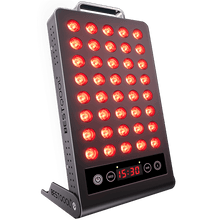
RLT devices are designed to deliver red and near-infrared light having wavelengths between 630 nm and 850 nm. These wavelengths can penetrate deeper into the skin and reach mitochondria in cells. They stimulate the production of energy molecules called ATPs in mitochondria, thereby increasing the efficiency of cellular functions. Click here to find out how RLT works.
This cellular response may support physiological balance. Better sleep, stress control, and lower inflammation can all matter for hormone-related wellness, but RLT should not be treated as a direct hormone therapy.
For example, better sleep can support the balance of hormones such as melatonin and cortisol, both of which help regulate the production of reproductive hormones. This can contribute to a more stable internal environment, thereby supporting sexual health.
The Connection Between Pelvic Floor Health and Sexual Satisfaction
Pelvic floor health plays a crucial role in maintaining sexual comfort and satisfaction in women. These muscles ensure adequate blood circulation and maintain nerve sensitivity in the pelvic region. The inefficient functioning of the pelvic floor muscles can affect the sexual desire of women and hamper their experience.
For example, weakness, tightness, and inflammation in the pelvic floor can result in pain and discomfort during intimacy. It may also reduce sensitivity and lower pleasure during sex. These factors, if not addressed in a timely manner, can impact libido over a period of time.
Red light therapy may support pelvic tissue wellness by promoting blood circulation and helping manage pain and inflammation pathways. The improvement in blood flow can enhance the delivery of oxygen and other nutrients to tissues and support nerve function, potentially contributing to better comfort, responsiveness, and pleasure. [4] Check this link to find out how RLT improves circulation.
What the Research Actually Says About Red Light Therapy and Female Libido
Current evidence does not prove that red light therapy directly improves female libido. The more defensible view is that it may support related factors such as inflammation balance, circulation, tissue repair, and sleep quality. [5] Click here to learn the healing effects of RLT.
Some studies suggest photobiomodulation can affect blood flow and tissue function in targeted areas. Whether that translates into improved female libido depends on the underlying cause, so RLT is best viewed as a supportive wellness tool.
How to Use Red Light Therapy as Part of a Female Sexual Wellness Routine
Here are some practical safety guidelines to consider when using red light devices for libido and sexual wellness:
- Use red light therapy externally on areas such as the lower abdomen or pelvic region.
- Sessions typically last around 5 to 15 minutes, depending on the device and personal comfort.
- Begin with shorter sessions and gradually increase the duration as your body adapts.
- Use the therapy consistently 3 to 5 times per week.
- Consider pairing red light therapy with healthy lifestyle habits, such as stress reduction, regular exercise, and adequate sleep, to support better overall results.

Realistic Expectations and When to Seek Professional Support Instead
Research suggests red light therapy may support some indirect factors related to sexual wellness in women. However, it is not a guaranteed solution for low libido or other sexual concerns arising as a result of underlying medical issues. Hence, it is important to approach RLT with realistic expectations.
If you are experiencing persistent low libido, accompanied by pain and symptoms of hormonal imbalances, you should consult a healthcare provider. Your doctors will help diagnose underlying conditions, such as hormonal imbalances, pelvic floor dysfunction, or poor sleep, and recommend appropriate treatments. You may still use red light therapy as a part of your supportive routine. However, it should not replace professional care when needed.
Most importantly, you must remember that female sexual health is influenced by several factors beyond physical biology. So, addressing it requires patience and a willingness to look at the bigger picture.
Red light therapy offers a gentle, non-invasive way to support your sexual wellness when combined with other aspects of care. Read this red light therapy guide to learn more about how red light therapy works and the RLT devices available for you.
References
- Adebisi OY, Carlson K. Female Sexual Interest and Arousal Disorder. [Updated 2024 Oct 29]. In: StatPearls [Internet]. Treasure Island (FL): StatPearls Publishing; 2026 Jan.
- Hamilton LD, Meston CM. Chronic stress and sexual function in women. J Sex Med. 2013;10(10):2443-2454.
- Hernández-Bule ML, Naharro-Rodríguez J, Bacci S, Fernández-Guarino M. Unlocking the Power of Light on the Skin: A Comprehensive Review on Photobiomodulation. Int J Mol Sci. 2024;25(8):4483.
- Weihrauch D, Keszler A, Lindemer B, Krolikowski J, Lohr NL. Red light stimulates vasodilation through extracellular vesicle trafficking. J Photochem Photobiol B. 2021;220:112212.
- Hamblin MR. Mechanisms and applications of the anti-inflammatory effects of photobiomodulation. AIMS Biophys. 2017;4(3):337-361.


 Small
Small

 Moderate

 Moderate

 Moderate

 Full
Full

