

If you have ever scrolled through red light therapy panels or masks online, you have probably seen “660 nm” and “850 nm” splashed across product pages as if those numbers alone guarantee results. As someone who works every day with people using at‑home red light and near‑infrared devices, I see the same question over and over: which wavelength should I choose?
Should you go with 660 nm red light for glowing skin and fine lines, or 850 nm near‑infrared for deeper tissues, joints, and brain health claims? And is it really worth paying more for devices that advertise both?
In this guide, I will walk you through what the research actually supports, where the science is still catching up, and how I personally help clients decide between 660 nm, 850 nm, or a combination device—without getting lost in the marketing hype.
Before we dive in, a quick note. This article is for education, not a substitute for medical care. If you have a medical condition or are on prescription medication, it is important to talk with a dermatologist or other licensed clinician before starting red light therapy, just as the Cleveland Clinic, Harvard Health, and the American Academy of Dermatology recommend.
Red Light Therapy In Plain Language
Red light therapy, often called photobiomodulation or low‑level light therapy, uses specific red or near‑infrared wavelengths to nudge cells into healthier behavior without burning or damaging the skin. Health systems such as the Cleveland Clinic and Harvard‑affiliated dermatologists describe a similar core mechanism: light is absorbed by cellular “power plants” (mitochondria), which can increase energy production, improve cell signaling, and reduce inflammation.
In dermatology and aesthetics, red light has some of the most practical, real‑world evidence for:
- Softening fine lines and wrinkles and improving skin texture and tone
- Supporting wound healing and reducing the appearance of scars
- Calming redness and inflammation from acne, rosacea, eczema, and other inflammatory conditions
- Supporting hair growth in certain types of pattern hair loss
Red and near‑infrared light is also being explored for joint pain, athletic recovery, metabolic health, and even brain function. Experts at Utah Health, Stanford Medicine, and other academic centers are clear, though: evidence is strongest for skin and hair. For deeper systemic effects like metabolism, mood, or neurodegenerative disease, research is still early and results are mixed.
Most consumer devices use wavelengths somewhere between about 600 and 900 nanometers. That broad window covers visible red light in the low 600s and deeper near‑infrared light in the upper 700s and 800s. The specific numbers printed on devices—like 660 nm and 850 nm—are simply “addresses” inside this wider range.

Where 660 nm And 850 nm Sit On The Spectrum
A nanometer (nm) is a unit used to describe the color of light. Visible red light lives roughly between 600 and 700 nm. Above that, between roughly 700 and 900 nm, is near‑infrared, which we cannot see but can still feel as gentle warmth with enough power.
In clinical and laboratory research summarized in peer‑reviewed studies:
- Red light for skin rejuvenation often falls in bands like 611–650 nm or around 630 nm. A controlled trial of more than 100 volunteers used red light in the 611–650 nm range to improve wrinkles, skin roughness, and collagen density. A separate clinical study of a 630 nm red light mask used twice a week for three months showed progressive improvements in wrinkles, firmness, skin density, and tone, with benefits lasting about a month after stopping use.
- Broader “energizing” light systems sometimes combine red with near‑infrared light that extends up toward 850 nm. In that same controlled trial, one device used a 570–850 nm spectrum, which overlaps the 850 nm marketing wavelength many consumer panels promote.
Clinically validated at‑home devices described by dermatology practices often use a red diode in the low 600s (for example, 633 nm) plus a near‑infrared diode in the 800s (for example, 830 nm), placing 660 and 850 nm comfortably inside the ranges already studied.
For the rest of this article, I will use “660 nm” as shorthand for visible red light in the low 600s, and “850 nm” as shorthand for deeper near‑infrared light in the upper 700s to 800s. The key idea is not the exact number on the label, but whether the wavelength is in the red or near‑infrared band and how that matches your goals.
What 660 nm Red Light Does Best
Visible red light in the low 600s, where 660 nm sits, tends to be absorbed primarily in the skin and just below it. In the Dior mask study mentioned earlier, a 630 nm mask with well‑defined power delivered about 15 joules per square centimeter over a 12‑minute session twice a week. Over three months, 20 volunteers between about 45 and 70 years old showed measurable improvements in crow’s feet wrinkles, facial sagging scores, skin firmness and elasticity, dermal density, pore appearance, and complexion homogeneity. Importantly, every participant reported overall skin quality improvement, and benefits persisted for roughly a month after stopping.
Another controlled trial using red light in the 611–650 nm range across 30 sessions found significant improvements in skin complexion, feeling, collagen density, and objective skin roughness compared with untreated controls. When researchers added a broader red‑plus‑near‑infrared spectrum up to 850 nm, they did not see extra benefit as long as the red dose in the 611–650 nm band was the same.
These findings align with what dermatologists at Harvard Health, the Cleveland Clinic, and multiple dermatology practices report in their patient education articles:
- Red light stimulates fibroblasts, the cells that build collagen and elastin, which helps skin look firmer and smoother over time.
- Red wavelengths have anti‑inflammatory effects that reduce redness and irritation in conditions like acne, rosacea, and eczema.
- By promoting tissue repair, red light can support wound healing and reduce the visibility of scars from acne, surgery, or injury.
- For acne care, red light works well as a complement to blue light. Blue light targets acne‑causing bacteria, while red light reduces inflammation and supports healing, helping to minimize post‑acne marks and hyperpigmentation.
Red light in the low 600s is also a big part of the evidence base for hair growth. As Stanford Medicine experts describe, shallow‑penetrating red light can dilate blood vessels around hair follicles, increasing blood and nutrient flow. Used consistently over months, it can regrow thinning hair, although it does not revive dead follicles on completely bald areas and benefits fade when treatment stops.
Taken together, 660‑type red light has the strongest real‑world evidence for:
- Fine lines and wrinkles
- Overall skin tone and texture
- Redness and surface‑level inflammatory conditions
- Supportive care after procedures like microneedling, peels, or lasers
- Certain types of hair thinning and pattern hair loss
If your main goal is cosmetic skin rejuvenation or scalp health, prioritizing a solid red wavelength in this range makes sense.

What 850 nm Near‑Infrared Does Best
Near‑infrared light around the 800–850 nm band does not look red to the eye; many devices that include it appear dim even while they are working. In photobiomodulation research, longer wavelengths in this range scatter less in tissue than visible light. That allows them to reach deeper structures while still being in a safe, low‑energy range that avoids heating or burning.
Medical centers and review articles summarized in the Utah Health discussion, UCLA’s overview of red light therapy, and a broad scientific review from Zoë highlight areas where near‑infrared is being investigated:
- Deeper joint and muscle tissues for chronic pain and inflammation
- Brain tissue via transcranial or intranasal devices in small studies of people with dementia
- Whole‑body exposures in athletes, looking at sleep, recovery, and performance
For chronic pain, a literature review cited by UCLA found that photobiomodulation can meaningfully reduce both acute and chronic pain and inflammation across several conditions. However, in many cases the pain returned within weeks of stopping therapy, suggesting that sustained benefits may require ongoing sessions.
For cognitive function, small early studies using near‑infrared applied through the skull and nasal passages reported improved cognition in people with mild to moderate dementia after daily sessions of just a few minutes over eight weeks, with no significant adverse effects. Researchers are careful to emphasize that these are early‑stage findings; larger, longer studies are still needed.
Athletic performance and exercise recovery are even more mixed. Some small trials suggest that red or near‑infrared light applied before exercise may help reduce muscle soreness or improve recovery, but other reviews conclude that effects on skeletal muscle injury and exercise‑induced pain may be modest or uncertain.
In short, 850‑style near‑infrared is most often chosen when someone wants to reach deeper tissues—joints, muscles, or brain. The safety profile looks favorable so far, but the strength of evidence is weaker and more uneven than for skin and hair.

How Deep Do 660 And 850 nm Go?
Depth of penetration is not a fixed number; it depends on skin type, hydration, the exact power of the device, and how close you are to it. But there are useful patterns.
Research summarized in PubMed‑indexed reviews of photobiomodulation notes that red light between about 600 and 700 nm reaches the dermis, where collagen‑producing fibroblasts, small blood vessels, and many inflammatory cells live. That is deep enough to influence wrinkles, texture, redness, and hair follicles near the surface.
Near‑infrared light between about 700 and 900 nm tends to travel deeper, down toward the bottom layer of the skin and into the tissues underneath. A dermatology FAQ from Northwell Health notes that red light can penetrate down to the hypodermis, the bottom skin layer, while other sources explain that longer near‑infrared wavelengths are often chosen specifically to target deeper tissues.
The same fundamental physics shows up in the photobiomodulation literature: shorter wavelengths scatter more and stay shallower, while longer wavelengths scatter less and can travel farther before being absorbed. That is why light‑therapy researchers focus on a window from roughly 600 to 1100 nm, where absorption and scattering allow useful penetration without the strong water absorption and heat risk that appears beyond about 1100 nm.
For practical purposes, you can think of 660‑style red as a “skin‑first” wavelength and 850‑style near‑infrared as a “deeper‑tissue‑capable” wavelength.
660 Versus 850 nm At A Glance
Here is a simple side‑by‑side comparison, based on the ranges and clinical uses described in peer‑reviewed studies and large health systems’ summaries.
Aspect |
660 nm visible red (low 600s) |
850 nm near‑infrared (upper 700s–800s) |
Where it sits on the spectrum |
Visible red light; you see a gentle red glow |
Invisible to the eye; LEDs may appear dim or off |
Primary target tissues |
Epidermis and dermis: surface skin, hair follicles, superficial circulation |
Deeper skin layers and tissues: deeper vessels, connective tissue, and potentially muscle or brain regions |
Strongest current evidence |
Skin rejuvenation (wrinkles, texture, tone), acne support, scar appearance, hair thinning and pattern hair loss |
Chronic and acute pain in certain conditions, small early studies in dementia, experimental work in exercise recovery and sleep |
Typical at‑home formats |
Facial masks, panels aimed at the face or scalp, handheld wands for spots |
Panels for body areas like back or knees, caps or helmets, some transcranial or intranasal devices under study |
What it clearly does not do |
Does not replace sunscreen, prescription acne care, or healthy lifestyle; not a proven weight‑loss or cellulite tool |
Does not replace physical therapy, evidence‑based pain management, or dementia care; not a proven cure for systemic disease |
When I usually lean toward it |
When the main goals are cosmetic skin changes, post‑procedure healing, acne support, or hair density |
When someone’s top priority is deeper joint or muscle comfort, or they are considering carefully supervised brain‑focused protocols |
The most important nuance from the controlled skin trial is that adding broader wavelengths up to 850 nm did not outperform red‑only light for skin rejuvenation when the red dose was matched. That means you do not automatically get better results for your skin just because a device lists 850 nm alongside 660 nm.

Do You Need Both Wavelengths?
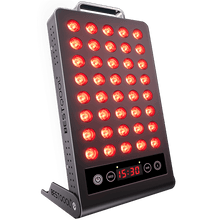
Many premium at‑home devices now include both a red diode around the low 600s and a near‑infrared diode in the 800s. Omnilux, for example, uses 633 nm red plus 830 nm near‑infrared in flexible masks that dermatology clinics frequently recommend for at‑home maintenance between office visits.
There are sensible reasons to include both. Red light has a robust track record in the dermis, while near‑infrared may reach slightly deeper structures and has plausible benefits for things like deeper inflammatory processes. When you are paying for a single device to cover face, scalp, and perhaps a knee or shoulder, having both bands available can be convenient.
At the same time, the clinical data we have suggest that for purely cosmetic skin goals, red light alone (in a well‑designed, adequately powered device) can be enough. The Dior mask study used only red light at about 630 nm and still demonstrated structural improvements and participant satisfaction. The randomized trial comparing red‑only versus red‑plus‑near‑infrared also found no added advantage for the broader spectrum when red dose was controlled.
So, if you care mainly about your face and budget is tight, I would rather see you choose a strong, well‑tested red‑only device and use it consistently than stretch for a weaker “dual‑wavelength” product just because it has more numbers on the box.

Matching Wavelength To Your Goals
When I sit down with someone trying to choose a device, I start by asking what they truly care about today. It is tempting to say “everything,” but your body will thank you if you prioritize.
Skin Anti‑Aging, Texture, And Radiance
If your top goal is smoother, more even, more resilient skin, 660‑style red light is where the best evidence lies.
Harvard‑affiliated dermatologists and the American Academy of Dermatology report that red light can modestly reduce fine lines and wrinkles, lighten dark spots, smooth texture, and diminish redness. Clinical work with red masks and lamps consistently shows improvements over months, not days. The Dior mask study, for example, used two twelve‑minute sessions per week, with clear cumulative gains measured at one, two, and three months.
For at‑home use, dermatology clinics and health systems commonly suggest sessions of about 10 to 20 minutes, several times per week, using an FDA‑cleared device and following the manufacturer’s directions. A practical rhythm for many people is three or four evenings a week, on clean, makeup‑free skin, for a total of at least eight to twelve weeks before judging results.
In this scenario, a device centered on 660‑type red light, with adequate power and good facial coverage, is an excellent starting point. Adding 850 nm near‑infrared is optional rather than mandatory.
Acne, Redness, And Sensitive Skin
For acne, rosacea, and reactive redness, red light’s anti‑inflammatory properties are key. Dermatology practices and systems such as the Cleveland Clinic describe red light therapy as a way to reduce redness, calm irritation, and support healing in mild to moderate inflammatory acne and conditions like rosacea and eczema.
Blue light can help kill acne‑causing bacteria; red light then reduces inflammation and helps tissue repair. For many of my acne‑prone clients, a red‑dominant device is the backbone, and we think about adding blue light only if breakouts remain stubborn.
Here again, 660‑style red is a strong fit. Near‑infrared around 850 nm may be present in some devices but is not essential for the surface inflammation that defines most acne and rosacea. As always, severe or scarring acne deserves a dermatologist’s care first, with red light as a possible adjunct once a diagnosis and core treatment plan are in place.
Hair Thinning And Pattern Hair Loss
For hair, both red and near‑infrared come into play.
Stanford Medicine experts remind us that red light’s ability to widen blood vessels and increase nutrient flow to hair follicles can regrow thinning hair when used consistently over multiple months, though the effect stops when treatment stops and does not resurrect dead follicles. UCLA’s overview notes that the Food and Drug Administration has cleared several at‑home caps, combs, and helmets for hereditary and hormonal hair loss, and one comparative study suggested that low‑level light therapy may be as effective as minoxidil, a common topical medication.
These devices typically use red wavelengths in the low 600s, sometimes paired with near‑infrared in the 800s, to reach follicles a bit deeper in the scalp. In practice, if hair regrowth is your primary goal and you are considering a dedicated cap or helmet, choosing a model that lists both a red wavelength around 630–660 nm and a near‑infrared wavelength in the 800s is reasonable, provided it has been tested and cleared for that specific use.
The key is patience. Most hair studies follow participants for many weeks to months, with repeated treatments several times per week. When clients use a cap for only a month or two and then declare it “did nothing,” they usually have not given their follicles enough time.
Joint And Muscle Discomfort
For deeper joints and muscles, near‑infrared in the 850 nm neighborhood becomes more appealing.
Reviews summarized by UCLA and in broader scientific articles find that photobiomodulation can significantly reduce pain and inflammation in several acute and chronic pain conditions while therapy is ongoing. Many of those protocols use near‑infrared wavelengths to reach deeper tissues. However, the same reviews emphasize that pain often returns within weeks once therapy stops, and that red light therapy should be seen as a supportive tool, not a replacement for physical therapy, strength training, or medical pain management.
If your main priority is easing a chronically sore knee or shoulder and you are choosing between a purely red facial mask and a near‑infrared‑capable panel, 850‑style near‑infrared is worth prioritizing. Just approach claims with the healthy skepticism that Utah Health and Zoë recommend, and stay in conversation with your physician about proven approaches like exercise therapy and weight management.
Brain, Mood, And Systemic Wellness
This is where the science is most intriguing and also most uncertain.
UCLA describes small but promising studies using intranasal and transcranial near‑infrared in people with dementia, showing cognitive improvements after short daily sessions over several weeks. The Utah Health discussion notes early research on mood, metabolism, and neurodegenerative conditions, but stresses that robust human trials are still limited.
If you are considering a helmet or intranasal device advertised for “brain fog” or “longevity,” I strongly recommend partnering with a clinician who understands photobiomodulation research, and recognizing that these uses are experimental. Near‑infrared around 850 nm is the typical band for these devices, but wavelength is only one piece; dose, session schedule, and your underlying condition matter just as much.
Buying Smart: Wavelength Is Only Step One
Once you know whether your goals are more “skin‑first” or “deeper‑tissue‑first,” you are ready to think about the rest of the device.
Several themes show up again and again in articles from Harvard Health, the Cleveland Clinic, Stanford Medicine, and the American Academy of Dermatology.
They emphasize that:
- Device strength and dose matter as much as wavelength. The Dior red mask delivered about 15 joules per square centimeter in twelve minutes and outperformed much weaker masks in technical comparisons. In contrast, some consumer masks deliver a fraction of that dose even with longer sessions.
- At‑home devices are usually weaker than in‑office systems but can still be effective for cosmetic goals when used consistently over time. Harvard Health notes that visible results often require several sessions per week for four to six months.
- “FDA‑cleared” speaks to safety and device classification, not guaranteed results. The Food and Drug Administration evaluates whether a device is reasonably safe for its intended use. It does not certify that your wrinkles will vanish or your arthritis will resolve.
- Price varies widely. Utah Health reports that consumer masks often cost a few hundred dollars, while full‑body beds can reach into six‑figure territory. Investing in sunscreen, a healthy diet, sleep, and movement often brings more return than stretching your budget for the most expensive light bed.
When I help someone choose, I care less about chasing a perfect wavelength and more about answering a few practical questions. Does the device clearly state its wavelengths and approximate power? Is it designed for the area you actually want to treat? Is it reasonably comfortable and convenient so you will actually use it several times per week? Does it come from a company willing to share technical details and safety testing?
If those basics are solid and the wavelengths align with your goals, you are on much firmer ground than most people browsing late‑night sales pages.
Using 660 And 850 nm Safely At Home
Safety is one of the reasons red light therapy has caught on. Compared with many medical or cosmetic procedures, side effects are usually mild and rare when you use devices as directed. Still, there are some important guardrails that major medical organizations consistently highlight.
Cleveland Clinic, Harvard Health, UCLA, and the American Academy of Dermatology all stress eye protection. Never stare directly into bright LEDs, and follow your device’s instructions about goggles, especially for facial treatments. There is even a real‑world example of this concern: a popular acne mask was recalled because of potential eye risks in susceptible people.
Most sources agree that short‑term use appears non‑toxic and does not involve ultraviolet light, which is the part of the spectrum that raises skin cancer risk. Red and near‑infrared devices do not tan the skin and are not substitutes for sunlight or tanning beds.
At the same time, overuse or misuse can irritate skin or cause headaches. The Dior study and broader photobiomodulation literature refer to the Arndt–Schulz concept, where very low doses cause no effect, moderate doses stimulate biology, but excessively high doses begin to inhibit or stress cells. That is one reason the Dior protocol spaced sessions about three days apart, giving cells time to respond and “digest” the energy rather than piling more on every day.
Several groups highlight specific cautions:
- People with epilepsy are generally advised against certain light therapies, as the Baylor College of Medicine blog points out.
- Those with darker skin tones may be more prone to visible dark spots from visible light, so Harvard Health and UCLA recommend involving a dermatologist and starting with lower doses.
- Anyone taking photosensitizing medications—such as some antibiotics, acne drugs, or medications for autoimmune disease—should ask their prescriber before adding any light‑based therapy.
If you ever notice worsening redness, burning, eye discomfort, migraines, or new pigment changes, it is wise to pause treatment and check in with a medical professional.

A Realistic At‑Home Routine That Uses Both Wavelengths
Let us imagine a common real‑world situation: you want to soften fine lines, lessen some acne marks, and also soothe a chronically sore knee. You purchase a panel that offers both red around 660 nm and near‑infrared around 850 nm.
A practical way to use that device might look like this.
On several evenings each week, you set aside about twenty to thirty minutes in total. After cleansing your face and removing makeup or sunscreen, you sit comfortably at the distance recommended in the manual and expose your face to the panel’s red light for about ten to fifteen minutes. You protect your eyes as directed.
Then you turn your body so that the panel faces your sore knee or hip, again at the recommended distance, and run another ten to fifteen minutes using both red and near‑infrared modes. Over time, you track not only how your skin looks in photos, but also how your joint feels day to day, and you keep up your physical therapy and movement plan alongside the light.
The numbers here are not magic. Different devices have different strengths, and you always defer to the instructions and any medical advice you have received. What matters is consistency over weeks and months, reasonable session lengths, and a willingness to adjust if your skin or joints signal that they need a gentler approach.

When Red Light Therapy Is Not Enough
One of the most important messages from Utah Health, Stanford Medicine, and Harvard Health is that red light therapy is not a cure‑all. It can be a helpful adjunct; it should not displace the basics.
For skin, that means daily sun protection, a gentle but consistent skincare routine, not smoking, and attention to nutrition and sleep. For hair, it means checking in with a dermatologist about hormones, nutritional factors, and scalp conditions. For joints and muscles, it means appropriate diagnosis, movement therapy, strength work, and weight management when relevant.
It also means recognizing when red light therapy is not appropriate on its own. Suspicious moles or non‑healing wounds need urgent evaluation, not more time under a panel. Severe depression, uncontrolled pain, or progressive neurologic symptoms cannot be safely self‑treated with a helmet. The American Academy of Dermatology even reminds people using cosmetic light devices to start by confirming the actual diagnosis, so that conditions like skin cancer are not mistaken for “sun damage” you hope LEDs will fade.

FAQ: Common Questions About 660 nm And 850 nm
Do I really have to pick just one wavelength?
Not necessarily. Many modern devices include both a red diode in the low 600s and a near‑infrared diode in the 800s. For purely skin‑focused goals, a strong red‑only device can be enough, as clinical trials with 611–650 nm and 630 nm masks show. If you also care about deeper joint comfort or want a single panel for skin and body, having both bands available is convenient. The key is that the device as a whole is well designed and that you can realistically use it several times per week.
If a device lists 660 and 850 nm but no power information, is that a red flag?
Wavelength alone does not tell you how much helpful energy reaches your skin. In the Dior study, the mask’s power density and dose were clearly defined, and that clarity is part of why the results are meaningful. If a company will not share even approximate power or dose information, or if its claims sound far more dramatic than the modest, gradual improvements described by sources like Harvard Health and UCLA, I encourage a cautious approach.
How long will it take to see results?
Most credible sources emphasize patience. The Dior 630 nm mask showed progressive improvement over one, two, and three months. Harvard Health mentions that cosmetic improvements from red light therapy typically require several sessions per week for four to six months. For hair, many trials run for about sixteen weeks or longer. Near‑infrared pain protocols and dementia studies also use weeks of consistent daily or near‑daily sessions. If you decide to try red light therapy, commit to at least two or three months of realistic use before judging whether it earns a permanent place in your routine.
Closing Thoughts
Choosing between 660 nm and 850 nm is really about choosing between a skin‑first and a deeper‑tissue‑first focus, then matching your device to your goals, schedule, and budget. Red light in the low 600s has the most consistent evidence for skin and hair, while near‑infrared around the 800s opens the door to deeper joints, muscles, and experimental brain applications. When you ground your decision in credible research, protect your eyes and skin, and keep red light therapy in its proper place as a supportive tool rather than a miracle cure, it can be a gentle, empowering part of your at‑home wellness routine.
References
- https://lms-dev.api.berkeley.edu/studies-on-red-light-therapy
- https://www.health.harvard.edu/diseases-and-conditions/led-lights-are-they-a-cure-for-your-skin-woes
- https://thewell.northwell.edu/skin-health/red-light-therapy-skincare
- https://pmc.ncbi.nlm.nih.gov/articles/PMC10311288/
- https://blogs.bcm.edu/2025/06/24/led-light-therapy-how-does-it-work-on-your-skin/
- https://med.stanford.edu/news/insights/2025/02/red-light-therapy-skin-hair-medical-clinics.html
- https://healthcare.utah.edu/the-scope/mens-health/all/2024/06/176-red-light-therapy-just-fad
- https://my.clevelandclinic.org/health/articles/22114-red-light-therapy
- https://www.gundersenhealth.org/health-wellness/aging-well/exploring-the-benefits-of-red-light-therapy
- https://www.uclahealth.org/news/article/5-health-benefits-red-light-therapy


 Small
Small

 Moderate

 Moderate

 Moderate

 Full
Full

