

If your home gym gets too hot during red light therapy, cool the room, shorten the session, and improve airflow so the treatment stays comfortable and easier to dose correctly. Red light therapy should feel mildly warm at most, not like a heat workout.
If your garage gym turns stuffy halfway through a panel session, leaving you sweaty, distracted, and ready to cut it short, the fix is usually simple. Home red light routines work best when they are consistent, moderate, and easy to repeat, not when you push through an overheated room.
Why heat changes the session
Red light therapy is a noninvasive treatment that uses visible red and sometimes near-infrared light to support cellular energy production and recovery. In practice, the goal is to deliver the right amount of light to the right area for the right length of time, which is why a session length of about 5 to 20 minutes matters so much in home use.
When your workout space gets too hot, two problems usually appear at once. First, you are less likely to finish the session comfortably or stick with it over time. Second, heat can blur the line between a light session and a heat session. That matters because red and near-infrared therapy should not heat or burn skin when used correctly. A little warmth from the panel or a warm room is common, but feeling flushed, overheated, or trapped in hot air is a sign to adjust the environment rather than push through it.
A simple way to think about it is that red light therapy is dose-sensitive. One overview of home session timing describes a Goldilocks effect: too little may do very little, and too much may reduce the benefit. In a hot room, people often stand too close, stay on too long, or stack therapy on top of post-workout body heat, which makes dosing less predictable.
What “too hot” actually means
For home users, “too hot” does not need a lab definition. It means the room is hot enough that you are sweating before the session is halfway done, your skin feels prickly, your breathing feels more like post-cardio recovery than quiet recovery work, or you keep stepping away from the panel early.
That matters because consistency over intensity is one of the clearest themes in at-home guidance. If your garage is 92°F in late afternoon and you planned a 15-minute recovery session after lifting, but you quit after 6 minutes because the room feels oppressive, the setup is working against your routine.
A useful benchmark comes from wellness environments that intentionally combine light with gentle heat. One source describes sessions in the 110 to 135°F range as a separate heated experience, not the default standard for ordinary panel use in a home gym. If your space is drifting toward that kind of heat, you are no longer doing a typical home panel session under normal comfort conditions.
The fastest fixes that usually work

Start with the room, not the device. If the air is stagnant, open the garage door a few feet if that is safe, run a fan across the room rather than directly into your eyes, and schedule the session for a cooler time of day. Morning often works better than late afternoon in a garage gym because the concrete, door panels, and equipment have not absorbed a full day of heat.
Next, separate your workout from your light session with a short cool-down window. If you finish intervals at 5:30 PM with your heart rate still elevated and then step straight in front of a panel, you are layering exercise heat onto room heat. Sit down, hydrate, and let your skin temperature settle for 10 to 15 minutes first. That small gap often makes the same red light session feel completely different.
Distance is another easy lever. Many home protocols place the body about 6 to 12 inches away for deeper. If the panel face feels uncomfortably warm up close, backing off a few inches may improve comfort without forcing you to skip the session. The tradeoff is that light intensity at the body drops as distance increases, so small adjustments are better than moving far away and guessing.
Session length also deserves attention. For many home users, 10 to 20 minutes per session, 3 to 5 times per week is a common starting range. In a warmer room, dropping from 20 minutes to 10 or 12 minutes can be smarter than forcing the original plan. A shorter session you can repeat four times a week is usually more useful than one miserable long session that you start avoiding.
How to set up a heat-smart home gym routine
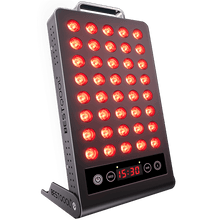
A dedicated red light corner can solve more problems than people expect. A purpose-built room setup that supports regular, focused use does not need to be elaborate. In a home gym, that might mean placing the panel on the coolest wall, away from direct sun, away from a running treadmill motor, and away from a closed storage area where air collects.
Hydration helps too, especially if your gym is in a garage, shed, or upstairs bonus room. Some at-home guides recommend drinking water before and after treatment because overheated sessions can feel more draining and may be mistaken for the therapy itself. If you notice lightheadedness, dry mouth, or a strong urge to rush the session, that is a practical sign that your environment needs work.
Timing matters as much as the hardware. If the light feels energizing, morning or midday may be the best fit. If you use it for recovery or relaxation, early evening can work, but not if that is also the hottest point in your gym. A simple rule for a real home setup is to choose the coolest repeatable time, not the theoretically ideal time that keeps failing in practice.
Should you combine red light therapy with sauna-like heat?
Sometimes, but only if you are clear about the goal. There is a difference between using red light in a deliberately heated wellness session and using a home panel for recovery, skin support, or post-training soreness. One overview notes that some sauna-ready panels tolerate temperatures up to around 150°F, which speaks to equipment durability, not necessarily the best day-to-day environment for a home gym recovery session.
That distinction matters because evidence for benefits is promising in some areas but still limited overall. When the evidence base is still developing, it makes sense to keep variables simple. If your goal is muscle recovery after strength training, a cooler, easier-to-dose setup is usually the cleaner choice. If your goal is a combined relaxation ritual with heat, stretching, and light, that can be reasonable too, but it should be treated as a different experience.
When to stop and adjust
Use comfort as a safety signal. One health overview notes that high exposure can cause redness, swelling, blistering, and eye damage, and another notes that burns and blistering are usually tied to misuse or malfunction. If your skin stays red longer than expected, the room feels oppressively hot, or you feel faint or headachy, end the session and troubleshoot before the next one.
A practical reset looks like this: move the next session to 8:00 AM, use a fan, stand a little farther back, and cut the time in half. If that feels comfortable and repeatable, you have probably found a better baseline. From there, build up slowly rather than jumping back to your old setup.
A simple way to decide what to change first
Problem during session |
Most likely fix |
Why it helps |
You start sweating within a few minutes |
Cool the room and change the time of day |
Better comfort improves consistency |
Your face feels overly warm up close |
Increase distance slightly |
Reduces heat sensation without abandoning use |
You feel wiped out after workouts plus light |
Add a 10 to 15 minute cool-down first |
Separates exercise heat from therapy |
You keep skipping sessions in summer |
Shorten sessions and use them more consistently |
Moderate routines are easier to sustain |
If your home gym gets too hot, the goal is not to endure it. The goal is to make the session calm, repeatable, and correctly dosed so the habit survives the season. A cooler room, a shorter session, and better timing usually solve more than buying another gadget.


 Small
Small

 Moderate

 Moderate

 Moderate

 Full
Full

