
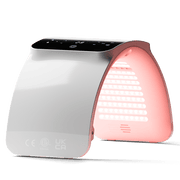
Red light is a reasonable starting point when fine lines or visible surface texture are your main concerns. Near-infrared may be worth considering alongside red light for broader or deeper-looking signs of aging, but research has not established a universal winner. For red light or near-infrared for facial wrinkles and skin texture, start with your goal, then compare the device's documented facial use, coverage, positioning, schedule, and eye guidance.

Choose red light or near-infrared for facial wrinkles and skin texture: surface vs. broader concerns
Choose red light when you want a focused starting point for fine lines or the visible look of facial texture. Consider near-infrared alongside red light when you want a broader approach to more noticeable wrinkles. Choose a combined setting only when the device is designed and labeled for facial use.
This is a practical decision rule, not a proven surface-versus-depth formula. Red and near-infrared light have both been studied for skin rejuvenation, but the results cannot be reduced to wavelength alone because treatment parameters and study protocols vary. The LED evidence across treatment protocols varies across studies, so a wavelength label should not outweigh a device's documented design.

- Surface-focused goal: Start with red light if fine lines, dull-looking skin, or visible texture are your main priorities. This makes red light therapy for wrinkles a reasonable focused option, not an exclusive rule.
- Broader or deeper-looking concern: Consider near-infrared with red light when more noticeable wrinkles or a broader aging concern matters to you. Near-infrared is a possible complement, not a guaranteed deeper or stronger treatment.
- Two goals in one routine: Choose combined red plus near-infrared only when the facial device supports that setting and provides clear guidance for positioning, schedule, and eye protection.
If the device has poor facial coverage, awkward positioning, or unclear instructions, the wavelength label may matter less than whether you can use the routine consistently.
What red light and near-infrared each target on facial skin
The most useful way to compare red light and near-infrared is by reasonable starting use, not by assigning either wavelength a guaranteed biological target. The evidence supports a qualitative comparison, while coverage, output, treatment time, schedule, and device design can change the practical result.
| Wavelength | Reasonable starting use | What can change the decision |
|---|---|---|
| Red light | Fine lines, visible surface appearance, or a simpler focused routine | Facial coverage, positioning, documented output, session guidance, and consistency |
| Near-infrared | A possible complement for broader or deeper-looking aging concerns | Whether it is intended for facial use, how it is delivered, the schedule, and the rest of the device protocol |
| Combined red plus near-infrared | One routine for both a surface-focused goal and a broader concern | The exact wavelengths, facial-use instructions, coverage, positioning, and whether the routine is practical to repeat |
This table does not establish that near-infrared light for skin texture is automatically better than red light, or that red light is limited to surface concerns. Published LED research uses different wavelengths, fluence, power density, treatment periods, and schedules. Those differences make wavelength-only comparisons unreliable.
When comparing a mask with a panel, also consider how evenly the face is covered and how close or stable the light source remains during a session. A device that matches your preferred wavelength but makes the documented routine difficult to repeat may be a poorer choice than a simpler format you can use as directed.
When using red and near-infrared together makes sense
Combined use may make sense when you want one facial routine for both fine lines or visible texture and a broader aging concern, provided the device is explicitly intended for facial use and its instructions support the combined mode. It has not been established that adding wavelengths, increasing output, or extending sessions will produce faster or better results.
A specific randomized, sham-controlled home-mask study tested combined 630 nm red LED and 850 nm infrared-emitting diode light. It reported significant crow's-feet differences at 8, 12, and 16 weeks among the study's participants under its specific protocol. This combined home-mask study is a study-specific example of gradual assessment, not a guarantee for every device, skin concern, or user.
- Use both for two goals: A combined setting is reasonable when you want one routine that includes red and near-infrared and the device's facial instructions clearly support it.
- Use one wavelength for a focused routine: A single setting may be the better practical choice when your goal is narrow, you prefer fewer decisions, or simplicity will make consistent use easier.
- Pause when facial guidance is unclear: Set aside the device until its facial-use labeling, positioning, session schedule, and eye guidance are clear. Do not infer suitability from a product name or a list of wavelengths.
If your skin feels sensitive, start with the device's stated facial routine rather than creating a stronger schedule yourself. Sensitivity is a reason to keep the plan cautious, not a basis for diagnosing a skin condition or promising that one wavelength will be safer for everyone.
How to choose a facial LED device and judge the routine
Choose the mask or panel that provides clear facial-use documentation and a repeatable routine. Compare the format, documented specifications, and expectations together instead of treating a wavelength claim as a complete measure of performance.
Mask or panel: Which format fits your routine?
Neither a mask nor a panel is automatically better for facial LED treatment. Choose the format that provides suitable facial coverage and positioning while making the documented schedule easy to follow.
| Format | Decision check |
|---|---|
| Mask | Look for facial fit, coverage, comfortable positioning, hands-free use, and explicit facial-use instructions. |
| Panel | Look for the documented treatment distance or positioning, facial coverage, session guidance, and a setup you can repeat consistently. |
A mask may simplify positioning because it is worn on the face, while a panel may offer a different setup and coverage pattern. These are format considerations, not proof that either format produces better wrinkle or texture results.
Which specifications should I check?
Use the official device documentation for operating details. The wavelength list is only one part of the comparison.
- Confirm the documented wavelength or wavelength combination and intended facial use.
- Check facial coverage, positioning or distance, session length, treatment schedule, timer or other session guidance, and eye instructions.
- Look for documented irradiance, output, or dose information, and compare it as a device-specific fact rather than applying a universal threshold.
- Favor instructions that make the routine clear enough to repeat without creating your own stronger schedule.
A device name cannot establish its output, dose, facial suitability, or expected result. The same is true of a wavelength list without the delivery and usage details around it. For additional background, read our red and near-infrared therapy guide, then use the device's own facial instructions for settings and session details.
What results and timeline should I expect?
Judge changes gradually, using consistent lighting, camera angles, and skincare conditions when comparing your appearance. Facial studies have assessed outcomes over several weeks, including 8, 12, and 16 weeks in the specific combined-mask study above, but that example is not a fixed timeline for every device or user.
The American Academy of Dermatology's consumer guidance describes red light as an option for signs of aging such as wrinkles. It also emphasizes following device instructions, keeping expectations realistic, and considering professional advice when suitability is a concern. At-home light therapy should be treated as a gradual cosmetic routine, not a promise that wrinkles will disappear or that a consumer device will reproduce a clinical procedure.
Match the wavelength approach to your visible goal, then choose the facial format and documented routine you can follow consistently. That gives you a more useful starting point than searching for a universal best light wavelength for facial aging.
FAQs
The questions below cover the main wavelength choice, combined use, expected timing, and mask-versus-panel format so you can match the routine to your goal.
Is red light or near-infrared better for facial wrinkles and skin texture?
Neither is proven to be universally better. Red light is a reasonable starting point for fine lines or visible surface appearance, while near-infrared may be considered alongside red light for a broader or deeper-looking concern. The device protocol and your ability to follow it consistently can change the choice.
Can I use red light and near-infrared together on my face?
Yes, combined use can be a reasonable option when a facial device is designed and instructed for both wavelengths. Evidence for a combined 630 nm and 850 nm routine comes from a specific home-mask study, so it does not prove that every combined device works faster or better. Use the device's stated facial schedule rather than combining settings on your own.
How long does red or near-infrared light take to improve skin texture?
There is no single timeline for every device or person. Studies assess facial changes over several weeks, so immediate improvement is not a reliable expectation. Follow the device schedule and compare photos under consistent conditions instead of increasing session length because results are not visible right away.
Should I choose a mask or panel for facial LED treatment?
Choose the format with documented facial use, suitable coverage, clear positioning and eye guidance, and a routine you can repeat. A mask is not automatically more effective than a panel, and a panel is not automatically stronger for facial wrinkles. The usable design and instructions matter more than the format name alone.
Read More
- Using Red Light Therapy for Facial Skin: Benefits for Anti-Aging and Acne
- Should You Wash Your Face Immediately After Red Light Therapy?
- Red-Only Panels for Facial Skin: What They Help, What They Miss, and How to Choose
- Harnessing the Power of Red Light Therapy to Reduce Wrinkles
- Can Red Light Therapy Support Skin Health for Aging Skin on the Face and Hands?
- How to Target Nasolabial Folds and Smile Lines with Red Light Therapy at Home


