

Usually not. Red light therapy is generally low risk when used correctly, but sitting beside an active device for hours is not the same as following a standard treatment session.
Do your eyes feel fried by 3:00 PM while your neck and shoulders tighten up after another long day at the computer? Most red light therapy guidance centers on short sessions of about 5 to 20 minutes per area, repeated several times a week, not all-day exposure. The practical question is not whether red light therapy is inherently dangerous, but whether multi-hour desk use matches how these devices are meant to be used. It generally does not.
Why “multiple hours” is the wrong way to think about desk use
The main safety issue is not that red light therapy is inherently unsafe, but that typical treatment times are intentionally short and dose-sensitive. Red and near-infrared devices are usually used for a defined period and then turned off. That matters because photobiomodulation tends to follow a “more is not always better” pattern: too little may do very little, while too much may reduce benefit or increase irritation.
That same point appears in consumer and clinical guidance. At-home recommendations commonly land around one to three sessions per week for weeks or months, while other evidence-aware sources suggest three to five sessions weekly, again in short blocks rather than continuous exposure. In practical terms, using a panel beside your monitor for four or six hours is not simply “more benefit.” It moves outside the dosing range most sources are actually discussing.
From a recovery and wellness standpoint, desk-side red light makes more sense as a deliberate break than as background lighting. If your goal is relief for sore traps, wrist tension, or mild skin support, a controlled session before work, at lunch, or after logging off is far more rational than leaving the light on all afternoon.
What the evidence suggests about safety
The broad safety picture is reassuring because red light therapy does not use UV light and is generally considered noninvasive. Short-term side effects are usually mild when devices are used as directed. That is one reason dermatology and wellness clinics use it, and why home devices have become so common.
But “generally safe” is not the same as “safe for unlimited duration.” Cleveland Clinic’s safety summary is a useful reality check: misuse can damage the skin or eyes, and long-term safety is still not fully known. Stanford’s dermatology review takes a similarly cautious line, noting that the strongest evidence is for hair growth and some skin uses, while many broader wellness claims remain less settled.
One of the most useful hard-data signals comes from the randomized controlled LED red light trials. In those studies, the highest tested dose required about two hours of treatment, and that upper range produced prolonged redness and blistering in some participants. The trials also found that darker skin required more conservative dosing, with temporary hyperpigmentation appearing more clearly and more often in skin of color. That does not mean normal home use is unsafe. It does mean that stretching exposure into multi-hour territory is not a casual choice.
Why desk use creates extra problems
The first problem is eye exposure. Eye protection guidance is repeated across medical and consumer sources for a reason. Even without UV, bright direct exposure can strain the eyes, and near-infrared is especially easy to underestimate because it may not trigger the same natural visual discomfort cues as visible light. At a desk, people tend to glance toward the panel repeatedly, even for a split second, and that exposure adds up.
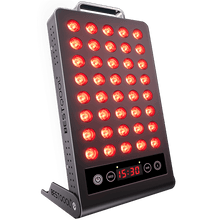
The second problem is inconsistent dosing. Atria’s practical guidance emphasizes distance, power, and session time because those three variables determine how much light you are actually getting. At a desk, you shift in your chair, lean in, roll back, turn sideways, and sometimes block the target area with clothing. That makes it harder to know whether you are underdosing, overdosing, or simply wasting the session.
The third problem is false expectations. Stanford’s review of the science makes clear that red light is not a cure-all for fatigue, focus, pain, sleep, or performance. If your upper back hurts because your laptop is too low and you have not stood up in three hours, a glowing panel is not fixing the root cause. In real-world recovery, posture, movement, load management, and sleep still do most of the work.
What a safer desk routine actually looks like

If you want to use red light therapy near your workstation, keep it structured. Home-use timing guidance often lands around 10 to 20 minutes per session, two to three times weekly for skin goals, while other sources allow somewhat more frequent use depending on the device and target area. For most desk workers, a short session before work or during a real break makes more sense than passive exposure stretched across emails and meetings.
A simple example shows the difference. If you use a panel for 12 minutes on your neck and shoulders at 8:30 AM, then turn it off and get back to work, you have a repeatable routine you can track. If instead the panel runs from 9:00 AM to noon while you occasionally angle your face toward it, there is no clean dose, no consistent target, and no easy way to tell whether skin tightness or eye fatigue later that day came from the light, the screen, or both.
Bare skin, the right distance, and following the manufacturer’s directions matter more than squeezing in extra minutes. If the light feels energizing, avoid using it too close to bedtime; some guidance suggests finishing at least two hours before sleep. If you are using it on the face or anywhere near eye level, protective eyewear is the safer choice.
Who should be especially cautious
Casual all-day desk use is a poor fit for anyone with photosensitivity risks or medical cautions. That includes people taking certain antibiotics, retinoids, or other light-sensitizing drugs, as well as those with lupus, epilepsy, active eye disease, suspicious skin lesions, or active cancer in the treatment area. Pregnancy is another situation where individualized guidance makes more sense than improvising.
Skin tone also deserves separate mention. The phase I safety trials found that darker skin showed a lower maximum tolerated dose in the study design and a greater tendency toward temporary hyperpigmentation. In plain terms, if you have medium-to-deep skin tones, it is smart to start with shorter sessions, watch for lingering redness or darkening, and resist the urge to push through because the device feels gentle.
The practical upside and the real downside
Used well, red light therapy can support skin appearance and some recovery goals, and many people like it because it is noninvasive and easy to repeat at home. A short session can fit neatly into a wellness routine, especially when your main goals are mild aches, skin maintenance, or scalp support.
The downside is that convenience can encourage sloppy use. OSHA’s 2025 interpretation is a reminder that red light therapy is not treated like simple first aid in a workplace context. That does not mean a desktop panel is dangerous by default. It does mean this is a real therapeutic modality, not decorative office lighting, and it deserves real dosing discipline.
So, is it safe to use red light therapy at your desk for multiple hours?
The best evidence-based answer is no, not as a routine. Short, intentional sessions are the safer and more evidence-aligned approach, while multi-hour use adds eye exposure, dosing uncertainty, and a higher chance of skin irritation without clear proof of added benefit.
If you want the potential wellness upside, treat red light like a session, not a desk lamp. Keep it brief, protect your eyes, respect your skin’s feedback, and let ergonomics, movement, and sleep carry the rest.


 Small
Small

 Moderate

 Moderate

 Moderate

 Full
Full

