

Living with lower back pain can feel like carrying a weight you never get to put down. It can change how you move, how long you sit, how you sleep, and even how you feel about your body. As someone who works at the intersection of red light therapy and spine-friendly movement, I see this every day: people are not looking for gimmicks; they want safe, credible relief that lets them get back to normal life.
Red light therapy (also called photobiomodulation) is one of the most talked‑about at‑home tools for pain today. At the same time, high‑quality research and clinical guidelines still point strongly toward movement, core stability, and education as the backbone of lower back pain care. The most sustainable results usually come when we combine these approaches thoughtfully instead of expecting any single modality to be a magic fix.
In this article, I will walk you through what lower back pain really is, what red light therapy likely does at the tissue level, what the strongest evidence still supports for long‑term relief, and how to safely integrate red light with proven core exercises such as planks, side planks, bird dog, and the McGill “Big 3.”
Why Lower Back Pain Is So Common
Lower back pain is not rare bad luck; it is one of the most common musculoskeletal problems worldwide. Several clinical and epidemiological sources estimate that up to about 80 percent of adults will experience low back pain at some point in life. It is also a leading cause of disability and one of the most expensive health conditions in the United States when you factor in medical care, missed work, and reduced productivity.
Specialists often distinguish between two broad patterns. The first is non‑specific mechanical low back pain, which means pain that seems to come from the joints, discs, and soft tissues of the lower spine without a single clear structural “villain.” The second includes pain that radiates from the back into the buttock or down the leg, a pattern called radiculopathy or sciatica when it is driven by a pinched nerve. A major academic medical center describes sciatica as nerve pain commonly caused by a bulging disk or other structures in the lumbar spine that press on the nerve root.
Modern research has made it clear that lower back pain is rarely about one factor alone. A systematic review of exercise for non‑specific chronic low back pain highlights issues like weak or poorly coordinated deep trunk muscles, altered motor control, slumped sitting and prolonged flexed posture, degenerative changes in discs and joints, and even psychosocial factors such as stress, catastrophizing, and fear of movement. A 2021 clinical practice guideline for acute and chronic low back pain from an orthopedic physical therapy academy emphasizes that effective care is built on non‑drug treatments, especially exercise, manual therapy when appropriate, and active education rather than passive rest.
The important takeaway is that while pain can be intense and frightening, it is often modifiable. The spine and its supporting muscles respond to load, alignment, and movement. That is exactly where both red light therapy and targeted exercises can play complementary roles.
What Exactly Is Red Light Therapy?
Red light therapy is a non‑invasive treatment that uses specific wavelengths of red and near‑infrared light to influence how cells behave. You may see it described as low‑level laser therapy, low‑level light therapy, or photobiomodulation. Instead of heating tissues like some older infrared devices, these lights deliver relatively low‑intensity energy that cells can absorb.
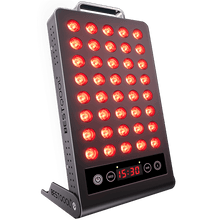
In musculoskeletal applications, the light is usually delivered by LEDs or low‑power lasers in the visible red and near‑infrared range. Devices can take many forms: clinic‑grade treatment heads, at‑home panels, wrap‑around pads, and smaller targeted units. The light is positioned near the skin over the painful region, such as the lower back, for a set time.
Based on laboratory and clinical research in photobiology, red and near‑infrared light appear to interact with structures inside cells, especially mitochondria. This interaction can increase cellular energy availability, influence reactive oxygen species, and modulate signaling pathways involved in inflammation and tissue repair. Importantly, the goal is not to “burn” or damage tissue, but to nudge struggling cells toward a healthier state.
For pain conditions, red light therapy is usually framed as a supportive modality. It does not reshape bones or discs, and it does not directly strengthen muscles. Instead, it may help calm irritated tissues, lower pain sensitivity, and create a more favorable environment for healing and rehabilitation efforts to succeed.

How Red Light Therapy May Help Lower Back Pain
Most people ask two simple questions: how could shining light on my back possibly change pain, and will it actually matter in my daily life?
While the research on red light therapy and low back pain is still evolving, several plausible mechanisms have emerged from broader photobiomodulation science and early clinical work in musculoskeletal pain.
Cellular energy and recovery
Chronic low back pain often involves tissues that have been overloaded and under‑recovered for years. Deep stabilizing muscles may be under‑recruited, while superficial muscles overwork to compensate. Discs, ligaments, and joint capsules can be irritated by repeated micro‑stress.
Red and near‑infrared light have been shown in basic science studies to enhance mitochondrial function, which increases the energy available for cellular repair processes. When cells in muscles, fascia, and other soft tissues work more efficiently, they may clear inflammatory byproducts better and maintain healthier structure under load. In practical terms, that can translate into less stiffness, fewer “hot spots,” and a better response to the exercise programs that truly rebuild capacity.
Inflammation and pain signaling
Low back pain is not only about mechanical stress; it is also about how the nervous system interprets that stress. Local inflammation, even at a low grade, can sensitize nerve endings in and around the spine. Over time, the central nervous system can become more reactive, so the same physical input feels more painful.
Photobiomodulation research suggests that red light exposure can dampen certain inflammatory mediators and influence nerve excitability. People often describe this subjectively as a warming, soothing, or easing effect in the treated area. While the degree of relief varies, even a modest reduction in pain intensity can be enough to allow someone to move more, tolerate their core exercises, and reduce their reliance on pain medications.
Muscle tone and guarding
When the brain senses threat around the spine, it often responds by tightening muscles in the lower back as a protective strategy. This guarding can be exhausting and paradoxically increase pain because stiff muscles compress joints and limit healthy movement.
Clinically, many people report that red light sessions help their back muscles feel less clenched and more willing to move. This is consistent with the broader idea that photobiomodulation can alter neuromuscular tone. The key is that reduced guarding should become an invitation to practice better movement patterns rather than a cue to immediately load the back aggressively.
How strong is the clinical evidence?
Compared with exercise therapy, the evidence base for red light therapy in chronic low back pain is smaller and more heterogeneous. Some clinical trials and reviews in musculoskeletal conditions suggest that red and near‑infrared light can provide short‑term reductions in pain and disability for certain patients, especially when combined with active rehabilitation rather than used in isolation. At the same time, protocols vary widely in wavelength, dosage, and schedule, and not every study shows large or lasting benefits.
By contrast, we have robust, multi‑study evidence that specific exercise and core stabilization programs produce consistent and meaningful improvements in chronic low back pain. A systematic review of non‑specific chronic low back pain found that core stabilization and strengthening programs often reduce pain by roughly 40 to more than 70 percent, with longer programs of three to twelve months tending to produce greater and more sustained effects. A plank‑focused core stabilization program in young adults with mechanical low back pain produced large improvements in both pain scores and Oswestry Disability Index scores over only three weeks of consistent practice.
Major clinical guidelines for acute and chronic low back pain emphasize exercise, education, and selected manual therapies as first‑line, evidence‑based treatments. Red light therapy is generally considered an adjunct rather than a replacement. That does not mean it is useless; it means you will likely get the best value from red light when you see it as a supportive tool wrapped around a strong movement and lifestyle strategy.
Why Core Strength Still Matters Even If You Use Red Light
To understand why pairing red light therapy with targeted exercise makes sense, it helps to look more closely at how the core and spine behave in people with low back pain.
Research on non‑specific chronic low back pain repeatedly finds poor recruitment and delayed activation of deep trunk muscles such as the transversus abdominis and multifidus. These muscles are critical for spinal stability and upright posture. When they underperform, the passive structures of the spine—discs, ligaments, and facet joints—see more load than they are designed for in daily life, and superficial muscles must work overtime to compensate.
Core stabilization programs aim to restore healthier muscle coordination and endurance. One review of trunk‑focused programs reported pain reductions in the range of roughly 39 to 76.8 percent across trials, with closer attention to motor control and balance often yielding superior results to simple stretching or general fitness alone. Another trial showed that combining core stability exercises with traditional strengthening delivered about twice the pain reduction of strengthening alone over a four‑week period.
The message is not that you need a six‑pack; it is that you need a core that knows how to switch on, support the spine in key positions, and keep working over time without fatiguing immediately. Red light therapy may help your tissues feel better, but it cannot teach your muscles how to fire in sequence or retrain your movement habits. That part still belongs to deliberate practice.
Planks, McGill’s “Big 3,” And Other Core Exercises For Back Pain
Among the many core exercises available, planks and related stabilization drills have earned a prominent place in spine rehabilitation and performance programs. Harvard Health describes the plank as an isometric core exercise where you hold a push‑up‑like position, usually on your forearms, keeping your body in a straight line from head to feet. Unlike standard sit‑ups, which mainly target the front of the abdomen and can strain the neck and lower back with repetitive bending, planks engage multiple core muscle groups at once and avoid repetitive spinal flexion.
Several clinical and research sources support this shift. One spine researcher has popularized the “Big 3” core exercises—curl‑up, side plank, and bird dog—as a minimalist set that builds torso stiffness and spinal stability in the front, side, and back without repeatedly bending or twisting the spine. The recommended frequency in that program is twice per day while symptoms persist, then gradually transitioning to maintenance several times per week once pain improves.
Electromyography studies show that plank variations, especially when done on slightly unstable surfaces or with reduced base of support, strongly activate the rectus abdominis, external and internal obliques, and transverse abdominis. Unstable‑surface planks and suspension‑based hip‑adduction planks can further increase activation demands, though these advanced versions are better suited for later‑stage rehab or athletic training rather than early pain‑relief phases.
At the same time, a recent cross‑sectional study published in the Journal of Clinical Medicine found that longer plank hold times do not necessarily indicate a healthier back. In that research, individuals with low back pain actually held planks longer than those without pain, and plank duration alone did not predict back pain status once factors like age, body mass index, physical activity, and working hours were considered. Among those with low back pain, a higher ratio of posterior chain endurance (as measured by single‑leg bridges) to plank endurance was associated with lower disability. This suggests that balanced strength between the front and back of the trunk matters more than brag‑worthy plank times.
In practice, this means it is wise to pair planks with posterior chain work such as bridges and bird dog, and to focus more on quality and alignment than on chasing extreme hold durations.
When Planks Help Your Back – And When They Hurt It
If you have ever tried to plank and felt a sharp pinch in your lower back rather than a steady burn in your abdominals, you are not alone. Physical therapists who use planks in back‑pain rehab hear this complaint frequently.
Multiple clinical articles and physiotherapy blogs converge on the same root causes. One therapist notes that in the vast majority of people whose back hurts during planks, the pelvis tilts too far forward, creating a deep arch in the lower back. In this sagging position, the vertebrae and spinal ligaments—not the core muscles—are doing most of the supporting. People often describe a focused pinch or ache in the lumbar region rather than broad, muscular fatigue.
Another common error is letting the hips sink below the shoulder line so the body forms a bowed shape toward the floor. This again shifts strain to the spine and away from the abdominals. The opposite pattern—hips hiked too high in a “pike” position—is especially common as fatigue sets in. Here, the load shifts into the shoulders and neck, and can still irritate the lower back.
Neck and shoulder position also matter. Tucking the head or craning the neck up compresses cervical structures and increases stress on neck discs and facet joints. Protracted, shrugged shoulders over‑recruit the upper trapezius and levator scapulae, encouraging the same rounded posture that bothers many people in long desk days.
Safe plank practice depends on alignment and muscle engagement. Several clinics emphasize the same key cues. Rest on elbows directly under shoulders or on straight arms if the forearm position is uncomfortable. Keep a gentle tuck through the pelvis so the lower back is flat or in a very slight natural curve, not exaggerated. Aim for a straight line from head to heels, with the gaze down to keep the neck neutral. Distribute the work across core, glutes, and legs rather than hanging passively into the spine. Breathe steadily rather than holding your breath, since using the diaphragm as your primary brace and bearing down can increase internal pressure in ways that are unhelpful for both the spine and cardiovascular system.
If you cannot maintain this alignment beyond about twenty seconds without sagging or piking, regression is not failure; it is smart programming. Therapists often start people with knee planks or incline planks using a bench or wall. When form is solid and pain free, they gradually lengthen hold times, often nudging people toward sets in the neighborhood of twenty to sixty seconds rather than marathon efforts. Harvard Health points out that multiple short, high‑quality holds are more useful than one long, sloppy plank, and that holding beyond one to two minutes rarely adds meaningful benefit.
The most important rule is to stop immediately if you feel deep aching or pinching in the lower back, neck, or shoulders, especially once your form is starting to unravel. The normal sensation should be a generalized, symmetric muscular fatigue in the abdominals and surrounding core, not joint‑like pain in the spine.

How Red Light Therapy And Core Exercise Can Work Together
Red light therapy and core exercise address different sides of the back‑pain puzzle. Light therapy aims to calm and support tissues; exercise aims to retrain how you move and load your spine. Used together, they can reinforce each other in a way that feels more sustainable than either approach alone.
A practical sequence many people find helpful begins with getting a clear diagnosis from a clinician who sees low back pain frequently. This is particularly important if you have pain that shoots down the leg, persistent numbness, significant weakness, or if your pain is not improving at all. Clinical evaluation helps distinguish non‑specific mechanical pain from conditions that need more specific interventions.
Once you have appropriate medical guidance and have been cleared for active rehabilitation, red light therapy can be used before or after your movement sessions. Before exercise, a session may help reduce pain enough to let you practice better form without guarding. After exercise, it can be part of a calming routine that supports recovery and signals to your nervous system that the back is safe.
On the movement side, building a spine‑supportive routine does not require a gym. Research and guidelines suggest that integrating core strengthening, motor control training, and general physical activity is more effective than strengthening alone. Programs that blend curl‑up variations, side planks, bird dogs, bridges, and controlled functional movements, such as squats and hip hinges, tend to produce better pain and disability outcomes than stretching or general exercise by itself.
For example, one three‑week plank‑based program for young adults with mechanical low back pain used several plank variations held in the twenty to thirty second range with rest between sets and two sets per exercise. Participants were coached carefully on alignment. The group saw pain scores drop from moderate to mild levels and disability scores improve substantially over that short period. Larger, longer trials of core stabilization show even bigger benefits.
Red light therapy can be layered into that kind of plan without making the exercise more complicated. Many people use it on days their back feels particularly reactive, or in the evening to ease stiffness from a day that included sitting and standing. The goal is not to use light instead of moving, but to use it so you can move more confidently.
Pros And Cons Of Red Light Therapy For Lower Back Pain
The table below summarizes how red light therapy fits into a modern, evidence‑based view of lower back pain care.
Aspect |
Potential Upside |
Important Considerations |
Pain relief |
May reduce pain intensity and muscle guarding enough to allow more movement and exercise, especially in people with chronic mechanical low back pain. |
Effects can be modest and vary between individuals; not everyone experiences dramatic relief, and benefits may be short term without concurrent rehab. |
Function |
By easing symptoms, can make it easier to participate in physical therapy, daily walking, and core exercises, which are the true drivers of long‑term improvement. |
Does not directly strengthen muscles, correct postural habits, or restore motor control; function will not improve much if you rely on light alone. |
Safety |
Non‑invasive, does not involve needles or daily medications; generally well tolerated when used as directed on intact skin. |
People with certain conditions, such as a history of skin cancers, significant photosensitivity, or pregnancy, should discuss use with their clinician; devices should not be used over suspicious lesions or directly into the eyes. |
Convenience |
Home devices allow you to treat your lower back while reading or relaxing and can be integrated into morning or evening routines. |
High‑quality devices can be expensive, and time spent on light sessions should not crowd out time needed for prescribed exercises and activity. |
Evidence |
Photobiomodulation research supports biological plausibility, and some clinical work suggests benefit in musculoskeletal pain when combined with exercise. |
Robust clinical guidelines for back pain emphasize exercise, manual therapy, and education; red light therapy is considered an adjunct rather than a core pillar of care. |
Safety Checks For Home Red Light Therapy And Plank Work
Any home‑care tool should be filtered through two lenses: your unique medical history and the best available evidence.
For red light therapy, discuss it with your healthcare provider if you are pregnant, have a history of skin cancer or pre‑cancerous lesions, take medications that increase sensitivity to light, or live with complex conditions such as uncontrolled diabetes or autoimmune disease. Keep the light directed away from your eyes, avoid using it over areas of broken skin unless a clinician specifically approves, and follow device instructions carefully rather than increasing dose aggressively in the hope of faster progress.
For planks and other core exercises, pain is feedback, not something to be ignored. People with acute lumbar disc herniations, severe spinal stenosis, or significant shoulder or wrist problems may need modified positions, such as supported or inclined planks, or different exercises altogether. A physiotherapy resource on planks notes that intensity should be reduced or avoided during acute flare‑ups of shoulder, elbow, wrist, or lumbar pain, and in conditions where prolonged isometric bracing or prone positions are not advised.
A simple self‑check during any plank or core drill is to ask what you feel most. The goal is a strong, controllable effort through the abdominal wall and surrounding core, with mild to moderate work in the shoulders and hips. If your lower back feels like the main worker or becomes sharply painful, pause, reset your alignment, shorten the hold time, or regress the exercise. Practicing in front of a mirror or asking a family member to watch your form can reveal hidden sagging or piking that you do not feel internally.
Frequently Asked Questions
Does red light therapy replace exercise for lower back pain?
No. All of the strongest evidence and clinical guidelines for both acute and chronic low back pain place exercise and movement at the center of care. Trunk strengthening, endurance work, and multimodal exercise programs are recommended to reduce pain and disability, with additional options such as movement control and mobility work in specific subgroups. Red light therapy can complement these strategies by making your back feel better, but it does not retrain your muscles or change how you move. The most resilient outcomes come when light is paired with well‑designed, spine‑friendly exercise.
How long should I try red light therapy before deciding if it is helping?
Most structured exercise programs for chronic low back pain in research span several weeks to several months. It is reasonable to think about red light therapy on a similar timescale. Rather than focusing only on moment‑to‑moment pain, track meaningful changes: how far you can walk, how long you can sit or stand comfortably, and whether you are progressing your exercises without flare‑ups. The Modified Oswestry Disability Index, a standard questionnaire used in low back pain research, uses a minimal clinically important difference to distinguish true change from daily fluctuations. In everyday life, that translates to looking for clear, practical improvements, not only tiny changes in a single pain rating. If you are using light consistently and pursuing an evidence‑based exercise plan yet notice no meaningful change over several weeks, it is worth revisiting your overall strategy with your clinician.
Is it safe to plank if I already have low back pain?
For many people with mechanical low back pain, planks and related core exercises are not only safe but therapeutic when taught and progressed appropriately. They are widely used in physical therapy programs to improve lumbar and core stabilization. However, they must be matched to your current level. That might mean starting with knee planks, side‑lying variations, or bird dogs and gradually working up to full forearm or high planks. It is essential to stop if you feel joint‑like pain in the spine, especially a focused pinch, and to seek assessment if you cannot perform even modified planks without discomfort. A physical therapist can help you choose the right entry point and ensure that your form supports your back rather than aggravating it.
Closing Thoughts
Lower back pain is complex, but your options are broader than simply enduring it or chasing quick fixes. Red light therapy offers a promising, non‑invasive way to support tissue health and pain relief, especially when it helps you participate more fully in the exercise and activity that we know drive long‑term recovery. Thoughtful, well‑coached core work—planks, side planks, bird dogs, bridges, and beyond—remains one of the most powerful tools for rebuilding confidence in your spine.
If you approach your back with curiosity instead of fear, use red light therapy as a supportive ally rather than a stand‑alone cure, and commit to an evidence‑based movement plan, you give your body the conditions it needs to heal and stay resilient over the long haul.
References
- https://www.academia.edu/92739265/Effectiveness_of_Plank_Exercise_in_Low_Back_Pain
- https://www.health.harvard.edu/blog/straight-talk-on-planking-2019111318304
- https://pmc.ncbi.nlm.nih.gov/articles/PMC12155697/
- https://www.cedars-sinai.org/blog/the-best-stretches-and-exercises-for-lower-back-pain.html
- https://www.jptrs.org/journal/view.html?doi=10.14474/ptrs.2016.5.1.29
- https://www.jospt.org/doi/10.2519/jospt.2021.0304
- https://www.researchgate.net/publication/392390060_The_Core_of_the_Issue_Plank_Performance_and_Pain_in_the_Lower_Back
- https://petersenpt.com/mcgill-big-3-exercises-chronic-back-pain-relief
- https://www.physio-pedia.com/Plank_exercise
- https://www.bodyandmind.clinic/plank-exercise-benefits/


 Small
Small

 Moderate

 Moderate

 Moderate

 Full
Full

