

A simple sofa setup can make red and near-infrared sessions easier to repeat. The key is steady positioning, realistic timing, and basic safety.
For sofa sessions, the simplest approach is to aim a red and near-infrared device at your lower back from the distance and for the time the manufacturer specifies, usually about 6 to 12 inches away for 10 to 20 minutes. Keep your spine supported, expose the skin if possible, and treat it as a steady recovery habit rather than a one-time fix.
Does your lower back start throbbing after half an hour on the couch, even when you are trying to rest? Home-use guidance across multiple sources points to short, repeatable sessions several times a week rather than marathon treatments. You will come away with a clear sofa setup, a realistic schedule, and the main safety checks that matter.
Why sofa use can work for lower back pain
Red light therapy is a noninvasive treatment that uses red and near-infrared wavelengths to support cellular activity and reduce inflammation. For lower back pain, the sofa can be a practical place to do it because you can stay relaxed long enough to keep the device at a steady distance, which is one of the biggest variables in home treatment.
Near-infrared light is described as penetrating deeper than visible red light, which is why many back-focused devices use both 660 nm red and 810 to 850 nm near-infrared. In plain English, red light is usually discussed more for surface-level skin effects, while near-infrared is the part most people care about for muscles, connective tissue, and achy lumbar areas.
Evidence for pain relief is promising but not universal, so it helps to think of this as an adjunct rather than a cure. In real home use, that often means less stiffness when standing up from the couch, easier movement the next morning, or reduced soreness after a workday, not a dramatic overnight reset.
The best sofa setup while sitting or reclining

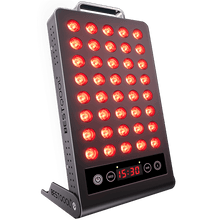
A panel or flexible pad usually makes the most sense because handheld units are harder to keep aligned for 10 to 20 minutes. If you are sitting upright, place a lumbar pillow or rolled towel behind your mid-back so your lower back stays gently supported rather than rounded. Then aim the light directly at the painful zone instead of letting it spill across your hips or upper back.
Many home protocols place the device about 6 to 12 inches away, which is a good starting range for sofa use with a panel. If you recline, prop the panel so it faces the low back squarely rather than from above your shoulder. A simple test is whether the light covers the full painful band from just above the beltline to the top of the glutes without forcing you to twist.
Dose depends on irradiance, distance, and time, so copying someone else’s session length is less useful than following your own device manual. If your panel is designed for 10 minutes at 8 inches, stretching that to 25 minutes because the couch feels comfortable is not smarter dosing. Red light therapy tends to follow a more-is-not-always-better pattern.
How long to use it and how often
Most at-home routines cluster around 10 to 20 minutes per session, several times per week. For a sore lower back, the most practical sofa schedule is to start at the low end, around 10 minutes, and stay there for several sessions before increasing. That lets you judge skin comfort, heat tolerance, and whether the timing fits your real life.
Consistency matters more than occasional long sessions, and that matches what usually works best at home: a routine you will actually repeat. A good example is pairing treatment with an existing habit, such as using the device during the first 15 minutes of evening TV instead of waiting for a perfect recovery window that never comes.
Several sources suggest using red light therapy three to five times weekly, and some back-pain guidance allows up to twice daily during flare-ups. For most people with couch-related low back tightness, a sustainable middle ground is one session a day on most days for a few weeks, followed by a lighter maintenance rhythm if it helps.
Sitting versus reclining: which is better
The device should match the treatment area and your ability to stay still, which makes position choice more important than many people realize. Sitting is usually better if your pain worsens when lying flat, because you can keep a neutral spine and a stable device angle. Reclining is better if your back muscles tense up or spasm when you sit upright for too long.
At-home back protocols work best on bare skin with direct exposure, so whichever position you choose, avoid treating through a thick sweatshirt or blanket. A thin T-shirt may be convenient, but it adds another variable between the LEDs and the area you are trying to reach.
Sofa position |
Best use case |
Main downside |
Sitting upright |
Good for desk-related stiffness and easier panel alignment |
Can feel tiring if your back pain spikes with prolonged sitting |
Reclining with support |
Good when you need muscle relaxation and less spinal loading |
Easy to let the device drift too far away or hit the area at a poor angle |
What to look for in a device for sofa sessions
Clear wavelength disclosure is a basic quality check, and missing specs are a real red flag. For lower back use, the most practical home choice is usually a device that includes both visible red around 630 to 660 nm and near-infrared around 810 to 850 nm, because that covers both surface and deeper targets.
Home buyers should also check irradiance and form factor, not just LED count or marketing language. On a sofa, a stand-mounted panel or a wrap-style pad is usually easier than a small handheld because you do not have to grip it in one position while trying to relax.
FDA-cleared status is mainly a safety signal, not proof of better results, so it can help narrow your choices but should not replace common sense. A sensible device also has a timer, clear distance instructions, and enough coverage to treat the whole lower back without constant repositioning.
Safety and realistic expectations
Red light therapy is generally considered low risk when used correctly, but faulty devices and overuse can cause irritation or burns. Sofa sessions are where people are most likely to get careless, especially if they are tired, lying down, and tempted to fall asleep with the device running. That is why an auto shutoff timer matters more than it seems.
People who take photosensitizing medications, are pregnant, or have unexplained pain should check with a clinician before starting. The same caution applies if your low back pain includes leg weakness, numbness, fever, bowel or bladder changes, or pain after trauma, because those are not good situations for self-treatment on the couch.
Home devices are usually less powerful than clinic devices, so results can be slower and subtler. The practical win to look for is improved comfort during sitting, an easier transition from couch to standing, or less next-day stiffness after a couple of weeks of steady use.
A good sofa routine is simple: support your spine, expose the lower back, keep the light at the correct distance, and stop before more turns into overdoing it. If it helps you move more comfortably and rely less on passive rest alone, it is doing its job.


 Small
Small

 Moderate

 Moderate

 Moderate

 Full
Full

