

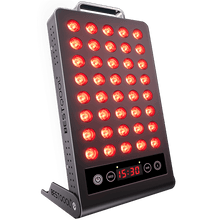
You can usually use a red light therapy panel while lying on a sofa or couch if you keep the correct distance, expose the target skin, and avoid angles that reduce the dose.
If your back is tight, your legs are sore, or you simply do not want to stand still for 15 minutes, a couch setup may be the one you actually stick with. Home red light routines work best when they are consistent over weeks, not intense for a single day. A simple setup can help you decide whether lying down makes sense for your body, your panel, and your goals.
The short answer: yes, but position matters
The practical answer is yes: you can treat from a couch if you still follow the device’s recommended distance and session length rather than treating posture as the main variable. Red light therapy is not like taking a pill, where body position does not matter. The light has to reach the skin at a useful intensity, and that depends on how far the panel is from you, how directly it hits the area, and how long you stay in place.
For most home users, the bigger issue is not whether you are standing or lying down. It is whether the panel is actually aligned with the body part you want to treat. A sofa can make that easier for hamstrings, quads, the low back, the chest, or the abdomen because you are more relaxed and less likely to shift midway through a session.
Why lying down can work well
Home devices are generally safe when used correctly, and the main variables are wavelength, irradiance, and dose. In real-world use, lying down often improves consistency because you can stay still, breathe normally, and keep the panel aimed at one area without fatigue. That matters because red light therapy tends to be cumulative. If a couch setup helps you complete sessions three to five times a week instead of skipping them, that is a meaningful advantage.
There is also a comfort benefit. If someone is using a panel for post-workout soreness or general stiffness, standing at a fixed distance can be irritating enough that sessions get cut short. A stable couch position can make it easier to complete the full treatment window your device recommends, which is often about 10 to 20 minutes for home use.
What changes when you use a sofa or couch
Distance can drift without you noticing
The biggest problem with couch use is that light intensity changes with distance. A panel that delivers a useful dose at about 6 to 12 inches may deliver much less if it ends up 2 feet away because it is sitting on a chair across the room. If you lie down and the setup feels casual, it is easy to lose precision.
A simple fix is to set the panel first, then lie down and measure the gap once with a tape measure or even the length of your forearm. If the manufacturer suggests 6 to 12 inches for deeper targets like muscles or joints, do not assume the couch position is close enough. Small changes in distance can affect treatment strength more than many people expect.
Angle affects how much light reaches the target
Red and near-infrared light work best when the target area faces the panel rather than turning away from it. Red light remains more superficial, while near-infrared reaches deeper tissue. When you lie on a couch, curved body parts such as the shoulders, hips, and sides of the knees can end up partly in shadow. You may think you treated the whole area when only the part facing the panel received meaningful exposure.
That is why a lying-down setup usually works best when you focus on one body region at a time. For example, if your goal is low-back recovery, place the panel so it is square to the lumbar area instead of trying to reach the back, glutes, and hamstrings all at once from a single angle.
Fabric blocks the session more than many people realize
For home treatment, bare skin and direct exposure are the better choice. Sofa cushions, throw blankets, leggings, and T-shirts may make the session feel comfortable, but they also create a barrier between the panel and the tissue you want to reach. If you are using the panel for the face, neck, knee, or low back, that area should be uncovered.
This is one reason couch treatment works best when you prepare the space first. A towel under you is fine for comfort, but the target area itself should not remain covered. If you are treating skin, it also helps to keep that area free of sunscreen or heavy products during the session.
When lying down is a good choice and when it is not
The evidence base is stronger for skin rejuvenation and hair-related uses than for broad wellness claims, so your setup should match a realistic goal. A couch position is often a good choice for recovery-focused use on the legs, hips, lower back, or abdomen. It can also work for chest or facial sessions if the panel is mounted securely and your eyes are protected.
It is less ideal when you need broad, even exposure across a large area and your panel is small. In that case, standing or sitting may provide better coverage. It is also less ideal if you have to twist your neck to keep your face aligned with the light, or if the panel cannot be secured and may tip.
That caution matters because home devices are considered relatively safe, but eye protection and correct use still matter. Do not stare into the panel, and take extra care with facial sessions or stronger units aimed toward the eyes.
A simple couch setup that usually works

Most home routines work better with consistent repeated use than with random long sessions. In practice, that means choosing one target area, placing the panel at the manufacturer’s recommended distance, uncovering the skin, setting a timer, and staying still enough for the light to hit the intended spot for the full session.
A low-back example is straightforward. If your panel’s guide suggests 10 minutes at about 8 inches, lie on your side or stomach so your low back faces the panel directly, keep the light square to that region, and do not let the panel drift toward your shins or shoulders. For quads after training, lying flat with the panel centered over the front of the thighs is often easier than standing and rotating every few minutes.
What not to do from the couch
More time is not automatically better because red light therapy appears to follow a biphasic dose response. Too little may do very little, and too much may reduce the benefit or irritate the skin. That is the main reason not to turn a 10-minute protocol into a 35-minute bonus session just because you are comfortable on the couch.
It is also worth staying skeptical about claims that one relaxed couch session can fix everything from soreness to sleep to chronic pain. The evidence is encouraging in some areas and still limited in others. If you have a diagnosed skin condition, an eye condition, are receiving active cancer care, have photosensitivity, or take light-sensitizing medication, it is smarter to clear the plan with a clinician before building a home routine.
Using a red light panel from a sofa is fine when the setup remains intentional. If the couch helps you keep the right distance, expose the right area, and stay consistent, it is not a shortcut. It is often the more practical routine.


 Small
Small

 Moderate

 Moderate

 Moderate

 Full
Full

