

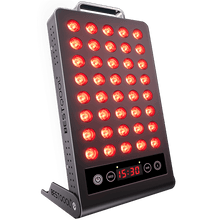
For occasional travel, the best size is usually the smallest panel that still covers your most common treatment area without forcing a lot of repositioning. The authors of Effect of red and near infrared wavelengths on low-level laser (light … and a government health source note that smaller formats are easier to pack, store, and set up, but they usually trade away coverage and session efficiency.
Have you ever packed a therapy device and realized the panel was either too bulky to bring or too small to use comfortably once you arrived? That sizing mismatch is the main reason travel-friendly buyers overpay for capacity they rarely use. This guide breaks down the size trade-offs so you can choose a panel that fits your luggage, your space, and your actual routine.
What “Panel Size” Really Means for Travel

Panel size is not just the emitting surface. For travel, it includes the housing depth, weight, mounting style, power accessories, and whether the unit can survive repeated packing and unpacking. In practical terms, the size decision is really a portability decision: how much treatment area you gain versus how much packing friction you add.
The authors of Effect of red and near infrared wavelengths on low-level laser (light … explain that smaller formats are easier to set up, store, and use, but usually cover less area or fewer functions, while larger formats give broader coverage and more versatility but take more space and usually require more setup.
The core trade-off
If you travel occasionally, you are usually choosing between two imperfect options:
- Compact panel: easier to carry, faster to deploy, narrower treatment coverage
- Larger panel: better coverage, more setup effort, harder to pack
A government health source and a public medical database both note that this trade-off shows up consistently across size guides: compact formats win on convenience and space, while larger fixed systems win on coverage and versatility.
How Size Changes Coverage, Session Time, and Use Case

Coverage area is the main technical variable tied to panel size. A smaller panel can work well for face-focused routines, joints, or one targeted body area, but it often needs more repositioning if you want to treat larger zones. A bigger panel reduces those repositioning changes, which can make sessions more efficient.
For travel, that matters because session flow is usually more constrained than at home. If you are treating a small area, a compact device can be enough; if you want broader body-area coverage, a larger panel may save time even if it is less portable. The public medical guide and a national medical library’s Phototherapy - StatPearls consistently emphasize coverage area, setup complexity, and space required as the main comparison points.
Best fit by treatment pattern
- Face or small joint use: compact panel
- One localized muscle group: compact to mid-size panel
- Multiple body areas in one session: mid-size panel
- Broader routine at home with occasional travel: mid-size panel, if packing allows
The authors of Effect of red and near infrared wavelengths on low-level laser (light … note that smaller panels may require more repositioning to cover a larger area, which can lengthen total treatment time even if the device itself is easier to carry. Larger panels reduce that problem but bring more setup friction and space demand.
The Travel Factors People Miss
Panel size is only one part of portability. For occasional travel, the physical footprint of the device matters, but so do a few related variables:
- Weight
- Thickness
- Protective case fit
- Mounting or stand requirements
- Cord and power adapter storage
- Whether you can use it on a table, wall, or floor
The authors of Effect of red and near infrared wavelengths on low-level laser (light …, a government health source, and a public medical database all show that smaller formats usually win on storage and setup ease, but they lose on coverage; larger systems improve versatility, but they cost more space and setup effort.
If you travel with the panel only occasionally, a protective case and simple mounting system can matter as much as the emitting surface size itself. A panel that technically fits your treatment routine but is awkward to pack is often less useful than a slightly smaller unit you will actually bring.
Which Size Makes Sense by Travel Pattern
Decision table
Travel pattern |
Best size range |
What it does well |
Main inconvenience |
Best for |
Rare weekend trips |
Small to compact |
Easy packing, quick setup, simple storage |
Narrower coverage |
Face, joints, spot treatment |
Occasional longer trips |
Compact to mid-size |
Better balance of portability and coverage |
More bulk than a small unit |
Mixed body-area use |
Travel plus regular home use |
Mid-size |
Strong coverage with tolerable portability |
More setup and storage needs |
Users who want one main panel |
Dedicated home setup |
Large or fixed |
Broadest coverage and greatest versatility |
Hardest to transport |
Home-first users |
The general sizing logic is simple: smaller formats are best when convenience matters most, and larger formats are best when coverage matters most. The public medical guide, a national medical library’s Phototherapy - StatPearls, and other review sources consistently frame device format, coverage area, setup complexity, and space required as the main comparison points.
What occasional travelers should prioritize
If you only travel sometimes, the sweet spot is usually compact or mid-size, not the smallest possible device and not the biggest home panel. That middle ground tends to preserve enough coverage for useful sessions while keeping packing and setup manageable. A government health source and the authors of Effect of red and near infrared wavelengths on low-level laser (light … consistently frame compact and single-panel formats as the best compromise between portability and coverage.
Features That Matter as Much as Size
A panel can be physically small and still be annoying to travel with if the rest of the design is awkward. When you are comparing options, the most important size-adjacent features are:
- Weight
- Thickness
- Carrying protection
- Stand or mount type
- Ability to sit on a desk, table, or floor
- Cable storage and power simplicity
The authors of Effect of red and near infrared wavelengths on low-level laser (light … show that simpler setups are better for convenience and consistency, while more complex systems trade convenience for capability, scalability, or performance.
A practical rule
If two panels are similar in coverage, choose the one that is: 1. lighter, 2. thinner, 3. easier to pack, 4. faster to set up, and 5. less dependent on permanent mounting.
That keeps the travel use case realistic. A travel panel should lower friction, not create it.
Compact vs Mid-Size vs Large: What Each Format Does Best
Occasional travel is usually about balancing convenience with enough treatment area to be worth bringing. The three most common size classes behave differently:
- Compact panels are easiest to travel with and store, but they cover less area.
- Mid-size panels offer the best balance for many occasional travelers.
- Large or fixed systems deliver broader coverage but are much less travel-friendly.
Comparison table
Format |
Coverage |
Setup effort |
Travel convenience |
Best use case |
Compact / portable |
Low to moderate |
Low |
High |
Occasional travel, spot treatment |
Mid-size / single-panel |
Moderate |
Moderate |
Moderate |
Mixed travel and home use |
Large / fixed system |
High |
High |
Low |
Home-first routines, broader coverage |
For a travel-first buyer, the best choice is rarely the biggest panel available. Instead, it is the smallest format that still covers the body area you use most often without making sessions impractical. A government health source and the authors of Effect of red and near infrared wavelengths on low-level laser (light … note that the key is matching coverage without sacrificing usability.
Quick Decision Checklist
Before you buy, check these five points:
- What body area do you treat most often?
- Will you pack it by hand, in a case, or in luggage?
- How much setup time is acceptable on the road?
- Do you need one targeted zone or broader coverage?
- Will the panel also serve your home routine?
If your answer is mostly “one targeted area” and “occasional travel,” compact is usually enough. If your answer is “several body areas” or “I want one panel for home and travel,” mid-size is usually the safer compromise.
Practical Next Steps
Occasional travel changes the size question from “What covers the most area?” to “What will I actually bring, set up, and use consistently?” Smaller panels are easier to travel with, but they usually cover less area and can require more repositioning. Larger panels improve coverage and versatility, but they add space, setup, and packing friction. The authors of Effect of red and near infrared wavelengths on low-level laser (light … and a government health source note that trade-off clearly.
If you want one practical rule: choose compact for portability-first use, mid-size for balanced travel and home use, and large only if travel is rare and coverage matters more than convenience.
Action Checklist
- Identify your most common treatment area.
- Decide whether packing convenience or coverage matters more.
- Check the panel’s weight, thickness, and case fit.
- Compare setup time, not just emitting surface size.
- Choose compact for spot use, mid-size for balance, and large for home-first routines.
- Favor the simplest system you will still use regularly.
FAQ
Q: How Small Does A Red Light Therapy Panel Need to Be to Travel with Occasionally?
A: Small enough to pack comfortably and set up quickly, but not so small that you need constant repositioning for your usual treatment area. For most occasional travelers, compact or mid-size panels are the practical sweet spot.
Q: Does A Smaller Panel Compromise Treatment Coverage or Effectiveness?
A: It can reduce coverage area, which often means more repositioning or longer total session time for larger body areas. Smaller panels are best when your routine is focused on the face, a joint, or one localized muscle group.
Q: What Matters Beyond the Panel’s Physical Size?
A: Weight, thickness, protective case fit, mounting style, cable storage, and setup complexity often matter as much as the emitting surface. A panel that is slightly smaller but easier to pack and deploy is often the better travel choice.
Key Takeaways
Occasional travel usually favors compact or mid-size red light therapy panels. Smaller units are easier to carry, store, and set up, while larger units provide broader coverage and more versatility at the cost of more space and friction. The authors of Effect of red and near infrared wavelengths on low-level laser (light …, a government health source, and a public medical database all note that trade-off.
The best size is the one that matches your real routine: spot treatment and easy travel point toward compact, while broader coverage and mixed home use point toward mid-size.


 Small
Small

 Moderate

 Moderate

 Moderate

 Full
Full

