

Choose a compact device, arrange a brief private window with your roommates, and keep the setup quiet, contained, and easy to pack away. A respectful 10-minute routine is usually less disruptive than an improvised full-room session.
Worried that switching on a bright red panel will make your hostel bunk look like a science-fiction movie set? A planned session with a timer, stable placement, and clear boundaries can fit into a shared stay without disturbing anyone. The following practices address privacy, safety, timing, and roommate communication without forcing you to abandon your routine.
Why Shared-Space Red Light Therapy Can Feel Awkward
Red light therapy devices are visually conspicuous. Even a small panel may fill a dark bedroom with a red glow, while a mask can attract questions from people who have never seen one. The practical requirements—exposing the treatment area, positioning the device correctly, and remaining still for several minutes—can also conflict with the limited privacy of a hostel or shared vacation rental.
The simplest solution is not to hide what you are doing but to make the session predictable, contained, and considerate. A calm explanation such as, “I use this small light for my skin or recovery, and it will be on for about 10 minutes,” usually causes less awkwardness than an unexplained red glow at bedtime.
Red light therapy, also called photobiomodulation, uses selected red or near-infrared wavelengths to influence cellular activity. Evidence is stronger for certain skin and hair applications than for broad claims involving athletic performance, sleep, or chronic health problems. Results also depend heavily on the device and treatment protocol. Evidence for specific skin and hair applications supports treating red light therapy as a consistent wellness practice rather than an urgent treatment that must occur at an inconvenient time.
Choose a Travel-Friendly Device
A full-size panel may work well at home, but it is usually the least comfortable option for a shared hostel room. It requires floor space, an electrical outlet, ventilation, more exposed skin, and a reliable way to prevent other people from looking directly at the LEDs.
A mask, handheld wand, flexible wrap, belt, or small tabletop panel is generally easier to use discreetly. A mask works well for facial routines because it limits light spill and requires little exposed skin. A wrap or belt is practical for a knee, shoulder, or lower back because it can often be worn beneath a robe or loose clothing when the device instructions permit it. A small panel offers more versatility, but its glow is harder to contain.
Match the device to the area you plan to treat. Home devices vary substantially in strength, dose control, and coverage, so a compact format is useful only if it can deliver the manufacturer’s intended treatment at the specified distance. Do not compensate for a small or weak travel device by doubling the session time.
If you primarily treat your face, a mask is more practical than a panel designed to cover your torso. If your goal is post-hike knee comfort, a flexible wrap may be less disruptive than illuminating the entire bedroom.
Ask for a Short Privacy Window

You do not need to describe your entire wellness routine to strangers. A brief, ordinary request is enough: “Would you mind if I used a bright therapy light for 10 minutes before everyone settles down?” State how long it will run, where you will use it, and whether the room will remain accessible.
In a vacation rental shared with friends, coordinate your session with shower schedules, breakfast preparation, or a period when others are out. In a hostel, use the room during a naturally quiet but sleep-friendly window, such as after breakfast or before the evening rush. A predictable 10-minute session creates less tension than repeatedly asking people to leave without saying when they can return.
If someone objects to the brightness, treat the objection as a legitimate shared-space concern. Move the session to a private bathroom only if the room is dry, ventilated, and large enough to use the device safely. Alternatively, ask the host whether a private dressing area, unused common room, or another suitable space is available. Never operate an electrical device beside a wet shower, sink, or bathtub.
Many commercial wellness settings also provide private rooms. A professional session may involve standing between panels for roughly 10 to 15 minutes while the operator leaves the room. These private treatment sessions provide a useful model for travel: prepare first, set the timer, complete the session efficiently, and get dressed before reopening the space.
Control the Glow Without Blocking the Treatment
Do not drape a towel, blanket, or hostel privacy curtain directly over a panel unless the manufacturer explicitly designed the device for enclosed use. Covering ventilation openings can trap heat and create a safety risk.
Instead, control the direction of the light. Face a tabletop panel toward a wall or into the corner of your bunk while maintaining the manufacturer’s required clearance. If the bed has a privacy curtain, position the device so the fabric contains some of the glow without touching the LEDs or ventilation openings. Check periodically to ensure the fabric is not becoming warm.
A sleep mask may help roommates who are comfortable remaining in the room, but wearing one should be their choice rather than an expectation. Your own eye protection also matters. Incorrect or excessive use may harm unprotected eyes or irritate the skin, so follow the device instructions and wear the supplied goggles when recommended, especially when the light faces you directly.
Near-infrared LEDs may appear dim or completely unlit because near-infrared light is invisible. Do not assume an apparently dark LED is inactive, and never stare into it to check whether it is working.
Keep Clothing and Privacy Practical
Red and near-infrared light must reach the intended treatment area. Clothing, makeup, sunscreen, and heavy skin products can reduce or alter exposure, depending on the wavelength and material. However, you do not need to undress completely in a shared room.
Expose only the target area. For a knee session, wear shorts or roll up one pant leg. For a shoulder, use a tank top or adjust the neckline of a robe while facing away from others. For facial use, cleanse your skin and use a mask or small forward-facing device. A large robe, changing poncho, or towel can provide coverage while you adjust your clothing.
If treatment requires substantial undressing, wait for genuine privacy. A shared hostel dorm is not an appropriate place for a mostly unclothed full-body panel session, even behind a thin curtain. Use a private bathroom only when electrical safety and ventilation are adequate, book a private room, or pause full-body treatment until you have a suitable space.
Missing one session is more sensible than making others uncomfortable or using the device unsafely. Red light therapy depends on repeated use over time, not on maintaining a perfect streak at any cost.
Follow the Device’s Dose, Not a Generic Travel Routine
Red light therapy has a biphasic dose response: too little exposure may accomplish little, while excessive exposure may reduce effectiveness or cause unwanted effects. More light is not automatically better. The dose response depends on irradiance, total energy, wavelength, treatment distance, and session duration.
Many home routines last approximately 5 to 20 minutes per body area and occur three to five times per week, but these figures are not interchangeable across devices. A powerful panel used at 0.5 ft may deliver a very different dose from a weak travel device used at the same distance. Follow the distance, timer, intensity, and frequency specified in your manual.
If your normal protocol is 10 minutes at approximately 0.67 ft, do not move the panel to 2 ft merely to reduce the glow while keeping the same treatment time. Light intensity can fall substantially as distance increases. Recreate the instructed setup or skip the session.
A 10-minute facial session completed four times during a one-week trip requires only 40 minutes total. Scheduling those sessions for 8:00 AM while roommates are showering or eating breakfast is usually easier than using the device every night after the lights are out.
Choose a Socially Considerate Time
Late-night sessions are often the most disruptive because the red glow can reach other beds and disturb people who are trying to sleep. Some users feel alert after treatment, while others find it relaxing. If the device feels energizing, finish at least a couple of hours before bedtime and observe your own response.
Morning is often the easiest option in shared accommodations. Your skin may already be clean, fewer people are trying to sleep, and the session can occur before you apply makeup or sunscreen. Early evening can also work if your roommates agree and the room is not being used for changing or resting.
Avoid turning on a bright panel at 11:30 PM simply because that is your schedule at home. Travel routines should adapt to the environment. Completing a session at 6:30 PM instead of immediately before bed preserves consistency without making the device everyone else’s problem.
Create a Quiet, Stable Setup
Place the device on a solid surface that will not wobble if someone bumps the bed or walks past. Do not balance a panel on luggage, stacked books, a soft mattress, or an unstable hostel shelf. Keep power cords out of walkways, leave ventilation openings clear, and avoid unnecessary extension cords.
Poor positioning can lead to uneven exposure, excessive heat, discomfort, or equipment damage. In a crowded room, someone tripping over a cable may be a more immediate concern than optimizing the treatment dose.
Use physical controls or a quiet remote instead of voice commands, which can feel intrusive when people are reading or sleeping. Set the intensity before exposing the treatment area, start the timer, and silence any app notifications.
When the session ends, switch off the device, allow it to cool if necessary, and clean it using a manufacturer-approved method. Store the device and cable together so they do not become shared-room clutter.
Be Honest Without Making Medical Claims
Curious roommates may ask what the light does. Keep the answer measured: “It is a red and near-infrared light device that I use for my skin or recovery. The evidence depends on the specific goal, so I follow the device instructions.”
Avoid presenting the device as a cure, offering it to treat another traveler’s injury, or implying that the red glow is harmless under all circumstances. Short-term use appears generally low-risk when performed correctly, but long-term safety and effectiveness are not equally established for every device or advertised use.
Do not share a mask, wrap, or other skin-contact device without cleaning it properly. Even among friends, separate eye protection and hygienic contact surfaces are important. A casual demonstration should never become an improvised treatment session for someone who has not reviewed the precautions.
When You Should Skip the Session
Pause treatment if the only available location is wet, poorly ventilated, unstable, or too cramped to maintain the required distance. Stop if you notice excessive heat, persistent redness, pain, blistering, eye discomfort, or another unexpected reaction.
Seek medical guidance if you take photosensitizing medication, have a light-sensitive condition, are pregnant, have a relevant history of eye or skin disease, or plan to use the device over a medical condition. Protective goggles and careful screening are particularly important when treating the face or areas near the eyes.
Travel can also change your skin’s condition. Sunburn, chafing, a new rash, or irritation from unfamiliar skincare products may make your usual routine uncomfortable. Do not treat broken or irritated skin unless a qualified clinician and the device instructions support that specific use.
Pros and Cons of Using Red Light Therapy While Traveling
The main advantage is consistency. A compact home device can preserve an established skin or recovery routine without requiring a clinic appointment. Sessions are relatively short, require no recovery time, and can often be paired with a quiet activity such as listening to a podcast through headphones.
The disadvantages include limited privacy, reduced luggage space, electrical compatibility concerns, and unpredictable room layouts. Brightness can disturb other guests, while rushed or improvised placement can compromise dosing and safety. Home devices are also often less powerful than clinical systems, so carrying one does not guarantee noticeable results.
For a short trip, pausing treatment may be the more practical choice. For extended travel, a mask, wrap, or small panel may be worthwhile if you can use it consistently without monopolizing shared space.
A Low-Awkwardness Travel Routine
Before your trip, photograph the device label and save the manual on your cell phone. Pack the device in a protective case with its original power supply, timer or remote, eye protection, and cleaning cloth.
After arriving, inspect the outlet and choose a stable, dry location. Tell your roommates when the light will be on and how long the session will last. Clean and expose only the target skin, position the device at the prescribed distance, put on eye protection, and set the exact timer. When finished, turn everything off, clean any skin-contact surfaces, and pack the equipment away.
Red light therapy should fit around shared travel rather than dominate it. Keep the session brief, communicate clearly, protect everyone’s eyes and personal space, and follow your device’s instructions instead of improvising. If the room cannot support a safe and respectful setup, skipping one treatment is the most practical choice.


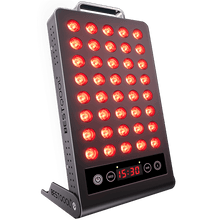
 Small
Small

 Moderate

 Moderate

 Moderate

 Full
Full

