

You can usually use a compact red light therapy device in a hotel room if it is quiet, electrically compatible, safely positioned, and permitted by the property. Confirm unclear rules with the front desk, control light leakage, and follow the device manufacturer’s instructions.
Worried that a bright red panel will make the room glow beneath the door—or that housekeeping will mistake your recovery setup for hazardous equipment? A compact mask, wrap, or tabletop panel can provide a practical 10- to 20-minute session without creating noticeable noise, heat, or disruption when set up thoughtfully. The following precautions can help you comply with hotel rules, protect the room, and avoid disturbing others.
Is Red Light Therapy Generally Allowed in a Hotel Room?

Most personal red light therapy devices function more like wellness electronics than medical or heat-producing appliances. They use LEDs to deliver visible red light and, in many models, invisible near-infrared light. They do not intentionally produce ultraviolet radiation, smoke, flames, steam, or the intense heat associated with tanning beds or portable saunas.
However, that distinction does not mean every hotel permits every device. A battery-powered facial mask and a large plug-in panel present different practical concerns. Hotels may restrict high-wattage appliances, equipment that generates excessive heat, devices that could overload an outlet, or setups that block walkways and emergency exits.
Policies also vary by property, room type, and location. If your device is larger than a laptop, has cooling fans, requires a floor stand, draws substantial power, or resembles clinical equipment, contact the front desk before setting it up. A clear question may prevent confusion: “May I use a personal LED wellness light in my room for about 15 minutes? It does not use UV light, produce smoke, or require permanent installation.”
Describe what the device does rather than relying solely on the term “red light therapy,” which may be unfamiliar to hotel staff. If permission is important, request confirmation through the hotel’s messaging system or by email.
Choose a Device That Fits Hotel Use

Travel-friendly equipment should be judged by more than whether it fits in a suitcase. It must also fit safely within the available space, work with the room’s electrical system, and provide the intended treatment without complicated installation.
A facial mask, handheld unit, or flexible wrap is usually easier to use discreetly than a full-size panel. Genuinely portable equipment is often battery-powered, while many compact panels still require an outlet. Larger systems can provide broader coverage, but their weight, fan noise, setup requirements, and luggage demands make them less practical for an ordinary hotel stay.
Device type |
Hotel-room advantages |
Potential drawbacks |
Facial mask |
Compact, quiet, and easy to use while seated |
Bright around the eyes; limited to facial treatment |
Handheld device |
Battery-powered options are easy to pack |
Treats only a small area at a time |
Flexible wrap or belt |
Provides direct, targeted coverage with little light leakage |
May generate mild warmth against the skin |
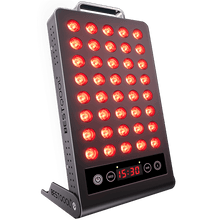
Tabletop panel |
Useful for the face, shoulders, knees, or localized soreness |
Can illuminate the room and may require an outlet |
Large panel |
Covers a broad treatment area efficiently |
Bulky, conspicuous, and more likely to have fans or a stand |
For example, treating one sore knee with a handheld device or wrap for 10 minutes is simpler than positioning a large panel in a narrow space between the bed and the room door. If you need to treat several areas, calculate the total duration before packing. Four separate 15-minute treatment zones create a one-hour routine, even though each exposure is brief.
How to Avoid Disturbing Other Guests

Control Visible Light Leakage
Red LEDs can make a dark hotel room appear dramatically brighter than they do during the day. Although the light is unlikely to travel through solid walls, it may be noticeable through gaps beneath the entrance door, around a connecting-room door, or through poorly closed curtains.
Close the curtains and the room’s interior doors before starting. Position an open panel so it faces an interior wall rather than a window, entrance, or shared connecting door. If light escapes beneath the entrance door, you may use a rolled bath towel as a temporary light block, provided it does not interfere with opening the door or create a tripping hazard.
A mask or body wrap naturally contains more light than an open panel. Placing a tabletop device several feet from the entrance can also make the glow less visible from the hallway. Never cover the device itself, as fabric may obstruct ventilation and trap heat.
Check Fan and Timer Noise
LEDs are quiet, but some higher-output panels use cooling fans. Test your equipment at home before traveling, listening for fan hum, timer beeps, voice prompts, or app notifications that might carry through thin walls late at night.
Silence alerts if the controls allow it, and operate the device before the hotel’s quiet hours. A 10-minute session at 7:30 PM is less likely to cause concern than running a fan-cooled panel beside a shared wall at 1:00 AM. Place the equipment on a stable table or carpeted floor rather than directly against a wall, headboard, or cabinet that could amplify vibration.
Be Considerate of Roommates and Housekeeping
If you are sharing the room, obtain the other guest’s agreement before illuminating the space. Bright LEDs can cause discomfort even when a person is not looking directly at them. Schedule the session while your roommate is showering, exercising, or out for breakfast, or choose a mask or wrap that contains the light more effectively.
Unplug and pack the equipment before housekeeping enters. Loose cords, unfamiliar stands, and powerful-looking lights may cause avoidable concern. Never leave the device operating unattended, even if it has an automatic timer.
Set Up the Device Without Damaging the Room
Use only a stable, dry surface. Keep the device away from the bathtub, sink, wet towels, drinks, and sprinkler heads. Do not attach equipment to hotel walls, mirrors, furniture, doors, or ceilings unless the property has explicitly approved the installation.
Keep power cords out of walking paths, and never route them beneath rugs or bedding. Do not place a panel on a soft mattress, upholstered chair, or folded towel if the manufacturer requires open ventilation. Mild warmth may be normal during a session, but excessive heat is not.
Inspect the power label before international travel. A plug adapter changes the shape of a plug but does not necessarily convert voltage. If the device does not support the destination’s voltage, use only voltage-conversion equipment recommended by the manufacturer.
Hotel outlets may already supply power to lamps, refrigerators, coffee makers, or charging hubs. Plugging a panel directly into a suitable wall outlet is generally safer than connecting it to an overloaded power strip. Stop using the device immediately if the plug, cord, adapter, or outlet becomes unusually warm.
Use a Conservative Travel Protocol
Typical home-use recommendations often suggest sessions lasting 10 to 20 minutes, approximately three to five times per week, with the device positioned 6 to 12 inches from the body. These figures are not universal prescriptions. Output varies considerably among masks, wraps, handheld units, and panels, so the instructions supplied with your device should take priority.
Travel is not the time to experiment with maximum intensity or unusually long exposure. Continue using settings that you have already tolerated at home. If the device is new, begin with a shorter session rather than trying to compensate for missed treatments.
Longer exposure is not necessarily better. Photobiomodulation appears to have a dose-dependent response: insufficient exposure may have little effect, while excessive exposure may reduce the intended benefit or increase irritation. Red and near-infrared therapy precautions emphasize following the manufacturer’s distance and duration instructions instead of assuming that closer, brighter, or longer treatment will produce better results.
A practical hotel session might involve cleaning the target area, securely placing a tabletop panel 8 inches away, setting a 10-minute timer, wearing the specified eye protection, and remaining seated until the device switches off. This setup is easier to control than moving around the room while the panel is operating.
Eye, Skin, and Medication Precautions
Bright visible red light can cause discomfort or eye strain, while near-infrared light may be invisible even when the emitters are operating. Do not stare into an illuminated panel. Use manufacturer-approved goggles or eye shields when directed; ordinary sunglasses should not be assumed to filter the relevant wavelengths.
Red light therapy precautions describe the treatment as noninvasive but note that excessive exposure may cause redness, swelling, or blistering and that eye protection is important. Mild warmth may occur, but pain, intense heat, persistent redness, visual changes, or a significant rash are reasons to stop immediately.
Use the device on clean, bare skin unless its instructions state otherwise. Makeup, sunscreen, thick creams, clothing, and hotel linens can obstruct the treatment area. Clean masks and other skin-contact equipment before and after use, especially after carrying them through airports or storing them in luggage.
Seek medical guidance before use if you are pregnant, have a photosensitive condition, have a history of skin or eye cancer, have a suspicious skin lesion, or take medication that may increase light sensitivity, including certain antibiotics and retinoids. Red light therapy is a supportive wellness tool, not a substitute for diagnosis, rehabilitation, medication, or treatment of an injury or medical condition.
Does Session Timing Matter in a Hotel?
Timing is partly a matter of personal comfort. Some people find a session relaxing, while others feel more alert afterward. If red light makes it harder for you to settle down, schedule the session for the morning or afternoon instead of immediately before bed.
This consideration is especially relevant during travel, when sleep may already be affected by unfamiliar surroundings, time-zone changes, late meals, and hallway noise. Evidence supporting red light specifically as a jet-lag treatment remains limited, so do not treat it as a guaranteed way to reset your body clock. A consistent bedtime, lower screen brightness, a cool room, and sensible caffeine timing remain more dependable foundations.
For example, if you plan to sleep at 10:30 PM and bright facial exposure feels stimulating, complete your session by about 8:30 PM. If it reliably helps you relax, a brief early-evening session may fit comfortably into your wind-down routine.
When You Should Ask the Hotel First
Front-desk confirmation is worthwhile when the device is a large panel, includes a powerful fan, uses a floor stand, produces substantial warmth, requires unusual adapters, or draws more power than an ordinary personal electronic device. You should also ask before using equipment in a historic property, extended-stay room, cruise cabin, shared accommodation, or hotel with detailed appliance restrictions.
If the hotel declines, respect the decision. A nearby wellness studio may offer private red light sessions in an enclosed room, often lasting approximately 10 to 15 minutes. Alternatively, maintain your recovery routine with walking, gentle mobility exercises, hydration, and sleep until you return home. Missing one or two sessions is safer than concealing an unapproved setup.
Frequently Asked Questions
Will red light therapy trigger a hotel smoke detector?
A properly functioning LED red light therapy device should not produce smoke. However, never place it near a detector or sprinkler, cover its ventilation openings, or continue using it if it smells hot or shows signs of electrical damage. If the device generates substantial heat, obtain hotel approval before use.
Can hotel staff enter while the device is operating?
Hotel access procedures vary. Use the privacy sign when appropriate, but do not rely on it as a safety measure. Remain with the device throughout the session, keep the entrance accessible, and switch everything off before leaving the room.
Can I pack a red light device in carry-on luggage?
Compact masks, handheld devices, and wraps may fit in carry-on luggage, but battery requirements depend on the battery type and capacity. Check the device documentation and current airline rules before departure, particularly if the equipment contains a rechargeable lithium battery.
Is a battery-powered device automatically safer for hotels?
No. A battery-powered device may eliminate outlet and adapter concerns, but it still requires proper charging, ventilation, eye protection, and storage. Never charge it on a bed, beneath clothing, or near water.
A hotel-friendly red light routine should be quiet, brief, stable, and easy to explain. Choose a compact device, confirm unclear property rules, contain the visible glow, follow the manufacturer’s dosage and eye-safety instructions, and never compromise basic electrical safety to maintain a perfect treatment schedule.


 Small
Small

 Moderate

 Moderate

 Moderate

 Full
Full

