

Schedule red light therapy before the morning rush, during a predictable low-demand period, or outside the bathroom. A consistent, device-directed session several days per week is usually more practical than forcing treatment into every morning.
Does your bathroom become a traffic jam of toothbrushes, showers, school bags, and last-minute searches for clean socks? A fixed 10-minute treatment window can fit into many family mornings without delaying anyone if you prepare the device, location, and skincare sequence in advance. The goal is to build treatment around your household’s actual routine rather than an idealized schedule.
First, Decide Whether the Bathroom Is Necessary

Red light therapy does not inherently require a bathroom. Although the bathroom may be convenient because it has a mirror, an outlet, and easy access to cleansed skin, those benefits may not outweigh the scheduling conflict.
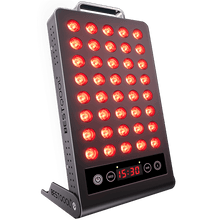
A face mask can often be used while sitting at a bedroom vanity, provided the device instructions permit movement during treatment. A tabletop panel may work on a dresser or desk, while a larger panel can be placed in a bedroom, home gym, or private corner with adequate clearance and a stable electrical connection. Moving the session out of the bathroom is usually the simplest solution when several family members need the room between 6:30 AM and 8:00 AM.
Device format also matters. Face masks provide hands-free coverage, handheld devices suit smaller areas, and panels can cover broader regions. A hands-free device is easier to incorporate into a crowded morning because it does not require you to stand in front of the bathroom mirror throughout the session.
If four people each need 15 minutes in one bathroom, the room already has an hour of demand. Adding a 15-minute light session increases that demand by 25%. Moving treatment to the bedroom eliminates the extra bathroom occupancy without shortening anyone’s routine.
Build the Schedule Around Clean, Bare Skin

Red light should generally reach clean, bare skin. Makeup, sunscreen, clothing, and thick skincare products may obstruct exposure, so facial treatment fits naturally after cleansing but before applying the rest of your morning products.
The key is to separate cleansing from treatment. You might wash your face in the bathroom at 6:20 AM, move to the bedroom for a 10-minute session, and then apply moisturizer and sunscreen at your vanity. The bathroom becomes available almost immediately, even though your routine continues elsewhere.
This sequence also prevents a common scheduling mistake: completing your full skincare routine before remembering that you intended to use the device. Morning treatment can occur before daytime skincare, but it should not become a reason to skip sun protection afterward.
Time |
Bathroom Use |
Red Light Routine |
6:20 AM |
Quick facial cleanse |
Device is already set up elsewhere |
6:25 AM |
Bathroom becomes available |
Begin a 10-minute session |
6:35 AM |
Family shower or grooming continues |
End the session and apply skincare |
6:40 AM |
No added bathroom demand |
Continue with breakfast or dressing |
This arrangement replaces one long bathroom block with a brief cleanse followed by treatment in another room.
Choose a Realistic Session Length

At-home sessions often last approximately 10–20 minutes, but that range is not a universal prescription. Device output, treatment distance, wavelength, target area, and skin sensitivity can all affect the appropriate duration.
The safest scheduling rule is to follow the device manufacturer’s treatment instructions rather than selecting a duration based only on convenience. Typical treatment schedules often use 10–20-minute sessions two to five times per week, but more exposure does not automatically produce better results.
Red light therapy may have a biphasic dose response. In practical terms, too little exposure may be ineffective, while excessive exposure may provide diminishing returns or reduce the intended response. A rushed five-minute session may not replace the recommended treatment, and a 30-minute session should not be used to compensate for missing the previous day.
If your device recommends 10 minutes and you plan four weekly sessions, the total commitment is 40 minutes per week. Scheduling treatment on Monday, Tuesday, Thursday, and Saturday may be more manageable than attempting a daily routine that repeatedly conflicts with school and work departures.
Use a Three-Window Scheduling Strategy
The Before-the-Rush Window
The quietest option is often the 10–20 minutes before the first family member normally enters the bathroom. This approach works well if morning treatment feels comfortable and you can wake slightly earlier without sacrificing needed sleep.
Prepare the device, recommended eye protection, timer, and chair the night before. In the morning, cleanse your skin, start the session, and avoid checking messages or beginning other tasks that could turn a 10-minute treatment into a 20-minute delay.
The main advantage is that no one else’s routine needs to change. However, the strategy depends on waking consistently, which may be difficult after a disrupted night with a baby, a sick child, or a late work schedule.
The Split-Routine Window
If waking earlier is unrealistic, use the bathroom only for the steps that require it. Cleanse first, leave the room, complete red light therapy elsewhere, and return only if necessary after the family rush.
Consider a parent who must leave at 8:00 AM while two children use the bathroom from 6:45 AM to 7:20 AM. A 6:40 AM cleanse followed by a bedroom session from 6:45 AM to 6:55 AM avoids competing with either child. Dressing can happen immediately afterward, with moisturizer and sunscreen kept on the bedroom vanity.
This approach improves bathroom turnover, but it requires a safe secondary treatment area with the correct device distance, a stable setup, and no tripping hazards.
The After-the-Rush Window
Not every session must happen before everyone leaves. If you work from home, start later, or can complete treatment after school drop-off, schedule the session when the household is quieter.
There is no universally optimal time for treatment. Morning use may suit people who find the light energizing, while evening use may feel more compatible with relaxation or muscle recovery. Individual response and consistency matter more than choosing one clock time for everyone.
This window provides less time pressure and makes device setup easier. However, an open-ended plan to treat “later” is easy to forget, so assign it a specific time, such as 8:30 AM after school drop-off.
Match Frequency to Family Life, Not Perfection
Consistency is more useful than an all-or-nothing schedule. Many home-use routines begin with three to five sessions per week, while general skin-maintenance schedules may use two or three weekly sessions. People with sensitive skin may need shorter or less frequent exposure, depending on device instructions and individual tolerance.
A practical family schedule might include two weekday mornings and one weekend session. For example, treatments at 6:30 AM on Tuesday and Thursday can be paired with a relaxed Saturday session at 9:00 AM. This creates three consistent opportunities without turning every school morning into a scheduling challenge.
Consistent sessions are generally preferable to occasional intensive use. If Wednesday morning becomes chaotic, skip the session or move it to another appropriate window rather than doubling Thursday’s duration.
Attach treatment to an event that already occurs reliably, such as turning off the first alarm, starting the coffee maker, or returning from school drop-off. Choose a cue specific enough to establish exactly when the session begins.
Prepare the Night Before
Morning delays usually come from setup rather than treatment. Searching for goggles, untangling a cord, adjusting a panel, or cleaning off skincare residue can take as long as the session itself.
Place the equipment in its approved treatment location before bed. Confirm that the timer is accessible, the chair is positioned correctly, and the floor is clear. Keep approved cleaning supplies nearby, and clean the device after each use instead of leaving maintenance until the next morning.
If the device must remain in the bathroom, give it a designated storage location that does not block the sink, shower, cabinets, or towels. Equipment that must be moved every time someone brushes their teeth will quickly become a source of frustration.
Eye safety should also be part of the setup. Protective goggles may be necessary when facing a panel directly, depending on the equipment and its instructions. Do not assume ordinary sunglasses can replace device-recommended eye protection.
Set Clear Household Rules
A red light panel can be bright, warm, and interesting to children, so the treatment area should not become a play space. Tell family members when the device will be operating, keep cords out of walkways, and do not allow children to handle or independently use the equipment.
A closed bedroom door can signal that a brief session is in progress. However, do not isolate yourself if you are the only adult supervising young children. In that situation, a hands-free mask used in a safe common area may be more practical than a panel that requires fixed positioning and eye protection.
The schedule should also include a firm stopping rule: when the timer ends, the session ends. This keeps the morning predictable and discourages the assumption that more exposure is always better.
Know When Morning Treatment Is Not the Best Choice
Morning sessions are optional. Move treatment to another time if the light causes discomfort, interferes with supervising children, or repeatedly contributes to missed buses and late departures.
Some people find bright exposure energizing, while others prefer evening use. If a session feels stimulating, schedule it earlier in the day or at least two hours before bedtime. Devices that also emit blue light may require different timing because blue light can have a stronger effect on circadian signaling.
Seek medical guidance before self-directed treatment if you take medication that increases light sensitivity, have a photosensitive condition, or plan to treat an active wound or an area previously treated for cancer. Stop using the device and obtain medical advice if you develop persistent redness, blistering, eye discomfort, or unusual skin changes.
Red light therapy should complement an established wellness or recovery plan, not replace medical evaluation for ongoing pain, severe fatigue, skin disease, or other unexplained symptoms.
A Simple Routine You Can Maintain
The most workable family-morning plan is often a brief bathroom cleanse, a manufacturer-directed session in the bedroom, and skincare afterward. Begin with the session length and frequency specified for your device, then evaluate whether the routine remains comfortable and allows everyone to leave on time.
Track each treatment date, session length, device distance, and any changes in your skin, sleep, soreness, or energy. After two to four weeks, your record can show whether the schedule is sustainable and whether morning treatment suits you. It may also help distinguish a device-related concern from a household scheduling problem.
A good red light therapy routine should fit quietly into family life rather than control it. Protect the bathroom’s busiest minutes, prepare equipment in advance, follow device-specific dosing instructions, and choose a schedule you can repeat without stress or delays.


 Small
Small

 Moderate

 Moderate

 Moderate

 Full
Full

