


Continuous red light therapy is the best default for most people because it delivers a steady, predictable dose that’s easier to repeat and track. Pulsed red light therapy isn’t “better” across the board, but it can be worth trying when continuous light feels too stimulating, when you prefer the sensation of pulsing, or when you’re testing a specific pulse setting while keeping time, distance, and intensity consistent. This article explains what actually changes between the two modes, how cells respond to light, and how to choose a setting that fits your goal.

Pulsed vs. Continuous Red Light Therapy: What’s the Difference?
In red light therapy, “continuous” and “pulsed” describe how the device delivers the same red or near-infrared light to your tissue over time, not two different types of treatment. The wavelength stays the same. What changes is the delivery pattern.
With continuous red light therapy, the LEDs stay on for the full session, so light energy is delivered in a steady stream. With pulsed red light therapy, the LEDs switch on and off in rapid cycles, so energy arrives in bursts rather than continuously.
That timing difference matters mainly because it can change the average energy dose (J/cm²) your body receives. Pulsed mode includes a built-in off time. On many home devices, that off time lowers the average energy delivered per minute compared with continuous mode set for the same number of minutes. As a result, two red light therapy sessions with the same timer setting can deliver different total energy to the same area, even when the wavelength is identical.
It also helps to know that “pulsed” is not one single setting. Frequency tells you how many on-off cycles happen each second, and duty cycle tells you how much of each cycle the light stays on. Together, those settings define the pulse pattern your tissue is actually receiving. Continuous mode is inherently uniform, while pulsed mode can vary widely depending on how it is configured.
How Does Red Light Therapy Work?
Red light therapy delivers red and near-infrared light to tissue to influence cellular activity. A commonly described effect is improved mitochondrial efficiency and cellular redox signaling, which can change cellular energy availability and the chemical signals involved in inflammation and repair.
Cellular Response
Light absorption can affect nitric oxide activity and short-lived reactive oxygen signaling, which act as messengers for cellular regulation. These signals can influence gene expression related to recovery, circulation, and tissue maintenance. The exact pathway varies with wavelength, tissue type, and dose.
Why Dose Matters
Photobiomodulation follows a biphasic dose response: too little may do little, an effective range supports beneficial signaling, and too much can blunt the response. This is why consistent, tolerable sessions often outperform pushing intensity or duration, and why mode comparisons can be misleading if one mode delivers a different average dose.
When Continuous Red Light Therapy Fits Best
Continuous red light therapy feels steady because the LEDs stay on for the full session. That simplicity is useful when you want predictable sessions and fewer variables to manage while you dial in a routine.
Continuous delivery often fits best when:
- You are aiming for gradual skin improvements, such as tone, texture, and overall appearance
- You want consistent sessions for general recovery or daily maintenance
- You notice flicker easily or find pulsing distracting
- You are still figuring out the right distance and session length for your body
Continuous mode also makes it easier to notice patterns. If soreness eases or skin feels calmer, you can connect that change to your routine without wondering if a shifting pulse setting changed the dose.
When Pulsed Red Light Therapy Fits Best
Pulsed red light therapy delivers the same wavelengths in on-off cycles, which can feel different even when the session time is identical. People tend to prefer pulsing when comfort is the deciding factor, or when they want to test a specific pulse setting while keeping everything else stable.
Pulsed delivery often fits best when:
- Continuous light feels too stimulating for the area you are treating
- You prefer the sensation of pulsing during a session
- You want to experiment with a pulse setting while keeping distance and session time consistent
- You are focusing on a smaller area where comfort and tolerance decide how long you can stay with it
Pulse settings vary across devices, so “pulsed” is not one single experience. Frequency and duty cycle define the pattern, and they can also change the average delivered energy if the light is off for part of each cycle. That is why pulsed sessions can feel different even when the timer looks the same.
If you want to compare modes without overthinking specs, it helps to use a device that includes both continuous and pulsed options. Bestqool offers models with both modes, so you can keep your time and distance the same and simply note which setting feels better for your goal.
What to Watch for in Pulsed and Continuous Modes
Inconsistent results usually come from three issues: unintentional dose changes, overinterpreting pulse presets, and ignoring basic safety. Keep these three points in mind before you switch modes.
Keep Dose Consistent When Testing Modes
Pulsing can change the average delivered energy through the duty cycle. A session can look intense while delivering less total energy than a continuous session of the same length. Parameter reviews stress that irradiance and energy density are the foundation for interpreting outcomes, and pulse structure belongs in the context of those basics.
Treat Presets as Experiments, Not Proof
Device manuals sometimes associate pulse settings with outcomes. Those descriptions can be helpful for user interface choices, yet they are not the same as clinical evidence for your specific concern. The safest approach is to use presets as structured options, track your response, and adjust based on comfort and results.
Keep Safety Simple
Bright panels still require common-sense habits. Avoid staring directly into the LEDs, use eye protection when appropriate, and take photosensitivity seriously. If you have a neurological condition involving light sensitivity, a history of seizures, or you are taking photosensitizing medications, it is wise to talk with a clinician before experimenting with new settings.

Choose the Mode That Fits Your Goal
For many people, continuous output is the easiest way to build a repeatable routine and control dose variables that drive real outcomes. Pulsed output earns a place when it feels better, improves tolerability, or gives you a structured way to test a different signal pattern while keeping the rest of the session consistent. With red light therapy, the mode is a tool, and your results are shaped by the session; you can repeat comfortably over weeks.
FAQs
Q1: Can I Use Red Light Therapy Every Day?
Yes. Daily use is common, as long as sessions stay comfortable and you avoid pushing intensity or time just to “do more.” Many people do best with short, repeatable sessions and occasional rest days if skin feels dry or irritated. If you have a condition involving photosensitivity or you take photosensitizing medications, check with a clinician first.
Q2: Is It Better to Use Red Light Therapy Before or After a Workout?
Yes, either can work. Before training, some people use it as part of a warm-up routine to support comfort and mobility. After training, it may feel more helpful for soreness and recovery. The better choice is the time you can repeat consistently. Avoid long sessions right after intense exercise if heat sensitivity is an issue.
Q3: Do I Need to Protect My Eyes During Red Light Therapy?
Yes. Even when the light is not UV, high-intensity LEDs can be uncomfortably bright and may strain your eyes. Avoid staring directly at the source, and consider appropriate eye protection for panel sessions, especially at close distances. If you are prone to migraines or light-triggered symptoms, keep sessions shorter and increase distance.
Q4: How Close Should I Sit or Stand from a Red Light Therapy Panel?
No single distance is “best.” Closer usually feels stronger because the intensity at the skin rises, while farther can feel gentler and cover a larger area. Use the distance that stays comfortable for the full session and keep it consistent if you are evaluating results. If your device provides distance guidance, treat it as a practical starting point.
Q5: How Long Does It Take to Notice Results From Red Light Therapy?
It depends. Some people notice short-term changes in comfort or stiffness within days, while skin-related goals often take several weeks of consistent use. Track one simple marker that matters to you, such as next-day soreness or skin feel, instead of relying on memory. If nothing changes after a few weeks, adjust the dose or the routine rather than chasing settings.


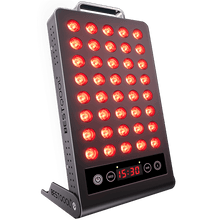
 Small
Small
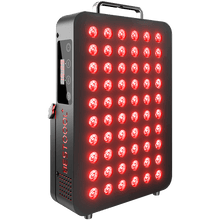
 Moderate
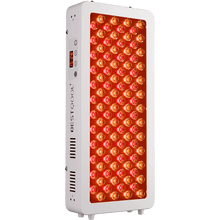
 Moderate

 Moderate
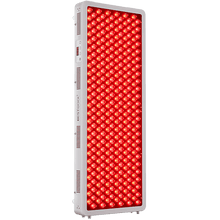
 Full
Full


