


No, red light therapy does not penetrate clothing in a way that keeps treatment reliably effective for most people. Fabric absorbs part of the light and scatters the rest, so the intensity that reaches your skin drops and spreads out. That matters because photobiomodulation responds best to a repeatable dose: similar distance, similar time, and similar skin exposure.

What Happens to Red Light When It Hits Fabric?
Clothing is an optical obstacle, even when it looks thin. Textiles are built from fibers, dyes, and air gaps, so light rarely travels straight through like it would through a clear lens.
Reflection and Absorption
Some photons reflect off the fiber surface. Others are absorbed by the fibers and dyes and converted into heat. Both effects reduce the amount of usable light that can reach your skin.
Scattering and Spread
The bigger issue is scattering. Fibers redirect photons in many directions. You may still see a red glow through a shirt, yet the light that reaches the skin can be weaker and less concentrated across the area you intended to treat. That “spread” is a quiet efficiency killer because dosing becomes uneven.
What Changes Fabric Behavior
Fabric is not one thing. Small differences in material and structure change how much light transmits and how much it diffuses.
| Fabric Factor | Typical Effect on Light | What You Experience |
| Tighter weave or compression stretch | More scattering, less direct transmission | Treatment feels inconsistent across days |
| Extra layers | Compounds attenuate quickly | “Same routine” stops feeling the same |
| Moisture from sweat | Shifts transmission and scatter patterns | Post-workout sessions feel less predictable |
| Dark dyes and certain finishes | Increased absorption | More warmth in cloth, less certainty at skin |
If consistency is the goal, fabric introduces variables you cannot easily control or measure.
Bare Skin vs. Clothing: How Much Light Actually Reaches Your Skin?
A reliable session is built around red light therapy dosing, not visibility. The eye sees color, not intensity in the skin.
Dose and Repeatability
Photobiomodulation is parameter-driven. Outcomes can shift with changes in irradiance at the skin, exposure time, distance, and schedule. Clothing disrupts the first step because it reduces intensity and redistributes photons before they reach the body. Once that happens, a session turns into guesswork.
Why Seeing Red Misleads
A glow through a shirt proves only that some visible light made it through. It does not confirm a stable dose across the whole target area. Scattered photons can land outside the zone you care about, which makes the session feel “fine” while delivering less useful energy to the spot you meant to treat.
Adding Time Doesn’t Fix It
People often extend session length to “make up for” clothing loss. That strategy is unreliable because the loss is unknown and it changes with the fabric, layering, and moisture that day. The body’s response to photobiomodulation also does not behave like a simple linear meter where doubling time always doubles the benefit. Time still matters, yet it works best after the biggest variable has been removed.
| Scenario | Dose Clarity | Practical Result |
| Bare skin, stable distance | High | Progress is easier to judge |
| Thin clothing, same setup | Medium to low | More day-to-day variability |
| Thick or damp clothing | Low | Hard to connect routine to outcomes |
When someone asks if red light therapy works through clothing, the honest answer is that the session becomes much harder to control, so results become much harder to trust.

How to Use Red Light Therapy Without Wasting Your Session
Convenience can stay in the routine without sacrificing dose clarity. The key is simplifying the session so it is repeatable.
Skin Exposure
Direct skin exposure fixes the clothing problem immediately. Full-body exposure is not required. A focused area treated well typically beats a broad area treated poorly through fabric.
A few realistic examples:
- Forearms, elbows, wrists: roll up sleeves.
- Knees, shins, ankles: lift a pant leg.
- Neck and shoulders: a private room for a few minutes is usually enough.
- Towels, robes, blankets: keep them out of the beam path during exposure.
This approach preserves privacy and still gives red light therapy a clear path to the skin.
Distance
Distance changes intensity quickly. A strong routine uses a setup you can repeat without thinking.
Pick one practical distance and keep it consistent. Use the same chair, the same device placement, and the same body position. If your device provides distance guidance, treat it as your anchor rather than improvising every session.
Time
Once distance is stable and the skin is exposed, time becomes a meaningful adjustment knob.
Hold the same session length for 10 to 14 days. Then adjust gradually based on comfort and the specific goal you are chasing, such as skin appearance support or post-training recovery support. Random changes make it harder to learn what works.
Simple Tracking
Record three items:
- area treated
- distance used
- minutes used
That small habit turns red light therapy into a repeatable routine you can evaluate calmly.
Why Gym and Public Booth Sessions Often Fall Short
Public setups can be convenient, yet convenience tends to reduce control. Control is what makes sessions repeatable.
Privacy Constraints
In shared spaces, many people keep clothing on for comfort. That pushes treatment straight into the fabric problem, meaning lower intensity at the skin and a less predictable dose. Even a good device cannot change the physics of a shirt.
Distance Drift
Booths and shared rooms often force awkward angles. The distance between the device and the body changes from visit to visit. Small distance shifts can translate into large intensity shifts at the skin, especially when combined with clothing.
Shared Surface Reality
Facilities may clean diligently, yet shared equipment always introduces uncertainty. Some users respond by covering more skin, which again reduces dose clarity. That cycle is common: privacy and hygiene concerns increase clothing coverage, and clothing coverage reduces treatment quality.
Choose Home Sessions for Privacy and Direct Skin Exposure
Home sessions make privacy simple, so direct skin exposure becomes easy and repeatable. That single advantage removes the biggest barrier to dose consistency. A home routine also makes distance and timing easier to keep steady, which helps you judge progress without constant tinkering. Bestqool is designed for home use, so the setup naturally supports skin-to-light contact and a consistent routine. If your sessions have been fully clothed, expose one target area for a week and keep distance and minutes steady. The feedback becomes much clearer.
FAQs
Q1: Can I use red light therapy if I’m taking a photosensitizing medication (like doxycycline)?
It depends. Many photosensitizing drugs can increase the chance of a phototoxic skin reaction, and that risk can be higher in people with underlying photosensitivity. Check with your clinician before using bright light devices on exposed skin, especially if you have lupus, porphyria, or a history of severe light reactions.
Q2: Is red light therapy safe on tattooed skin?
Yes, usually. Tattoos are generally not considered a contraindication, but ink pigments can absorb light and may feel hotter at higher intensities. Some people report warmth, tingling, or localized heating sooner over tattoos. Keep sessions conservative at first, avoid prolonged close-range exposure to dense black ink, and stop if you feel burning pain.
Q3: Should I wash off sunscreen or makeup before a session?
Yes. Opaque layers can change how much light reaches your skin by increasing reflectance and scattering, which makes dosing less consistent. Mineral sunscreens and heavy foundation are the most likely to interfere, especially if they leave a visible cast. Treat on clean, dry skin, then reapply sunscreen afterward if you are going outside.
Q4: Does skin tone affect how red light therapy performs?
It depends. Some biophotonics research suggests skin tone may not be the main limiter for 660 nm penetration at certain tissue sites, yet safety data show higher-dose tolerance can differ across skin types and that overdoing exposure can raise pigmentation risk in some users. Use a lower dose first and scale slowly based on skin response.
Q5: Do I need eye protection when using a panel?
Yes. Avoid staring into operating LEDs, especially at close range. Photobiological safety standards explicitly flag retinal thermal and infrared-related hazards and recommend avoiding eye exposure or using appropriate eye protection for higher risk groups. Closed eyes help, but goggles are a safer default when the device is bright or near the face.


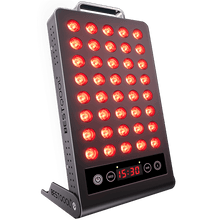
 Small
Small
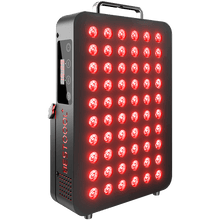
 Moderate
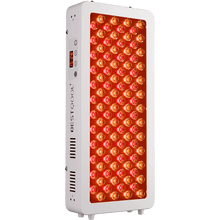
 Moderate

 Moderate
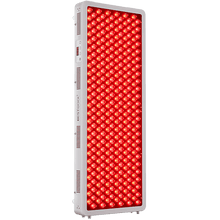
 Full
Full


