
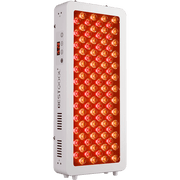

Fertility in women is influenced by a number of factors, some of which include age, weight, overall health, and medical conditions. Recent research has revealed that cellular health, especially the energy available in reproductive cells, also plays a role in supporting fertility in women.
Red light therapy is being studied for its role in cellular energy and women’s reproductive wellness, especially when used alongside medical care. It is believed to work by creating a balanced environment in the body.
In this article, we will explore how red light therapy may relate to women’s reproductive health, egg quality, and fertility support.

Why Egg Quality Matters and How Cellular Energy Plays a Role
Hormonal levels and cycle timings are key factors that play a role in regulating reproductive functions in women. The quantity and quality of eggs are other important factors that influence women's fertility.
The number of eggs produced in the ovaries in each cycle tends to decline naturally with age. Egg quality, on the other hand, is closely tied to overall health and the availability of energy within the cells. Cellular energy, specifically how efficiently cells are able to produce and utilize it, can influence the quality as well as quantity of eggs.
Each egg cell contains thousands of mitochondria. Mitochondria are structures responsible for generating energy molecules called ATPs, which are the body’s source of fuel. These mitochondria power essential processes occurring in the cells, including cell division and embryo development.
The functions of these mitochondria decline due to factors like age, oxidative stress, and inflammation. As a result, the quality of eggs declines too. This is why researchers are exploring therapies that can support the production of energy at the cellular level.
Red light therapy (RLT) may offer a supportive, non-invasive way to support cellular energy, which is one factor researchers consider in egg quality and fertility.
How Red Light Therapy May Influence Mitochondrial Function in Reproductive Cells
Red light therapy, also referred to as photobiomodulation, works by delivering red and near-infrared light having wavelengths between 630 nm and 850 nm. These wavelengths of light can be absorbed by mitochondria easily. They stimulate mitochondrial functions, thus promoting energy production and cellular functions. [1] review the photobiomodulation and mitochondrial study.
This mechanism is what makes RLT relevant to discussions of women’s reproductive health; the science behind red light therapy is still developing in this area.
When mitochondria absorb red and near-infrared light, they become more efficient at producing ATPs. The increase in the availability of energy is expected to help cells perform their functions more efficiently, including those involved in reproductive processes. [2] review the red light and mitochondrial activity study.
Additionally, the improvements in mitochondrial efficiency in ovarian tissue also help in the development of eggs. This suggests that red light therapy may help create a more supportive cellular environment for fertility, especially when combined with other medical and lifestyle interventions.
What Current Research Says About Red Light Therapy and Female Fertility
Research aimed at evaluating the benefits of red light therapy for fertility has grown in recent years. Although the findings are promising, it’s important to approach this topic with balanced expectations.
Some clinical discussions have suggested that photobiomodulation facilitated by RLT may improve ovarian function, increase blood flow, and promote cellular activity. It may also restore the regularity of menstrual cycles and enable healthy ovarian responses, which may support fertility care in selected contexts. [3] review the clinical applications of low-level light therapy.
Some studies have also shown that light therapy can influence mitochondrial activity in reproductive cells. However, the results tend to vary widely depending on women’s health, age, and underlying conditions.
Red Light Therapy for Endometriosis and Ovarian Cysts: Is There Evidence
Conditions like endometriosis and ovarian cysts are known to affect the reproductive health of women significantly. The development of these conditions is primarily attributed to inflammatory changes that trigger hormonal imbalances and tissue damage, eventually interfering with fertility. [4] review the endometriosis and infertility paper.
Red light therapy produces anti-inflammatory and tissue-supporting effects and addresses these underlying factors responsible for infertility.
Endometriosis develops as a result of the abnormal growth of tissue outside the uterus, often causing pain and inflammation. Some studies suggest photobiomodulation may help reduce inflammatory pathways, but direct fertility outcomes in endometriosis still need more clinical evidence. [5] review the anti-inflammatory mechanisms of photobiomodulation.
In women with ovarian cysts, RLT may help support blood circulation and cellular repair. These mechanisms are indirect and should not be treated as proof that RLT restores fertility. [6] review the circulation and vasodilation study.
This suggests RLT may play a role as a supportive therapy when included as part of a broader, integrative approach to infertility management.
How to Use Red Light Therapy Safely During a Fertility Journey
Safety is a major concern when exploring any new therapy for fertility management. The reproductive system is sensitive, and hence, any new treatment must be introduced carefully and thoughtfully.
Red light therapy is generally considered safe for most people. However, it is important to begin your sessions with a gentle, informed approach.
Here are some guidelines on how to use RLT for fertility support:
-
Start with short sessions of around 5 to 10 minutes. You may gradually increase the duration as tolerated.
-
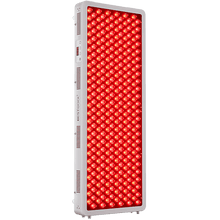
Place your RLT device several inches away from the lower abdomen or pelvic area, depending on the manufacturer’s guidelines.
-
Consult your healthcare provider, especially if you are undergoing fertility treatments such as IVF or managing conditions like endometriosis. Your doctor can help determine whether RLT is appropriate for you and when it should be used in your treatment plan.
-
Consistency is important for seeing the desired results. Hence, gentle, regular use is generally recommended over long or aggressive sessions.

Red Light Therapy as a Supportive Tool, Not a Standalone Fertility Treatment
Red light therapy offers a gentle, science-backed approach to increasing cellular energy and supporting reproductive health. However, it is important to remember that RLT is not a treatment for infertility on its own. It does not replace medical interventions, hormone therapies, or diagnostic care. Instead, it fits into a broader picture for fertility management by supporting your overall wellness.
Red light therapy may support blood circulation, inflammation balance, and cellular energy, all of which are relevant to general health and may indirectly support fertility wellness. However, outcomes depend on factors such as age, underlying medical conditions, and lifestyle.
RLT should be combined with proper nutrition, stress management, sleep, and medical guidance. It can be a part of a comprehensive approach to your reproductive wellness.
Read this red light therapy guide to learn more about red light therapy and its benefits for women’s wellness and fertility.


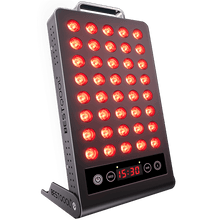
 Small
Small
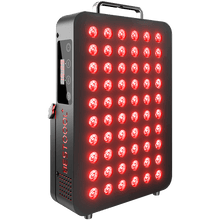
 Moderate
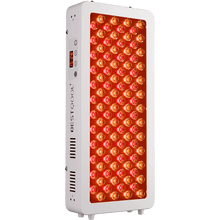
 Moderate

 Moderate
 Full
Full


