


Red light therapy (RLT) has emerged as one of the most effective and flexible treatment options for people looking to support their recovery, skin health, and overall wellness. At-home RLT devices offer great convenience by allowing people to have their sessions from home without traveling to the clinic.
There is a wide range of RLT devices available today, including panels, wands, belts, and mats, each promising unique benefits. This can make it overwhelming for people to choose one that suits their needs and preferences.
This article aims to provide clarity on different types of red light therapy devices and explain the differences between them to help you choose the best one for your specific condition.

The Core Difference Between Panel, Wand, Belt, and Mat Devices
Most red light therapy devices work in a similar manner. They emit the same types of wavelengths, typically between 630 nm and 850 nm. These wavelengths can penetrate deeper and are easily absorbed by mitochondria. Learn more about the science behind how red light therapy works.
Red light helps improve cellular functions by stimulating mitochondria to produce more energy. In addition, red light also reduces inflammation and improves blood circulation. See how RLT can boost cellular energy and improve blood flow.
Most RLT devices work by producing these effects and benefits. However, there are differences in how the light is actually delivered to your body.
For example, panels are larger, stationary devices that are designed for broader coverage. Wands, on the other hand, are small, handheld devices designed for precise applications. Belts and wraps are flexible and convenient to use. These are designed to contour around specific parts of your body. Mats lie flat and allow you to receive treatment while lying down.
Each of these types is specifically designed to create a different experience in terms of coverage, intensity, and convenience. Being aware of these differences is important to ensure you choose the right device based on your lifestyle and treatment goals.
Which Body Areas Each Device Format Covers Best
The area of your body you want to treat is one of the most important factors to consider when choosing an RLT device.
For example, panels are suitable for targeting larger areas, such as your back, chest, legs, and even your entire body. You can simply stand or sit in front of these devices to treat multiple areas at once. Wands are more suitable when you want to target smaller areas, such as your face, joints, or specific points of pain.
Belts and wraps can be used to treat areas like the lower back, abdomen, shoulders, and knees. They stay in place, making it convenient for you to have longer sessions. Mats are recommended for treating larger surface areas and full-body relaxation sessions. You can simply lie down on the RLT mats and let the light cover most of your body.
Panels for Full-Body and Half-Body Coverage: What You Get at Each Size
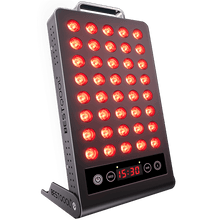
RLT Panels offer high power and broad coverage. This is what makes them a popular choice for home sessions.
RLT panels are available in different sizes. You can choose smaller panels for targeted or half-body treatments. However, remember that you may need to reposition yourself if you want to cover multiple areas, which also means your sessions will take more time. The internal LED design also matters here — see our breakdown of single chip vs. dual chip panels.
Larger panels are preferred by those seeking full-body coverage. They are suitable for treating multiple areas at once. These are particularly ideal for people who want efficiency and do not prefer to move the device or their body frequently during sessions. To compare panel options across sizes and power levels, see our Bestqool BQ vs. Pro panel comparison, or read our panels vs. wraps comparison if you're weighing flexibility too.
In addition, panels usually offer higher intensity. So, they tend to be more effective for healing deeper tissue. However, they require more space and are less portable than other types of RLT devices.
Wands and Belts for Targeted Treatment: Convenience vs Intensity
Smaller, targeted devices, such as wands and belts, are recommended for people who want to treat specific issues, such as a painful knee, shoulder tension, and facial skin concerns. Read more about how RLT can help with facial skin concerns and anti-aging.
Wands are highly precise and easy to use on small areas. They are also portable and flexible. However, they usually have lower power output than panels, which means your sessions might need to be longer or repeated across different areas. Explore the broader benefits of red light therapy across different use cases.
Belts and wraps offer a middle ground. They provide consistent contact with the body while keeping your hands free during sessions. They are usually not as powerful as panels. But the convenience they offer makes it easier to use them on a regular basis.
The choice can be made based on whether you are looking for precision and portability or intensity and speed.

Mat Devices for Lying-Down Sessions: Who Actually Benefits Most
Mat devices offer comfort and convenience as you simply need to lie down and let the light cover your body. You do not have to stand or hold a device, which is why it appeals to people who are looking for a more relaxing approach.
RLT mats can be especially helpful for those dealing with fatigue and chronic pain or those who want to combine therapy with relaxation. See how RLT can help relieve arthritis pain.
However, mats usually have lower intensity, as the light tends to spread over a larger area. This means sessions may need to be longer to achieve similar benefits. Yet, mats are a practical choice for people for whom comfort and ease of use outweigh the lower intensity.
Matching the Right Device Format to Your Health Goals and Budget
Choosing a red light therapy device requires aligning its features and benefits with your specific goals and lifestyle. Here are some tips and strategies to help you make an informed decision:
- Choose a panel if your goal is full-body wellness, recovery, or overall energy support. It provides broader coverage and efficiency. However, the initial cost is often higher.
- You can consider buying a wand or belt if you are seeking relief from joint pain or skin concerns. They are more affordable compared to other options.
- Mats could be a more practical option, offering a balance of coverage and comfort. However, they usually require a larger upfront investment, depending on size and quality.
The Right Device Is the One You Will Actually Use Consistently
Red light therapy offers a flexible and accessible way to support your health. Choosing the right RLT device is important for building a sustainable routine. It is common for people to feel overwhelmed by the wide range of devices available, their specifications, and features.
The information provided in this article will help you choose the right RLT device. You can think about your daily routine and how a device fits into it to make an informed decision.
Also, whether you choose a panel, wand, belt, or mat, the key is consistent use. When the device fits naturally into your routine, it becomes a sustainable part of your wellness journey.
For a different angle on device formats, see our comparison of red light therapy panels vs. masks.
References
- Glass, G. E. (2021). Photobiomodulation: The Clinical Applications of Low-Level Light Therapy. Aesthetic Surgery Journal, 41(6), 723–738. doi:10.1093/asj/sjab025
- Powner, M. B., & Jeffery, G. (2024). Light stimulation of mitochondria reduces blood glucose levels. Journal of Biophotonics, 17(5), e202300521.
- Couturaud, V., Le Fur, M., Pelletier, M., & Granotier, F. (2023). Reverse skin aging signs by red light photobiomodulation. Skin Research and Technology, 29, e13391.
- Zhang, R., & Qu, J. (2023). The Mechanisms and Efficacy of Photobiomodulation Therapy for Arthritis: A Comprehensive Review. International Journal of Molecular Sciences, 24(18), 14293.
- Stelian, J., Gil, I., Habot, B., Rosenthal, M., Abramovici, I., Kutok, N., & Khahil, A. (1992). Improvement of pain and disability in elderly patients with degenerative osteoarthritis of the knee treated with narrow-band light therapy. Journal of the American Geriatrics Society, 40(1), 23–26.


 Small
Small

 Moderate

 Moderate

 Moderate

 Full
Full

