


In this article6 sections
Many people who are dealing with pain related to muscles or joints are using TENS devices in their homes. Some have even started using panels for red light therapy or specific devices delivering 630 nm or 660 nm of red light along with 850 nm or 940 nm of near-infrared light. The following logical question arises: can both therapies be combined in one day, and if yes, what is the right sequence?
It turns out that physical therapy practices, along with patients' experiences, confirm that it is possible to combine both types of treatments. These two therapies work differently, as TENS stimulates nerves to lower pain and red light therapy helps cells produce more energy. If used within certain boundaries of safety, they may work as a combination.

Can Red Light Therapy and TENS Be Used on the Same Day?
Yes, they can be combined and applied on the same day in most cases. A double-blind, randomized, sham-controlled study conducted in 2024 considered Photobiomodulation (PBM) and transcutaneous electrical nerve stimulation (TENS), both individually and combined, in patients suffering from chronic neck pain. Subjects received 10 treatments over two weeks. It was found that the combination of PBM and TENS is more effective in reducing pain intensity during movement, increasing the local pressure pain threshold, and improving the global perceived effect.
Similar research conducted in related fields has examined the potential of using PBM and TENS in combination in various other conditions such as burning mouth syndrome, post-operative pain and others. Such studies have concluded that these therapies can be safely used in combination, and could result in an additive effect in the application of protocols. Notably, there have been no reports of any adverse reactions associated with the concurrent use of PBM and TENS on the same day.
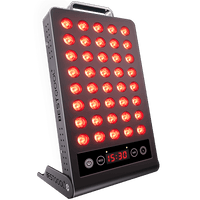
How Do Red Light Therapy and TENS Target Pain Differently?
Red light therapy and TENS are used for the alleviation of pain, although their modes of action are quite different. Knowledge about this can facilitate selection between the two modalities and application, particularly if both are going to be used together in one day.
| Feature | TENS (Transcutaneous Electrical Nerve Stimulation) | Red Light Therapy (Photobiomodulation) |
|---|---|---|
| Primary target | Nervous system | Cellular / tissue level |
| How it works | Electrical stimulation of the large sensory nerve fibers causes them to help “close the gate” in the spinal cord and brain (gate control theory). The higher frequency stimulation can help stimulate the release of endorphins. | Photons in the red light wavelength range (630-660nm) and the near infrared range (850-940nm) are absorbed by mitochondria, which promotes ATP production and helps to modulate inflammation. |
| Sensation during use | Pulsating or tingling electrical feeling | Not electric and not heat; usually feels like mild warmth or nothing with normal intensity settings at home devices |
| Main effect focus | Sensing modification of pain signal processing | Helps cells with energy, inflammation, and healing |
| Complementary role | Offering fast-acting nerve-based pain relief which may lead to easier movement | Long-term tissue healing assistance |
Swipe to see the full table →
Photobiomodulation therapy is thought to have an impact on both cell metabolism and immunity. It can be used not only in dermatology and wounds but also in such diseases as osteoarticular, neurologic, ophthalmic, and oncotherapy. PBMT is useful for symptom relief and tissue protection under oxidative and inflammatory stress.

Which Treatment Should Come First?
There is no standard required order that works for all cases. In medical practice, the use of TENS may precede light therapy when the objective is to provide short-term relief and increase mobility and ability to move or exercise. In some cases in research, both therapies have been used during one session or within very short time frames.
When using the therapies at home, it would be helpful to:
- Apply TENS in case of need for quick sensory stimulation and prior to any activity.
- Apply red light therapy when working with longer sessions of tissue relaxation, usually after activity or at the end of the day.
- Take a small break in between application of both techniques in case of sensitivity of the skin or electrodes following TENS application.
Follow the recommendations of your physiotherapist or physician in any case.
Can Both Modalities Be Used on the Same Body Area?
Yes. In the neck pain study and others involving combinations, the two modalities were used together in the same areas, without any reports of safety concerns under controlled conditions. The TENS electrodes and the red light could be focused on the same muscle or joint area on the same day.
Some useful guidelines are to remove the TENS electrodes before the light treatment for the light to fall directly on the skin, clean the skin before each application, and do not use the electrodes on any areas of broken or light-sensitive skin. A device offering the combination of both the red (630-660 nm) and near-infrared light (850-940 nm), such as the ones manufactured by BestQool, can provide this flexibility.
Who Should Avoid Combining Red Light Therapy and TENS?
There are instances where special care must be taken:
- Patients with electronic implants (pacemakers, defibrillators, and some forms of neurostimulators) must first seek a physician’s permission for TENS application.
- People with photosensitive conditions, active cancers in the treatment areas, or pregnant individuals must seek clinical advice before using red light therapy.
- Patients with altered sensation, open sores, infections, or postoperative sites must first seek clinical clearance prior to the application of either modality.
- Individuals taking drugs that increase light sensitivity should also seek professional advice.
In the event of any unexpected skin reactions, increased pain or any other unusual reaction in response to either modality, discontinue immediately and seek professional advice.
Coordinate Red Light Therapy and TENS With Clear Safety Limits
With careful application, red light therapy and TENS may make up an efficient combination on the same day for many patients suffering from musculoskeletal pain.
- The use of both techniques together has proved beneficial, especially for pain associated with movement and localized sensitivity.
- Limit the sessions and adhere to the intensity and duration recommendations of the manufacturers, but do not forget about the recommendations of your physical therapist regarding movement, exercise, and activities.
- It is more important to be consistent and under professional supervision than to try all available modalities during one day.
If you want to have a reliable and effective at-home device for red light therapy emitting all of the necessary wavelengths (630 nm, 660 nm, 850 nm, and 940 nm), visit BestQool to choose from different models and specialized devices.
Sources:
[1] Rampazo, É. P., de Andrade, A. L. M., da Silva, V. R., Back, C. G. N., Madeleine, P., & Liebano, R. E. (2024). The effects of photobiomodulation and transcutaneous electrical nerve stimulation on chronic neck pain: A double‑blind, randomized, sham‑controlled trial. Brazilian Journal of Physical Therapy, 28(6), 101124.
[2] Medeiros, C.K.S., Serrão, M.d.C.P.N., de Lima, A.A.S. et al. Comparative analysis of photobiomodulation therapy and transcutaneous electrical nerve stimulation for burning mouth: a randomized clinical trial. Clin Oral Invest 27, 6157–6165 (2023). https://doi.org/10.1007/s00784-023-05232-7
[3] Sena, A. M. P. H. A., de Holanda, A. M. P., de Lima, A. A. S., de Oliveira, P. T., & de Araújo, A. M. P. H. (2025). TENS alone or combined with low‑level laser therapy photobiomodulation for pain, functional capacity, and cardiorespiratory physiological variables after cesarean section: Protocol for a randomized clinical trial. PLOS ONE, 20(3), e0325254.
[4] Shivappa, P., Basha, S., Biswas, S. et al. From light to healing: photobiomodulation therapy in medical disciplines. J Transl Med 23, 1430 (2025). https://doi.org/10.1186/s12967-025-07466-3
[5] Rampazo, É. P., de Andrade, A. L. M., da Silva, V. R., Back, C. G. N., Madeleine, P., & Liebano, R. E. (2024). The effects of photobiomodulation and transcutaneous electrical nerve stimulation on chronic neck pain: A double‑blind, randomized, sham‑controlled trial. Brazilian Journal of Physical Therapy, 28(6), 101124.

This article is for general education and is not medical advice. If you have a medical condition, are pregnant, or take light-sensitizing medication, talk to your healthcare provider before starting red light therapy.


Leave a comment