


In this article7 sections
Looking at these two similar-sounding light therapies, a question arises: what is the differentiating factor between these two? Let’s decode it.
Red light therapy is basically a unique form of light therapy intended for non-invasive use. It uses specific wavelengths of 630-660 nanometres to modulate cellular activity within the tissue. Red light penetrates deep into the skin layers and promotes the body’s natural repair processes. [1] The treatment is safe, non-invasive, requires minimal downtime and can be utilised for areas including the face, scalp and entire body too.
Photodynamic therapy, commonly referred to as PDT, is a specialized, destructive therapy aimed at treating harmful cells, including cancer cells. It relies on a dynamic interaction between a drug, light and oxygen molecules to selectively cause cell death. [2] Depending on the complex nature of the procedure, it is always performed under the supervision of a dermatologist.

How Do Photobiomodulation and Photodynamic Therapy Work Differently?
Now that we have separated the basic differentiating factors between the two, let’s dive a little deeper and have a closer look at their cellular mechanism.
Photobiomodulation (PBM) simply translates to light modulating tissue response. Red light therapy (RLT) works on the principle of PBM. What do we mean by that? In very simple terms, imagine a stream of light penetrating your skin layers straight through the cell to reach your mitochondria. The red light encourages mitochondria to produce more ATP which is then utilised to promote healing and repair. [3] Thereof, unfolding a chain of events such as - collagen and elastin remodelling, improved circulation, reduced inflammation and maintaining overall skin health. [1]
Now that we have a rather clear understanding of the pathomechanism of RLT, let’s turn our lenses towards making sense of the photodynamic therapy (PDT).
PDT is a complex, intricate and destructive, two-step process. It starts off with application of a photo-sensitizing (PS) agent. There are certain drugs (applied topically or given orally/intravenously) that have the potential to accumulate in unhealthy cells such as – precancerous, sun-damaged and tumor cells. Once they are present in sufficient quantities in these cells, they become more likely to be destroyed upon exposure to a specific wavelength of light (lasers, LEDs, or other light sources). [2]
It is safe to say that PBM is usually used to stimulate, heal or regenerate damaged or dying tissues, which is the opposite of PDT, which tends to kill cells.
Why Does Photodynamic Therapy Require a Photosensitizing Agent?
PDT works on precision to target unhealthy cells. When exposed to the light source of a specific wavelength, only the cells that have accumulated the PS agent are targeted, thereby reducing damage to surrounding healthy tissues. So what actually happens when the PS agent absorbs the light? It produces something called as ROS (reactive oxygen species). [2] What do these molecules do? The ROS cause direct damage to the cancer cell’s membranes, proteins, and DNA, ultimately leading to cellular inflammation and death. By virtue of this mechanism, it is ensured that the cancerous cells are effectively destroyed while simultaneously sparing healthy skin cells.
Which Skin Conditions Does Each Treatment Address
So, what makes a candidate ideal for either of these procedures?
If you are looking for tissue recovery and rejuvenation, red light therapy is more suitable for you. When coupled with blue light therapy, it is a good alternative for treating mild to moderate acne. [4] According to the literature, by controlling skin inflammation it can prove useful in eczema, psoriasis and even some forms of rosacea (reduces redness). RLT can be beneficial in treating signs of ageing such as – fine lines, wrinkles, improving skin texture, scars, pigmentation, loose skin, enlarged pores and maintaining overall skin health. Another major application is as an adjunct for hair regrowth. [5] The ease of using an LED device at home, with minimal downtime and practically very limited side effects, has made it a popular treatment modality among people seeking out a non invasive cosmetic procedure.
Are you wondering if you should go for PDT instead? PDT excels at effectively treating severe acne, sun damage, photoaging, precancerous growths, actinic keratoses, and early-stage skin cancers. [2,6] Recent scientific reports claim that PDT is a great alternative for recurrent cystic acne as it targets both the bacteria and the inflammation. Its precision makes it an indispensable tool in medical dermatology, as it is curative for some forms of cancers while in some cases, it helps people live longer by providing symptomatic relief.

How Do Pain, Downtime, and Side Effects Compare?
To make an informed decision, we should look at the side effect profile of these therapies.
RLT has an excellent safety profile with minimal to practically no side effects. What makes it the most popular at-home device among people, you ask?
Is it the cost-effectiveness, painless and non-invasive nature, ease of use or the ergonomics which is suitable for all skin types? I would say all of the above. Thus, making it a lucrative option for anti-ageing and maintaining skin health. Commonly encountered side effects include mild redness or warmth in the treated area, which improves over time with repeated usage.
PDT has a powerful action spectrum, and so does the side effect profile, although temporary.
The usual problems encountered post a PDT session ranges from temporary skin sensitivity, redness, itching, stinging or burning. [6] You can sometimes encounter skin discoloration, scales, crusts or blisters, swelling in the treatment area and in severe cases skin infections. Patients are advised to avoid sun exposure post-treatment so as to prevent adverse reactions. Sun exposure might exacerbate redness, irritation and skin sensitivity. However, these side effects are usually temporary and resolve as time progresses.
It is always good to address them with your dermatologist if side effects persist beyond what is normal for both therapies.
Can a Home Red Light Device Replace Clinical Photodynamic Therapy?
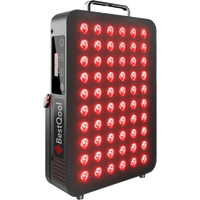
Practically, all home-based red light devices use a standalone light-emitting diodes (LEDs) or low-level laser mounted as a face mask, cap, belt or a body panel. Also, they do not come with any photosensitizing medication.
On the other hand, clinically used PDT requires the application of a medical-grade, light-sensitizing topical medication such as 5-aminolevulinic acid (ALA) or methyl aminolevulinate (MAL), which selectively sequesters in targeted diseased or pre-cancerous cells. Thereafter, it needs a specific clinical light source of a specific wavelength to get activated and produce the desired results.
Hence, PDT is a controlled medical procedure that ought to be performed or supervised by a physician or a dermatologist.
Home-based devices are largely cosmetic or tools for wellness. They can neither diagnose medical-grade skin pathologies nor treat active skin cancer.
Choose the Light Treatment That Matches Your Skin Condition
Choosing between these light-based skin therapies largely depends on your skin type, skin condition and specific concerns.
Red light therapy may enhance skin rejuvenation, tissue repair and recovery, although results fluctuate depending on which device and treatment settings are used. [5]
Photodynamic therapy treats premalignant lesions, a few superficial skin cancers, and may be considered for certain types of refractory or resistant acne patients. [6]
It is safe to say that a home-based red-light device cannot replace clinical PDT or a dermatologist’s assessment of a suspicious skin lesion. Consulting your dermatologist will help you choose the treatment that best matches your diagnosis, expectations and recovery needs.
Scientific References
- Hernández-Bule ML, Naharro-Rodríguez J, Bacci S, Fernández-Guarino M. Unlocking the Power of Light on the Skin: A Comprehensive Review on Photobiomodulation. Int J Mol Sci. 2024 Apr 19;25(8):4483. doi: 10.3390/ijms25084483. PMID: 38674067; PMCID: PMC11049838.
- 2. Balakirski G, Lehmann P, Szeimies R-M, Hofmann SC. Photodynamic therapy in dermatology: established and new indications. JDDG: Journal der Deutschen Dermatologischen Gesellschaft. 2024; 22: 1651–1662.
- 3. Maghfour J, Ozog DM, Mineroff J, Jagdeo J, Kohli I, Lim HW. Photobiomodulation CME part I: Overview and mechanism of action. J Am Acad Dermatol. 2024 Nov;91(5):793-802. doi: 10.1016/j.jaad.2023.10.073. Epub 2024 Feb 1. PMID: 38309304.
- 4. Ershadi S, Barbieri JS. At-Home LED Devices for the Treatment of Acne Vulgaris: A Systematic Review and Meta-Analysis. JAMA Dermatol. 2025;161(5):552–555. doi:10.1001/jamadermatol.2025.0019
- 5. Mineroff J, Maghfour J, Ozog DM, Lim HW, Kohli I, Jagdeo J. Photobiomodulation CME part II: Clinical applications in dermatology. J Am Acad Dermatol. 2024 Nov;91(5):805-815. doi: 10.1016/j.jaad.2023.10.074. Epub 2024 Feb 1. PMID: 38307144.
- 6. Qureshi S, Rehan Z, Ao A, Mukovozov I. Photodynamic Therapy in Acne Vulgaris: A Systematic Review. J Cutan Med Surg. 2025 Jan-Feb;29(1):69-73. doi: 10.1177/12034754241291031. Epub 2024 Nov 18. PMID: 39552358; PMCID: PMC11829500.

This article is for general education and is not medical advice. If you have a medical condition, are pregnant, or take light-sensitizing medication, talk to your healthcare provider before starting red light therapy.


Leave a comment