


In this article5 sections
Trigger finger is a widespread hand ailment that causes pain, stiffness, and the typical triggering of fingers while moving them. This ailment makes the simplest things like grabbing a mug or typing on a keyboard challenging and painful. While the conventional treatments include splinting, injection of corticosteroids, and surgery, there are people who resort to red light therapy as a possible alternative to conventional therapy.
In this guide, BestQool looks at whether red light therapy can be used for treating trigger finger, what current research says about the impact of red light therapy on pain, triggering, and locking of fingers, and how it differs from other therapies.

Can Red Light Therapy Ease Pain or Reduce Finger Locking?
A finger that catches, clicks, and even locks during movement can indicate trigger finger, a medical term used for stenosing tenosynovitis.[1] This occurs due to the irritation and swelling of the flexor tendon, making it harder for the tendon to slide freely within the synovial sheath. With time, moving one's hand is increasingly painful and challenging.
Red light therapy, also referred to as photobiomodulation (PBM) therapy, involves exposure to wavelengths of red and near-infrared light to promote cellular functions. PBM therapy is reported to have beneficial effects on tissue healing, increased energy production by cells, and inflammation regulation.
Given the fact that inflammation is one of the causes of trigger finger, decreasing inflammation can help alleviate some of its symptoms. Red light therapy may help support:
- Decreased finger pain
- Reduced stiffness in the morning
- Increased comfort while gripping objects
- Finger flexibility.
Nonetheless, even though pain relief can be achieved through the use of locking, it does not guarantee that locking will be resolved through the process. Red light therapy has been found to assist in reducing the pain and inflammation associated with the condition, but the underlying factors contributing to locking and catching will not change. [2]
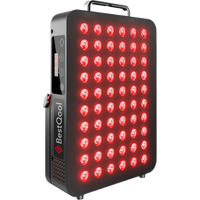
What Does Laser Research Tell Us About Home LED Devices?
Red light therapy involves many types of photobiomodulation, which may include different types of laser treatments and LEDs. Many modern red light therapy devices involve wavelengths like 630nm, 660nm, 850nm, and 940nm that have been extensively studied for their impact on cell functions, tissue healing, and inflammatory processes. [3]
In the case of trigger finger, the number of studies available is rather small, and there is a need for further investigation to know how photobiomodulation can help to manage symptoms. Nonetheless, based on current results, one may conclude that photobiomodulation may contribute to providing comfort, mobility, and natural healing processes. [4]
When searching for a suitable device, one should pay attention to the information about the wavelengths of the device and its quality. For example, BestQool specifies the wavelengths used in their red light therapy devices. Following the recommendations of the manufacturer and using the device consistently may contribute to obtaining optimal results.
People interested in having a safe and noninvasive wellness approach can benefit from home red light therapy devices, which are easily integrated into daily activities. Although the research on the trigger finger is still developing, the wavelengths involved in modern LED devices are the wavelengths often studied in photobiomodulation. [5]
How Does Light Therapy Compare With Splints, Hand Therapy, and Injections?
Treatment for the trigger finger usually occurs in a step-by-step manner.
Its objectives involve reducing pain, improving smooth tendon gliding, and preventing the worsening of the problem.
Splints
Splinting can be suggested as a treatment modality in cases where the patient has developed a trigger finger at an early stage. [1]
Splinting prevents repetitive movement of the tendon, thus giving the irritated tissue time to settle. Some people benefit from this method; however, the degree of benefit varies significantly from person to person.
Hand Therapy and Exercises
The hand therapy may involve the following:
- Stretching
- Tendon gliding exercises
- Modification of activities
- Ergonomic training
This treatment might help in alleviating pain and increasing functionality, particularly if used in conjunction with some other methods.
Corticosteroid Injections
Corticosteroid injection therapy remains one of the most frequently employed evidence-based treatment regimens for trigger finger. [1]
Inflammation at the site of the tendon sheath is injected. It gives faster relief than many conservative approaches.
Surgery
If the conservative method fails, then surgery can be considered as an option.
Surgery is meant for the release of the constricted A1 pulley for free gliding of the tendon. The method is usually highly successful for stubborn cases of trigger finger that cannot be managed through other methods.
Where Does Red Light Therapy Come in?
Red light therapy is better seen as a complementary technique.
It can offer the following benefits:
- Non-invasive treatment
- Lack of medication side effects
- Ease of use at home
- Possibility of managing pain
Currently, there is no evidence to show that red light therapy is better than corticosteroid injection therapy in cases of mechanical locking.
Therefore, the most appropriate application of red light therapy is in combination with other approaches to treatment, such as modification of activities and hand therapy. [4]

Measure Pain, Finger Catching, and Hand Function Separately
The most frequent error that individuals make is measuring the progress in their trigger finger improvement based on just one of its components.
There are three different parts of the trigger finger:
- Pain
- Catching or locking
- Hand function.
They do not necessarily get better simultaneously.
For instance, a person can experience considerable relief from pain and yet have episodes of catching. Another person can have less frequently occurring episodes of locking but no decrease in pain.
To see a clearer picture of what's happening with your condition, it would be helpful to monitor each component individually.
Pain
Measure the level of pain on a 0-10 scale.
Pay attention to:
- Morning pain when gripping
- Pain in daily activities
- Triggering Episodes
Write down:
- Frequency of catching
- If there is locking and how often it happens
- If there is a need for manual correction to straighten the finger
Hand Function
Think about such things as:
- Opening jars
- Using utensils
- Writing
- Typing
- Grocery shopping
Improvement in daily life could sometimes mean more than improvement of symptoms on a scale.
Get Persistent Finger Catching or Locking Assessed
While trigger finger might respond to conservative measures, one must not overlook the condition if there is no improvement in their symptoms.
Professional assessment is crucial particularly when [1]:
- Finger locking increases in frequency
- Pain is worsening over time
- There is loss of motion
- Activities of daily living become hard to perform
- The finger locks in a bent position permanently
- Numbness or strange sensations occur
Healthcare providers will assess the degree of symptoms and determine if more treatment is needed.
Some ways of assessment include:
- Physical exam
- Functional assessment
- Sometimes ultrasound imaging
- Past treatments review
Early diagnosis might help prevent the progression of disease.
Trigger Finger and Red Light Therapy: What We Know So Far
Red light therapy has become a widely accepted means of maintaining overall well-being. In terms of its anti-inflammatory and photobiomodulation properties, it presents a promising solution for individuals who deal with trigger finger. Existing data indicate that this method could assist in alleviating pain and inflammation and provide some comfort.
Nevertheless, trigger finger is a combination of an inflammatory and mechanical issue. While red light therapy could be considered to alleviate symptoms, it is not likely to solve any issues related to significant narrowing resulting in locking.
The most successful strategy in dealing with this condition could be a combination of professional advice and conservative treatments, including proper exercise modifications, hand therapy, splints, and other proven treatments.
When incorporated into a more comprehensive plan of action, red light therapy can serve as an additional convenient non-invasive solution.
Sources
1. Jeanmonod R, Tiwari V, Waseem M. Trigger Finger. [Updated 2024 Feb 5]. In: StatPearls [Internet]. Treasure Island (FL): StatPearls Publishing; 2024 Jan-. Available from:
2. Choi AR, Kang JH, Park KJ, Lee HI, Kim TJ. Effects of light-emitting diode therapy on hand stiffness and pain in non-steroidal anti-inflammatory drug-refractory patients with tenosynovitis. J Rheum Dis. 2023 Jul 1;30(3):170-175. doi: 10.4078/jrd.2023.0004. Epub 2023 May 4. PMID: 37476675; PMCID: PMC10351370.
3. Spongberg CV, Stack ER, Aprigliano C, Grinis D, Sawicki S, Elway M. What to Look for in Red Light Therapy: A Product Guide Backed by Science. Cureus. 2026 Mar 17;18(3):e105378. doi: 10.7759/cureus.105378. PMID: 42005232; PMCID: PMC13085462.
4. Parizotto NA, Ferraresi C. Enhancing Physiotherapy Outcomes with Photo-biomodulation: A Comprehensive Review. J Nov Physiother Rehabil. 2024; 8(2): 031-038. Available from:
5. H. Chamkouri and L. Chen, “Advancement of Photobiomodulation Therapy Using 680 and 850 nm Light-Emitting Diodes for the Differentiation of Human Brain Endothelial Cells.” Adv. Therap. 8, no. 9 (2025): e00164.

This article is for general education and is not medical advice. If you have a medical condition, are pregnant, or take light-sensitizing medication, talk to your healthcare provider before starting red light therapy.


Leave a comment