

Near-infrared light can reach deeper than visible red light in back tissues, but it still does not reliably “bathe” spinal discs in a direct, full-dose way. For home use, the practical question is less “Can it penetrate?” and more “How much usable light actually reaches the target area, at what dose, and from what distance?” What to Look for in Red Light Therapy: A Product Guide Backed by … notes that a brand
If your goal is lower-back recovery, muscle soreness, or a warm-up style routine, red light therapy may be a reasonable tool to test. If your expectation is a disc-level treatment or a guaranteed deep-tissue fix, PubMed explains that the evidence is much more limited and the device setup matters a lot.
What “Deep Penetration” Means in Back Use

“Deep penetration” in red light therapy usually refers to how far a wavelength can travel through skin and soft tissue before it is absorbed or scattered. Near-infrared wavelengths generally penetrate more deeply than visible red wavelengths, which is why many spine-focused devices use near-infrared LEDs rather than red-only panels. PMC explains that a platform
That said, reaching the back is not the same as reaching the disc. The lower back has skin, subcutaneous fat, fascia, and muscle layers before any light gets near the intervertebral structures, so delivered dose drops quickly with depth. In plain terms, a device can affect superficial and some deeper soft tissues without meaningfully delivering the same energy to a spinal disc.
Can It Reach Deep Spinal Muscles?
Yes, sometimes to a useful extent. Deep spinal muscles such as the erector spinae and multifidus are more realistic targets than discs because they sit closer to the surface than the disc itself and are not shielded by bone in the same way. Near-infrared light is the better choice when the aim is back-muscle recovery or symptom relief around the lumbar region.
The practical limitation is dose delivery. Higher irradiance, closer placement, and longer exposure increase the amount of light that reaches the tissues, but that also raises the importance of heat, skin tolerance, and session control. A panel that is too far away may look powerful on paper but deliver much less usable energy to the back.
Protocol variables that matter most
- Wavelength: near-infrared is generally preferred for deeper back tissues; red is more superficial.
- Distance: closer placement usually increases delivered dose.
- Irradiance: higher output can improve dose at tissue level.
- Time: longer sessions increase total exposure, but not always proportionally.
- Body position: lying, sitting, or prone positioning can change angle, coverage, and comfort.
For home users, this means a back panel should be chosen for actual delivered dose, not marketing claims alone. A strong device used too far away can underdose the spine, while a moderate device used close and consistently may be more practical.
Can Near-Infrared Reach Spinal Discs?
Probably not in a way that should be treated as direct disc treatment from a home device. Light energy falls off as it passes through tissue, and the disc sits deeper than the muscle layers most users are trying to target. That makes spinal discs a poor “clean transfer” target for light therapy compared with skin, superficial tissue, or nearby muscle.
This is the key expectation boundary: a spine panel may support comfort, recovery, or localized soft-tissue response, but it should not be framed as a substitute for medical evaluation of disc problems or a guaranteed way to treat disc-related pain. If you have radiating pain, numbness, weakness, or symptoms that are worsening, that needs professional assessment rather than device-only treatment.
What Device Features Matter Most For The Lower Back

The best home setup is usually the one that maximizes usable dose on the target area while staying comfortable enough to repeat. For spine-focused routines, that means paying attention to wavelength mix, output power, size of the treatment area, and whether the device can cover the full lower back without awkward repositioning.
Practical buying priorities
- Near-infrared capability for deeper back tissues
- Enough panel size to cover the lumbar area without gaps
- Solid irradiance at the working distance you will actually use
- Timer and distance guidance so sessions are repeatable
- Comfort and positioning so you can lie or sit long enough to finish the protocol
A device that is technically strong but hard to position often gets underused. For home routines, repeatability matters as much as output, especially when the target is a broad area like the low back.
Typical Home-Use Protocol Ranges
For a back routine, many users start with shorter, tolerable sessions and build only if the skin and session practicality are good. The usable range depends on the device, but the main variables are not mysterious: wavelength, irradiance, distance, and session length determine the delivered dose.
A simple way to think about it
- Red light: better for more superficial tissues
- Near-infrared: better for deeper soft tissue
- Longer distance: less delivered energy at the body
- Closer distance: more delivered energy, but watch comfort
- Longer time: more total exposure, but not automatically better
If a device does not specify output at a real-world distance, it is harder to judge whether it will help the back in practice. That is why careful buyers compare panel specs, not just wavelength labels.
Comparison Table: What Each Light Type Is Better For
Light Type |
Typical Use Case |
Relative Depth |
Best Spine Target |
Main Limitation |
Red light |
Surface-focused routines |
Shallower |
Skin and superficial tissue |
Limited depth for deeper back structures |
Near-infrared light |
Deeper soft-tissue routines |
Deeper |
Back muscles around the spine |
Still attenuates before reaching discs |
Combined red + near-infrared |
Mixed routine use |
Mixed |
Broad back coverage |
Performance depends on output and distance |
Near-infrared is usually the more relevant setting if the goal is spine-adjacent muscle work rather than skin-level cosmetic use. Even then, “deeper” does not mean “unlimited,” and it does not turn a home panel into a medical device for disc disease.
What Red Light Therapy Can Realistically Do For A Sore Back
A realistic home use case is localized recovery support: a repeatable routine that may help comfort, soft-tissue recovery, or symptom management around the low back. It is most believable when used consistently, with reasonable expectations, and alongside proper loading, movement, and sleep habits.
What it cannot reliably do is deliver a uniform therapeutic dose to every deep spinal structure, especially in larger bodies or over thicker tissue layers. That is why the best answer is usually “partially, for muscles; not cleanly, for discs.”
Action Checklist
- Choose near-infrared if your main goal is deeper back tissue rather than surface use.
- Check irradiance at a real distance, not just the headline wattage.
- Make sure the panel can cover the low back area without constant repositioning.
- Start with short, tolerable sessions and increase only if the routine is comfortable and repeatable.
- Treat spinal discs as a non-equivalent target and avoid disc-treatment claims from a home device.
- Seek professional care if you have radiating pain, numbness, weakness, or worsening symptoms.
FAQ
Q: Can Red Light Therapy Actually Reach Deep Spinal Muscles?
A: Yes, near-infrared light can reach deeper soft tissues than visible red light, so spinal muscles are a realistic target. The main limit is delivered dose, which falls with distance and tissue depth.
Q: Can Near-Infrared Light Reach Spinal Discs Through the Back?
A: Not reliably enough to treat discs as a clean home-device target. The disc is deeper than most of the tissue layers that light can affect well, so expectations should stay limited to nearby soft tissues and general comfort or recovery support.
Q: What Should I Look for in A Spine-Focused Home Device?
A: Look for near-infrared capability, enough panel size for the low back, output that remains meaningful at the distance you will actually use, and a setup that makes repeat sessions practical. If the device is hard to position or underpowered at real-world distance, the back results will usually be weaker.
Key Takeaways
Red light therapy can plausibly reach deep back muscles, especially when the device uses near-infrared wavelengths, is placed close enough, and delivers enough irradiance for a real session. It is much less convincing as a direct way to reach spinal discs.
For home users, the best approach is to choose a device for usable dose, not just wavelength, keep expectations realistic, and treat the method as a supplemental recovery tool rather than a disc-specific treatment. If symptoms are significant or persistent, get evaluated by a clinician.


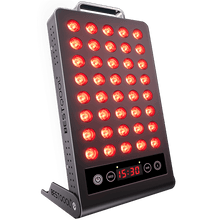
 Small
Small

 Moderate

 Moderate

 Moderate

 Full
Full

