

If you play golf regularly, you probably know the feeling: your shoulders tighten by the back nine, your lower back aches on the drive home, and your swing gets shorter and more guarded as the round wears on. Many golfers accept this as “just getting older” or “the price of practice,” but persistent muscle tension is not just uncomfortable; it can quietly erode your swing mechanics, clubhead speed, and confidence.
As a red light therapy wellness specialist and health advocate, I hear a common question from golfers: can red light treatment actually loosen up golf-related muscle tension and help my swing, or is it just another wellness trend? The honest answer is nuanced. There is real science behind red light therapy and muscle performance, but the benefits are modest, dose‑dependent, and not a substitute for sound training, mobility work, and coaching.
This article will walk you through what red light therapy is, what high‑quality research shows about muscles and athletic performance, how those findings may translate to golf-related muscle tension, and how to use red light safely and realistically as part of your at‑home recovery routine.
Why Golf Creates So Much Muscle Tension
Golf looks deceptively gentle, but your body knows better. A full swing asks a lot from your neck, shoulders, mid‑back, hips, and forearms. You rotate at high speed, decelerate hard, and repeat this pattern dozens or hundreds of times per practice or round. Add in long periods of standing, bending to tee and pick up balls, and walking or riding with a slightly twisted posture, and you have a recipe for chronic muscle tightness.
Modern life often makes this worse. Many golfers spend weekdays at a desk or driving, which shortens the hip flexors, stiffens the thoracic spine, and weakens deep stabilizer muscles. When you then ask your body for a big, free turn on the weekend, the most overworked muscles around the neck, shoulders, and lower back often “brace” to protect you. That protective tension can restrict your backswing, alter your swing path, and change how the clubface meets the ball.
Reducing unnecessary muscle tension is not just about comfort. It directly influences how consistently you can load and release your swing. That is why golfers are now looking beyond stretching and massage to tools like red light therapy that might help muscles recover better between rounds.
What Red Light Therapy Is (In Plain Language)
Red light therapy is also known as photobiomodulation, low‑level laser therapy, or low‑level light therapy. A counseling and wellness program at Penn State Behrend describes it as a non‑invasive treatment that uses specific red and near‑infrared wavelengths of light to stimulate cellular function, especially in the mitochondria, the “energy producers” inside your cells. Similar explanations appear in sources such as WebMD and University Hospitals.
Instead of heating tissue the way some infrared saunas do, red light therapy uses low‑level red and near‑infrared light to:
Increase cellular energy production by boosting adenosine triphosphate (ATP) in mitochondria.
Promote vasodilation, meaning your blood vessels widen so more oxygen and nutrients can reach muscles and other tissues.
Modulate inflammation by influencing signaling molecules in the immune system.
Support tissue repair by stimulating collagen production and promoting healthier microcirculation.
Stanford Medicine experts describe this under the umbrella term photobiomodulation, which became an official Medical Subject Heading in the National Library of Medicine in 2015. That matters because it signaled that enough controlled studies existed to treat this as a legitimate scientific field rather than just a cosmetic fad.
In sports and muscle recovery contexts, many clinics and fitness centers use both visible red light and invisible near‑infrared (NIR) light. These wavelengths behave somewhat differently in the body, which is important when you are targeting golf-related muscle tension in deeper areas like the hips or lower back.
Type of light |
Typical wavelength range (approximate) |
How it behaves and common uses |
Red light |
Around 630–660 nm |
Mostly absorbed in skin and superficial tissues; often used for skin quality, scar tissue, and shallow muscle or tendon issues. |
Around 810–850 nm (sometimes slightly wider range) |
Penetrates more deeply into muscles, fascia, and joints; frequently used for sports recovery, deeper muscle tension, and joint pain. |
These ranges are drawn from sports‑medicine focused discussions by clinics such as FunctionSmart Physical Therapy, Synergy Physical Therapy, and multiple recovery centers that specialize in athlete care.
What the Research Really Says About Muscles, Recovery, and Performance
When you strip away marketing language, the most helpful overview for athletes comes from a narrative review in a sports medicine journal indexed in PubMed, summarized in a Harvard‑affiliated article on photobiomodulation in human muscle tissue. That review looked at 46 clinical and case‑control studies involving more than 1,000 healthy volunteers and athletes.
Several patterns emerged.
First, pre‑conditioning matters. When red or near‑infrared light was applied to muscles shortly before high‑intensity exercise, many studies found improvements in acute performance: more repetitions before fatigue, longer time to exhaustion, and in some cases smaller drops in strength and range of motion afterward. However, not every trial found a benefit, and some well‑designed, triple‑blind studies reported no meaningful difference. The conclusion was that any performance boost is protocol‑ and dose‑dependent.
Second, biochemical markers of muscle damage and stress often improved. Multiple trials reported lower post‑exercise creatine kinase (CK) and sometimes lower C‑reactive protein or blood lactate when red light therapy was used as a pre‑conditioning tool. A 2018 systematic review and meta‑analysis of 14 studies, summarized by a chiropractic and sports‑recovery practice, concluded that phototherapy had a positive effect on controlling CK levels after exercise.
Third, delayed‑onset muscle soreness (DOMS) is more complicated. Early trials using laser or LED therapy after eccentric exercise (the kind that usually causes the most DOMS) sometimes showed no difference in soreness compared with placebo. Later work that used specific combined wavelengths found reduced DOMS at 48 hours in some protocols. A 2016 systematic review of 15 studies and 317 participants, summarized by an Athletic Lab article and other clinical sources, judged the evidence for DOMS reduction as promising but not yet definitive, and called for better, standardized research.
Fourth, chronic adaptation may improve when light and training are combined. Sports medicine summaries from clinics such as Synergy Physical Therapy highlight controlled trials where strength training plus red or near‑infrared light led to greater strength gains, more muscle hypertrophy, and better fatigue resistance than training alone. In one endurance study, treadmill training combined with photobiomodulation produced endurance improvements roughly three times faster than a control group. Again, not every trial replicated these effects, but there is a consistent theme: when the dose and timing are appropriate, light seems to support the muscle’s ability to train and recover.
Finally, credible caution is important. Stanford Medicine dermatology and sports experts point out that while hair growth and some skin changes are well supported, claims about athletic performance, sleep, and systemic benefits are still building their evidence base. University Hospitals likewise emphasizes that red light therapy is best viewed as a recovery‑phase tool that may reduce inflammation and support healing, not as something that can repair structural damage such as torn ligaments or advanced joint degeneration.
Put simply, the research suggests that red and near‑infrared light can help muscles handle stress a bit better, recover a bit faster, and perhaps tolerate more productive training. That is meaningful, but it is not magic, and benefits depend heavily on how, where, and when the light is used.
Why This Matters for Golfers and Their Swing
Golf is not just about how strong your muscles are; it is about how well they coordinate under fatigue and tension. As your round wears on, tight neck and shoulder muscles can restrict your backswing. Stiff hips can limit your rotation, forcing your lower back to twist more than it should. Sore forearms can subtly change your grip and release pattern.
These small changes often show up as:
A shorter or rushed backswing.
Loss of clubhead speed without understanding why.
More “across the line” or over‑the‑top moves as your body tries to protect a tight area.
Fatigue‑related loss of balance late in the round.
If red light therapy can reduce excessive muscle tension and soreness between sessions, it may help you arrive at the tee with more comfortable range of motion and keep you from tightening up as quickly. That does not replace the need for mobility work, strength training, and technical coaching, but it can make all of those investments easier to express in your swing.
How Red Light Therapy May Help Golf‑Related Muscle Tension
Supporting Warm, Oxygenated Muscles Before You Play
Many strength and endurance studies show the biggest benefits when red or near‑infrared light is used before exercise. The muscle pre‑conditioning protocols in the Harvard‑affiliated review, as well as trials summarized by Synergy Physical Therapy and Athletic Lab, generally applied light within the hour before a workout. This pre‑exposure seems to increase ATP production in the mitochondria and improve microcirculation through nitric‑oxide‑mediated vasodilation.
For a golfer, that means that applying light to your shoulders, upper back, and hips before a range session or round may help those muscles feel “warmed from within.” Because the treatment is non‑heating, you still need an active warm‑up, but your tissue may accept that warm‑up more easily, with less “rubber band” stiffness at the start.
A fitness article from City Fitness describes how red light helps widen blood vessels so more oxygen and nutrients reach muscles, which supports both endurance and muscle recovery. Combined with a simple golf‑specific warm‑up, that can create a more relaxed, responsive feel in the foundation muscles of your swing.
Calming Post‑Round Soreness and Stiffness
Delayed‑onset muscle soreness commonly peaks 24 to 72 hours after an intense workout or long day on the course, especially if you walked undulating fairways or hit a lot of range balls. Several double‑blind randomized trials, summarized by a chiropractic practice that focuses on muscle soreness, report that people who received red or near‑infrared light after “damaging” exercise had lower pain scores, less strength loss, and fewer range‑of‑motion issues in the following days compared with controls.
Meta‑analyses from 2015 and 2018 pooling multiple randomized trials concluded that low‑level laser or LED therapy can improve muscular performance and accelerate recovery, with consistent reductions in muscle damage markers such as CK. Professional athletes, including volleyball, rugby, and soccer players, have shown lower post‑exercise lactate and inflammatory markers and less perceived fatigue after photobiomodulation in controlled studies.
For golfers, the practical translation is that a short session after golf may help reduce the depth and duration of next‑day soreness in the primary swing muscles. That can make it easier to practice again without feeling locked up, especially during multi‑day events or weeks when you are stacking rounds and range sessions.
It is important to remember the nuance: a systematic review cited by Athletic Lab found that while some protocols reduced DOMS, the overall evidence was mixed and far from definitive. You should see red light therapy as a potential nudge in the right direction, not a guarantee that you will never feel sore again.
Helping Older Joints and Tendons Keep Up
Many golfers also battle tendinopathies in the elbows or shoulders, or joint pain in the knees, hips, and hands. A 2021 review discussed in University Hospitals patient education materials suggests that red light therapy may be particularly helpful for tendinopathies and inflammatory problems close to the skin, and may ease some chronic musculoskeletal pain. WebMD’s overview similarly reports low‑to‑moderate quality evidence that red light can reduce pain and improve function in some tendon conditions.
For inflammatory forms of arthritis, such as rheumatoid arthritis, red light therapy appears to provide short‑term relief of pain and morning stiffness, although benefits for osteoarthritis are less clear and probably smaller. Several sports injury and rehab sources also describe using red light to support healing of sprains, strains, and soft‑tissue injuries by improving circulation and reducing swelling.
For the aging golfer, this suggests a reasonable role for red light therapy around painful but not structurally destroyed joints. It may help reduce the inflammatory component of pain in shoulders, elbows, wrists, and knees, making it easier to move through a full, smooth swing. However, it will not reverse advanced cartilage loss or correct mechanical problems that require surgical or structural intervention.
Indirect Benefits: Sleep, Stress, and Consistency
Recovery is not just tissue‑level; it is systemic. Poor sleep is strongly linked to overtraining symptoms, lower performance, and higher injury risk. Athletic Lab highlights research on Chinese female basketball players where evening red light sessions improved sleep quality and increased nighttime melatonin compared with a placebo condition. Another trial summarized in the same article found that red light exposure during or just after waking reduced sleep inertia, the groggy, low‑alertness state many early‑morning golfers know too well.
City Fitness also notes that regular evening red light sessions, often in the 10–20 minute range, may help regulate circadian rhythm and support closer to eight hours of consolidated sleep. While these findings are still limited and specific to certain populations, they point toward a useful reality: if red light therapy helps you sleep better and wake more alert, your muscles will recover more fully between rounds and your focus on the course will improve.
Given how many recreational golfers juggle full‑time jobs, family obligations, and early tee times, even small advantages in sleep quality and morning alertness are worth pursuing with safe, low‑risk tools.
Practical Guide: Using Red Light Therapy Around Your Golf Routine
At‑Home Panels vs. Clinic Treatments
Stanford Medicine dermatologists emphasize that red light treatments delivered in a clinic are usually more powerful than at‑home devices, with carefully controlled wavelengths, power, and treatment times. They also note that results are not guaranteed even in clinic settings; the effectiveness of any device depends heavily on its technical specs and how consistently it is used.
University Hospitals and WebMD both point out that home devices can be a reasonable starting point, especially for ongoing recovery needs. Handheld or small panels can cost under a hundred dollars, while larger full‑body panels or beds can run into the hundreds or thousands. Insurance typically does not cover red light therapy, so budgeting and cost‑benefit thinking are important.
From a practical golfer’s perspective:
Clinic‑based treatments may deliver a higher, more precise dose and may be better suited if you are rehabbing an injury under professional supervision.
At‑home devices are more accessible for daily or near‑daily use, which is crucial because most studies report benefits after repeated sessions over weeks rather than a single treatment.
Sessions are typically described as non‑invasive, painless, and chemical‑free. Many people simply feel a gentle warmth or nothing at all during the session, with no downtime afterward.
Choosing a Device With Golf in Mind
Sports rehab and photobiomodulation education resources recommend paying attention to a few key technical details rather than brand hype.
Look for wavelengths in the therapeutic ranges used in studies. For general muscle recovery, that usually means red light around 630–670 nm and near‑infrared light around 810–880 nm. Some devices combine both, which can be helpful if you want to address superficial tissues (like forearm tendons) and deeper muscles (like glutes and lower back) with the same panel.
Check that the manufacturer lists irradiance (power per unit area). Many research protocols deliver a few to several tens of joules per square centimeter to the target area. At home, you will mainly rely on the manufacturer’s suggested distance and time, but knowing that extremely low power for very short periods is unlikely to match research dosing can guide realistic expectations.
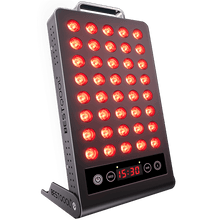
Choose a size that fits your needs. For golf-related muscle tension, a medium panel that can cover your neck, shoulders, upper back, and hips in a standing position tends to be more practical than a tiny spot device that only treats a couple of square inches at a time.
Finally, make sure you can use protective eyewear if the device is bright, and that the instructions are clear about recommended exposure times.
Where to Aim the Light for Golf Tension
Most of the muscle groups that tighten up in golf are accessible to red or near‑infrared light.
Common target areas include the neck and upper trapezius muscles, which often feel tight from address posture and desk work; the upper and mid‑back, crucial for thoracic rotation; the lower back and glutes, which stabilize your spine and generate power; the hips, which control rotation and weight shift; and the forearms and wrists, which manage grip pressure and clubface control.
Clinical and fitness sources discussing sports recovery commonly recommend sessions of about 10–20 minutes per body area with professional‑grade devices, and around 20–30 minutes per area with some consumer devices, depending on distance and power. Athletic Lab notes that their in‑facility system has a built‑in maximum exposure of 20 minutes because benefits appear to plateau beyond that for their setup.
For a golfer using a medium panel at home, one practical approach is to stand or sit about the distance recommended by the manufacturer and position yourself so that the light covers the main tension zones, such as front and sides of shoulders and chest for one session and back, hips, and lower back for another. The goal is to bathe the tissues in therapeutic light, not to chase single trigger points.
When to Use It: Before, After, and Rest Days
Across the research summarized by Harvard‑affiliated authors, Synergy Physical Therapy, and Athletic Lab, timing emerges as a key variable.
Before strength or power sessions, several trials have shown improved performance when red or near‑infrared light is applied to the working muscles. A randomized trial reviewed by Athletic Lab found greater strength gains when light was applied before strength training compared with training alone. Other studies in endurance protocols report the largest improvements when light is used both before and after sessions.
After exercise, especially within a few hours, multiple studies and clinical summaries describe faster recovery of strength and lower markers of muscle damage when photobiomodulation is added. FunctionSmart Physical Therapy, for example, highlights protocols that apply light for about 10–20 minutes per body area in the two‑ to four‑hour window after hard training.
On rest days, clinics focused on sports injuries and chronic pain sometimes schedule two to five sessions per week for active injuries, particularly in the early phases. Consistency is emphasized as more important than occasional long sessions.
Translating this to golf, many players find it helpful to think in terms of three windows.
In the pre‑round window, roughly 15–30 minutes before practice or a round, using red or near‑infrared light on your shoulders, upper back, and hips can complement an active warm‑up and may help muscles feel more ready to rotate and load.
In the post‑round window, within a few hours after you finish, applying light to the same muscle groups may assist with recovery, helping reduce the buildup of excessive soreness and stiffness.
On non‑golf days, shorter sessions aimed at chronic problem areas, such as elbow tendons or a historically tight lower back, can be layered into your general recovery routine alongside stretching, mobility work, and walking.
An Example Weekly Routine for a Recreational Golfer
Imagine a golfer who practices on the range midweek and plays 18 holes on Saturday.
On practice day, they could use red light on their upper back and shoulders in the late afternoon, about 20 minutes before heading to the range. After practice, they might repeat a shorter session focusing on the forearms and lower back.
On the non‑golf days, they could schedule two or three short sessions aimed at long‑standing tension areas, perhaps combining light with gentle rotational mobility drills.
On the weekend round, they might use a brief session before heading to the course to ease into better posture and rotation, then another short recovery session afterward to reduce next‑day stiffness.
Over two to four weeks of this consistent pattern, the realistic goal is not to transform their swing overnight but to notice easier warm‑ups, less end‑of‑round tightness, and more freedom to repeat their best swing mechanics.

Safety, Side Effects, and When to Be Cautious
Across clinical reviews from Stanford Medicine, University Hospitals, and WebMD, one message is reassuringly consistent: properly used red and near‑infrared light therapy is generally low risk. The devices used for therapy do not emit ultraviolet light, so there is no sunburn or UV‑related DNA damage. Most people experience either a gentle warmth or no perceptible sensation other than relaxation.
Still, there are important safety considerations.
Do not shine bright panels directly into your eyes. Many devices come with protective goggles, and both Stanford and WebMD stress that high light intensities aimed at the eyes can be harmful.
Respect recommended exposure times and distances. Very high doses can potentially irritate skin or, paradoxically, reduce beneficial effects. Sports injury and photobiomodulation dose guidelines often suggest moderate energy doses for muscles and tendons, and Athletic Lab’s built‑in 20‑minute ceiling reflects a practical “diminishing returns” point for their equipment.
Be cautious if you are pregnant, have a history of skin cancer, or are on medications that increase light sensitivity. WebMD and several recovery resources advise talking with a physician before starting red light therapy in these circumstances.
Avoid using red light therapy directly over known or suspected malignancies, over the pregnant abdomen, or over areas of active bleeding without medical supervision, as suggested in rehabilitation‑focused guidance.
Remember that cost is a real factor. University Hospitals notes that the main concern clinicians have is often financial rather than physical harm, since multiple sessions are usually needed and treatments, whether at home or in clinics, are rarely covered by insurance.
If you are under the care of a dermatologist, orthopedic specialist, or physical therapist, let them know you are planning to use red light therapy. Coordinating care helps ensure that light is used as a supportive tool rather than an unmonitored experiment.

Pros and Cons of Red Light Therapy for Golfers
The best way to set realistic expectations is to place red light therapy alongside the other tools you already know, like stretching, strength work, and hands‑on therapy.
Aspect |
Potential benefit for golfers |
Limitations and cautions |
Muscle tension and soreness |
Research in athletes and healthy volunteers suggests that pre‑ and post‑exercise light can modestly reduce soreness, lower markers of muscle damage, and improve fatigue resistance, which may translate into looser shoulders and hips across a round. |
Effects are modest and not guaranteed; meta‑analyses show mixed results for DOMS, and protocols that work in lab settings may not be replicated with every home device. |
Swing consistency |
By easing excessive tension and helping muscles tolerate repeated loading, light may support more repeatable rotation and posture, especially late in the round. |
It does not teach technique. Any swing improvement comes from combining freer movement with good coaching and practice. |
Injury and joint support |
Clinical reviews highlight promising results for tendinopathies and some inflammatory pain conditions, which can help golfers with sore elbows, shoulders, or knees stay more comfortable. |
It will not repair structural problems such as severe osteoarthritis or torn ligaments; surgery, rehab, and load management remain primary treatments. |
Convenience |
At‑home panels allow short, regular sessions that fit before or after work or golf without appointments, supporting the consistency that research suggests is important. |
Quality devices can be expensive, and technical specifications vary widely; choosing and using a device without guidance can lead to under‑ or overdosing. |
Evidence base |
A Harvard‑affiliated muscle review, multiple randomized trials, and several meta‑analyses support real, though variable, benefits for muscle performance and recovery. |
Stanford Medicine and hospital‑based reviews emphasize that evidence for performance and systemic claims is still developing; red light therapy is not a cure‑all. |
Safety |
When used correctly, red light therapy is generally well tolerated, with no UV exposure and minimal side effects, and some devices are cleared by the Food and Drug Administration for safety. |
Eye protection and medical caution in special populations are still required, and inappropriate use of very strong devices or excessively long sessions can irritate skin or provide no added benefit. |

Frequently Asked Questions About Red Light Therapy and Golf
Question: Does red light therapy really improve my golf swing, or just help me feel looser?
Answer: Red light therapy does not directly change your technique, but it can influence the physical conditions that support a good swing. Clinical and sports studies summarized in Harvard‑affiliated and National Strength and Conditioning Association materials show that when light is applied before exercise, muscles often perform more repetitions before fatigue and recover strength faster afterward. For a golfer, that likely shows up as reduced muscle tension, less soreness, and the ability to maintain your best swing mechanics for more of the round. The light creates a better environment; your practice and coaching turn that into better ball‑striking.
Question: How soon might I notice a difference?
Answer: Many people feel a pleasant warmth or relaxation after their first session, and some notice slightly easier movement within days. However, most performance‑oriented studies and clinic reports describe more meaningful changes after two to four weeks of consistent use. Strength and endurance trials reviewed by sports clinics often ran for several weeks, combining training with regular red or near‑infrared light sessions. If you are using a home device, it is reasonable to evaluate its impact over a month while keeping your training, sleep, and practice routines as consistent as possible.
Question: Can I overdo red light therapy?
Answer: More is not always better. The muscle review in the sports medicine literature, along with photobiomodulation guidelines, notes that there appears to be an optimal dose range: too little light may have no effect, but excessively high doses can diminish benefits or even blunt positive responses. Practical rehab guidance suggests staying within manufacturer recommendations and avoiding stacking very long exposures on the same area. Athletic Lab’s cap of about 20 minutes per session on their in‑house device reflects this idea of diminishing returns. If you notice increased irritation, warmth, or discomfort, backing off exposure time and discussing your approach with a healthcare provider is wise.
Question: Should I replace stretching, strength training, or physical therapy with red light therapy?
Answer: No. Rehabilitation‑focused summaries, including those from physiotherapy resources, emphasize that red light therapy should be an adjunct to evidence‑based exercise, progressive loading, education, and sound recovery habits. For golfers, that means you will get the most out of red light when it is layered onto a foundation of good swing instruction, appropriate strength and mobility work, smart practice volume, and quality sleep and nutrition. Think of red light therapy as a supportive add‑on that may help you reap more from those essentials, not as a standalone solution.
Red light therapy offers golfers a science‑backed but modest way to reduce muscle tension, support recovery, and protect the freedom of movement that a powerful, repeatable swing requires. Used consistently, with realistic expectations and good safety habits, it can become a quiet ally alongside your warm‑ups, training, and coaching, helping your body keep up with the game you love.
References
- https://lms-dev.api.berkeley.edu/studies-on-red-light-therapy
- https://digitalcommons.cedarville.edu/cgi/viewcontent.cgi?article=1013&context=education_theses
- https://pmc.ncbi.nlm.nih.gov/articles/PMC5167494/
- https://dash.harvard.edu/server/api/core/bitstreams/3c6f36f1-0010-4f64-9675-14686c456953/content
- https://behrend.psu.edu/student-life/student-services/counseling-center/services-for-students/wellness-offerings/red-light-therapy
- https://med.stanford.edu/news/insights/2025/02/red-light-therapy-skin-hair-medical-clinics.html
- https://www.uhhospitals.org/blog/articles/2025/06/what-you-should-know-about-red-light-therapy
- https://www.kamegochiro.com/red-light-prevents-muscle-soreness
- https://www.physio-pedia.com/Red_Light_Therapy_and_Muscle_Recovery
- https://www.athleticlab.com/red-light-therapy-for-athletes/


 Small
Small

 Moderate

 Moderate

 Moderate

 Full
Full

