


In this article9 sections
Is Red-Light Therapy Safe During Pregnancy? What the Evidence Can and Cannot Tell Us
Red-light therapy (RLT), also known as photobiomodulation (PBM) or low-level light therapy, has grown in popularity as a remedy for inflammation, pain, hair growth, and wound healing. Unlike ultraviolet (UV) light, red light has not been shown to cause the DNA damage linked to UV exposure, and many red-light devices are considered low-risk when used as directed.
However, pregnancy does alter the question of safety. The key point here is not merely that red light is generally regarded as safe, but whether it has been sufficiently studied in pregnant individuals and under the specific conditions in which the device is used.

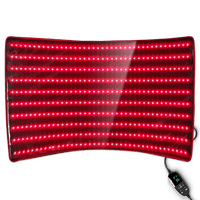
What Does Current Evidence Say About Red-Light Therapy During Pregnancy?
There is a lack of solid evidence regarding the use of red-light therapy during pregnancy. Since most of the clinical research on PBM has been done on non-pregnant adults, researchers have relatively less direct evidence on its effects on the fetus or on pregnancy outcomes.
That distinction is important. An international consensus of experts in 2025 concluded that PBM is generally a safe treatment for adults and that red-light PBM does not cause any DNA damage. [1]
There is also some reassuring evidence from research on other light-based treatments. A systematic review of laser therapy in pregnancy included reports concerning 380 pregnant women and found no clear indication of harm to the mother or fetus. [2]
A more recent review of cosmetic dermatology in pregnancy referred to PBM as a nonthermal technique which has a potentially low risk, although it stressed that the evidence specific to pregnancy is limited. [3]
Why Is the Absence of Reported Harm Not Proof of Safety?
The fact that no harm has been reported with PBM in pregnancy is not a guarantee of its safety. Due to the lack of clinical trials involving pregnant women, researchers have little information to identify rare complications or to find out whether an RLT has an effect on fetal development.
This is particularly important because PBM devices differ in wavelength, power, energy, treatment time, distance, pulsing, and treatment area. FDA guidance for PBM devices considers these parameters important when assessing such products.
To say that RLT is generally safe during pregnancy therefore goes beyond what the current evidence establishes.
How Do Treatment Area, Near-Infrared Light, and Heat Affect the Decision?
The treatment area matters; using a red-light device on the face or another small, superficial area is different from intentionally treating the abdomen, pelvis, or larger areas of the body.
Red and near-infrared light are non-ionizing and therefore not the same as X-rays or other ionizing radiation; however, near-infrared wavelengths can penetrate deeper than visible red light, depending on the wavelength and the device used. So, the specific device and the area being treated matter in pregnancy.
Heat is another factor to consider. Some products are advertised as red-light devices that combine red or near-infrared light with heating. This does not mean that they should be regarded as equivalent to nonthermal PBM. The FDA differentiates between low-level PBM and light-based procedures that are intended to heat tissue.
Avoiding excessive maternal heat during pregnancy is especially important, and the American College of Obstetricians and Gynecologists (ACOG) recommends that pregnant women avoid exposure to high heat, highlighting concerns about elevated core body temperature, especially in the early stages of pregnancy. [4]

Which Pregnancy Conditions Require Medical Guidance Before Use?
One should exercise extra caution when the pregnancy is deemed to be high-risk or when there are other medical conditions or treatments that could influence the decision to undergo RLT.
You should consult your obstetric care provider before using RLT if you have any complications such as pregnancy-related hypertension, bleeding, a history of pregnancy complications, or another condition that requires specialized monitoring.
Medical guidance is also especially important if the PBM device is:
- Intended to treat the abdomen or pelvic region
- Producing substantial heat
- Using near-infrared wavelengths or multiple types of energy
- Marketed for body contouring rather than simple skincare
- Used over an active infection, wound, lesion, or other medical condition
- Used alongside medications or conditions associated with photosensitivity
The FDA has specifically included pregnancy—or the intention to become pregnant—as a reason to avoid some PBM devices used for non-invasive body contouring, showing how important it is that devices have specific labeling.
What Questions Should You Ask Your Obstetric Care Professional?
If you’re considering RLT during pregnancy, make sure you bring the device details rather than just asking about red light in general.
Useful questions include:
1. Is this specific device suitable for use during pregnancy?
2. Is it safe to use the device on the part of the body that you want to treat?
3. Does the device produce a considerable amount of heat, or is the treatment basically nonthermal?
4. Does it also emit near-infrared light alongside red light?
5. What does the manufacturer recommend regarding the use of the device during pregnancy?
6. Would it be safer to delay using it until after delivery?
Make Pregnancy Safety the First Step in Any Red-Light Therapy Decision
Red-light therapy is generally safe for nonpregnant adults, but there is still a lack of evidence specifically relating to pregnancy. The fact that no harm has been documented should not be taken as proof that it is definitely safe. The area being treated, the wavelength, the intensity, the amount of heat produced, and the particular device should all be considered before making the decision.
It is reasonable to talk to your obstetric care provider before beginning the treatment or to wait until after delivery when it comes to using the treatment electively for cosmetic purposes. For any device that is intended for use on the abdomen, pelvis, or whole body, specific medical advice is especially important.
Is Red-Light Therapy Safe During Pregnancy: Conclusion
Regarding RLT in pregnancy, being cautious doesn’t require avoiding all new wellness treatments; it just means realizing that pregnancy can alter the balance between possible benefits and uncertainties.
If the treatment is merely cosmetic and not essential, it may be best to delay it until after delivery, especially when studies on a particular RLT device are uncertain. The aim should not be to assume that RLT is harmful, but rather to make a careful choice taking into account what is known, what is still uncertain, and the individual circumstances surrounding your pregnancy.
References
- Maghfour, Jalal et al. “Evidence-based consensus on the clinical application of photobiomodulation.” Journal of the American Academy of Dermatology vol. 93,2 (2025): 429–443. doi:10.1016/j.jaad.2025.04.031
- Wilkerson, Eric C et al. “Utilization of Laser Therapy During Pregnancy: A Systematic Review of the Maternal and Fetal Effects Reported From 1960 to 2017.” Dermatologic surgery: official publication for American Society for Dermatologic Surgery [et al.] vol. 45,6 (2019): 818–828. doi:10.1097/DSS.0000000000001912
- Kovacs, Timea et al. “Cosmetic Dermatology in Pregnancy and Lactation: A Risk-Benefit Framework for Clinical Practice.” International journal of dermatology, 10.1111/ijd.70620. 24 Aug. 2026, doi:10.1111/ijd.70620
- “Physical Activity and Exercise During Pregnancy and the Postpartum Period: ACOG Committee Opinion, Number 804.” Obstetrics and gynecology vol. 135,4 (2020): e178-e188. doi:10.1097/AOG.0000000000003772

This article is for general education and is not medical advice. If you have a medical condition, are pregnant, or take light-sensitizing medication, talk to your healthcare provider before starting red light therapy.


Leave a comment