


In this article6 sections
Some people when starting red light therapy notice their skin feeling dry or flaky. They assume that the light caused it. Sometimes the timing is just a coincidence. Other times it is related to how the sessions are being done. Before giving up on light therapy, it would be useful to determine exactly what the cause of the dryness is.

Dry Skin and Irritated Skin Are Not the Same
Many people confuse these terms as being the same. They are actually different, and each one points to a different cause.
Dry skin is commonly the result of water loss in the stratum corneum, or the outermost layer of the skin. In simpler terms, the skin becomes dehydrated. Any skin type can become dehydrated. Weather, humidity, hot showers, central heating and air conditioning can all play a role. Dehydrated skin often feels tight while still looking shiny. There may also be some flaking.
Irritated skin, on the other hand, is a reaction. It usually is associated with stinging, burning, redness, and sometimes flaking. Its cause is an immune reaction to an offending chemical contacting the skin.
It is worth sorting out which skin issue you have. Dehydration that starts after you begin sessions suggests heat. Irritation suggests a product. And skin that is dry all the time was probably dry before you started red light therapy.
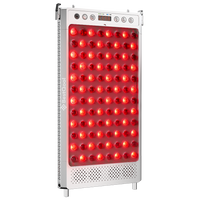
Does Red Light Therapy Directly Remove Moisture From the Skin?
There is no evidence that red light therapy itself draws water out of the skin. To understand this, it helps to know about transepidermal water loss (TEWL). TEWL is the amount of water that escapes through the outer layer of the skin. When TEWL is high, it usually means the skin barrier is not holding on to water properly. In research on skin after laser treatment, areas given LED light did not lose significantly more water than areas given a placebo. [1]
Heat is where things change. According to a systematic review, TEWL goes up as skin temperature goes up, and the two rise together in a straight line. This means warmer skin loses more water. Therefore, if your skin feels dry after sessions, it is worth checking whether the session is heating your skin rather than blaming the light itself. [2]
How Heat, Distance, and Long Sessions May Affect Skin Comfort
The right session length depends on your device and the distance you sit from it, so it is best to follow what the manufacturer recommends. If dryness is the problem, pay attention to how warm your skin gets.
Panels produce some heat. Also, how much light reaches your skin depends on how far away you are. If you sit closer, your skin absorbs more light and heat. If your sessions are longer, your skin will remain warm longer. Beyond a certain point, more light exposure ceases to provide additional benefit, however, a very long session will continue to add heat.[3] [4]
Hot water can add to the problem. In a study on skin barrier function, trans epidermal water loss (TEWL) increased after exposure to hot water. If you take a hot shower and then sit close to the panel straight afterwards, your skin is being heated twice in a row. [5]
The face needs the most care. Facial skin is thinner, and people usually sit nearer to a panel or wear a mask close to the skin. If your skin feels hot, tight or flushed right after a session, you may need to change your setup.

Skincare Products That May Increase Dryness or Sensitivity
Retinoids are one of the biggest causes. Retinoids commonly cause dryness, peeling, and redness, in the first few weeks of use. Other products that can make skin drier or more sensitive include exfoliating acids (AHAs and BHAs), benzoyl peroxide, toners with a lot of alcohol, and products containing fragrance. [6]
Many people start red light therapy and a new skincare product at the same time. When they notice dryness, they assume the light is responsible. The time of year also matters. In winter, indoor heating makes the air drier, and skin tends to become drier as a result. So if you started your routine in the colder months, the weather may be the cause of the dryness.
Certain prescription and over-the-counter medicines can make the skin more sensitive to light. The result can be irritation and redness. If you are taking any of these, speak to your pharmacist or doctor before you start using red light therapy.
How to Adjust Your Routine Without Abandoning Light Therapy
Most dryness complaints can be sorted out without abandoning red light therapy. A few changes usually eliminate the dryness issue..
Sit further back from the panel and follow the manufacturer's distance guidance. BestQool, for example, publishes guidance for its own panels. If your skin feels dry, shorten your sessions or cut down how often you use the panel for a week or two, then build back up slowly. If you use a mask-style device, check the instructions on session length, since a mask sits much closer to the skin than a panel does.
After a hot shower, let your skin cool down before a session. Keep retinoids and exfoliating acids for evenings when you are not using the panel.
Your skin should be clean and bare during the session. Put on a fragrance-free moisturiser afterwards, ideally while the skin is still slightly damp.
Change one thing at a time. That way, you will determine what actually made the difference.
When Dryness, Peeling, or Redness Needs Professional Evaluation
Most dryness resolves once the routine is adjusted. However, there are some instances when it is important to consult a dermatologist:
- Dryness that keeps getting worse even after you have changed your routine
- Cracking, bleeding, blistering or weeping skin
- Itchy, red patches that could be eczema or contact dermatitis
- Redness or burning that lasts long after a session has ended
- An existing skin condition that starts flaring up
Reference:
- Soliman J, Elsanadi R, Messele F, Kelly KM. The effect of combined red, blue, and near-infrared light-emitting diode (LED) photobiomodulation therapy on speed of wound healing after superficial ablative fractional resurfacing. Lasers Med Sci. 2024 Mar 27;39(1):94. doi: 10.1007/s10103-024-04042-x. PMID: 38532146; PMCID: PMC10965566.
- Green M, Kashetsky N, Feschuk A, Maibach HI. Transepidermal water loss (TEWL): Environment and pollution-A systematic review. Skin Health Dis. 2022 Feb 25;2(2):e104. doi: 10.1002/ski2.104. PMID: 35677917; PMCID: PMC9168018.
- Chung H, Dai T, Sharma SK, Huang YY, Carroll JD, Hamblin MR. The nuts and bolts of low-level laser (light) therapy. Ann Biomed Eng. 2012 Feb;40(2):516-33. doi: 10.1007/s10439-011-0454-7. Epub 2011 Nov 2. PMID: 22045511; PMCID: PMC3288797.
- Huang YY, Chen AC, Carroll JD, Hamblin MR. Biphasic dose response in low level light therapy. Dose Response. 2009 Sep 1;7(4):358-83. doi: 10.2203/dose-response.09-027.Hamblin. PMID: 20011653; PMCID: PMC2790317.
- Herrero-Fernandez M, Montero-Vilchez T, Diaz-Calvillo P, Romera-Vilchez M, Buendia-Eisman A, Arias-Santiago S. Impact of Water Exposure and Temperature Changes on Skin Barrier Function. J Clin Med. 2022 Jan 7;11(2):298. doi: 10.3390/jcm11020298. PMID: 35053992; PMCID: PMC8778033.
- Narsa AC, Suhandi C, Afidika J, Ghaliya S, Elamin KM, Wathoni N. A Comprehensive Review of the Strategies to Reduce Retinoid-Induced Skin Irritation in Topical Formulation. Dermatol Res Pract. 2024 Aug 17;2024:5551774. doi: 10.1155/2024/5551774. PMID: 39184919; PMCID: PMC11344648.

This article is for general education and is not medical advice. If you have a medical condition, are pregnant, or take light-sensitizing medication, talk to your healthcare provider before starting red light therapy.


Leave a comment