
Only limited multitasking is practical. A wearable facial mask may work during a quiet, seated, low-movement activity if it stays correctly positioned and its instructions permit that use. A panel requires you to keep your face at the labeled distance and angle for the full session, making stationary seated use more realistic than moving around.
Neither format makes attention to safety optional. Do not assume that masks allow eyes-open use, that panels always require goggles, or that looking at a phone or screen is appropriate during every session.
The Main Difference is What Must Stay Consistent
A direct-contact facial mask moves with your face, so you do not manage treatment distance in the same way you do with a panel. Its consistency instead depends on correct placement, stable fit, session timing, and the device's eye-use guidance.
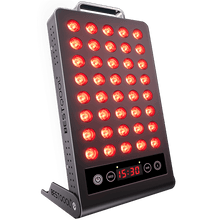
A stationary panel creates a treatment zone in front of the device. Distance affects both the amount of light reaching the face and how evenly it lands. Moving closer or farther away, turning your head, reclining, or repeatedly leaving and returning to the treatment position can change the exposure conditions.
In practical terms:
| Routine Factor | Facial Mask | Stationary Panel |
|---|---|---|
| Distance from the light | Set by direct contact or close fitted placement | Must be maintained at the device's specified distance |
| Movement tolerance | Limited by fit, comfort, and coverage | Limited by distance, angle, and time in the treatment zone |
| Hands | Usually free once the mask is secured | May be free, but the face still needs to remain positioned |
| Visual multitasking | Depends on the mask's eye guidance and visibility | Depends on eye-protection guidance, glare, and positioning |
| Best routine match | Quiet, low-movement seated time | Still, seated or standing time at a repeatable setup |
The goal is not to maximize how much you can do during treatment. It is to choose an activity that does not alter the intended setup or prevent you from noticing discomfort.
With a Mask, Keep Movement Low Enough to Preserve Fit

A mask can be convenient for a seated break because the light source stays with the face. That does not mean it is automatically suitable for walking, chores, exercise, or any activity that requires frequent movement.
Movement can change how the mask sits on the face. If it shifts, presses uncomfortably, loses its intended contact or alignment, or distracts you from noticing warmth or discomfort, the activity is not a good fit for that session.
Low-movement options may include sitting quietly or listening to audio, provided the mask remains properly positioned and the manual allows the setup. The exact suitability of reading, watching television, or using a phone depends on the device's instructions for eyes, eyewear, and visibility.
A mask also should not be treated as a substitute for situational awareness. Avoid activities that require clear, unobstructed vision or rapid response, such as driving, cooking, navigating stairs, or working around water or heat.
With a Panel, Positioning Limits Multitasking

Panel use is generally more compatible with staying in one place than with moving around the room. Your face needs to remain at the manufacturer-specified distance and orientation, rather than simply being somewhere near the light.
As explained in guidance on panel treatment distance, distance affects irradiance, evenness of exposure, and how quickly exposure builds. Moving farther away can reduce the amount of light reaching the face; moving closer can raise exposure, heat, and discomfort. Treatment duration must be considered together with distance, so there is no universal "closer for less time" or "farther for longer" adjustment.
That makes a desk-like setup more practical than mobile multitasking. For example, sitting upright in a chair may work if you can maintain the labeled distance and angle. Walking around, doing household tasks, or exercising is unlikely to keep facial exposure consistent.
Changing angle matters, too. If you turn away to look at another task, bend down, or repeatedly reposition, different parts of the face may no longer receive the same exposure conditions. A panel routine works best when the setup is simple enough to repeat without improvising.
Eye Protection and Screen Use Depend on the Device
Eye guidance is not determined by format alone. A mask is not automatically an eyes-open device, and a panel is not automatically a goggles-required device in every configuration. Follow the instructions for your exact device, including whether it calls for supplied protective eyewear, closed eyes, or another precaution.
General at-home guidance is to shield the eyes and follow all directions. The Cleveland Clinic's overview of red light therapy notes that using devices improperly or without protecting the eyes can potentially harm skin or unprotected eyes.
Before planning any visual activity during treatment, check:
- Whether the manual permits eyes-open use.
- Whether goggles or other provided eye protection are required.
- Whether the mask's eye openings allow safe, comfortable vision.
- Whether the panel's brightness or glare makes visual focus uncomfortable.
- Whether the planned activity causes you to turn away from a panel or alter your distance.
The available evidence does not establish whether looking at a phone, reading, or watching television during treatment adds eye risk or reduces facial-treatment effectiveness. That is not a reason to assume screen use is fine for every device. If screen viewing conflicts with eye-protection instructions, makes you reposition, or causes visual discomfort, skip it.
Stop the session if you experience visual discomfort, painful warmth, or other discomfort addressed in your device instructions.
Activities That Usually Do Not Match Treatment Setup
The evidence does not establish that common multitasking activities are safe or effective during facial red light treatment. Still, some are plainly poor routine matches because they interfere with stable positioning, vision, attention, or device directions.
Avoid treating while:
- Driving or operating equipment.
- Cooking or working near heat.
- Showering or doing water-related tasks.
- Sleeping.
- Walking around, climbing stairs, or exercising.
- Performing tasks that require quick reactions or unobstructed vision.
- Doing chores that repeatedly pull you away from a panel's set distance and angle.
These are practical precautions, not proof that every activity creates the same risk with every device. The key issue is whether the task disrupts the intended treatment conditions or prevents you from responding to discomfort.
Use a Repeatable, Low-Distraction Routine

Choose the device format and routine you can repeat while preserving the intended setup.
A mask may suit a quiet, seated, low-movement session when it remains properly fitted and its eye guidance allows the activity. A panel may suit stationary seated use when you can maintain the specified distance, angle, and session conditions.
For either format, review the device manual before treating, avoid tasks that compromise vision or attention, and stop if discomfort occurs.


 Small
Small

 Moderate

 Moderate

 Moderate

 Full
Full

