
There is no universal daily-use rule for chronic lower-back discomfort. Start with your specific device's labeled session time, distance or contact instructions, and frequency range. If the manual offers a range, begin at the lower end rather than increasing both session length and frequency at once.
That caution matters because light exposure is shaped by wavelength, irradiance, treatment geometry, distance, treated area, timing, and other protocol factors---not simply by how many sessions you do. A review of LED photobiomodulation parameters also notes that both too little and too much exposure may reduce the intended response. Red light therapy should not replace assessment for persistent, worsening, radiating, or neurologic back symptoms.
Choose Frequency From Your Device's Dose, Not a Universal Schedule
The most useful answer to "daily or every other day?" is: follow the schedule designed for the device you actually have.
A close-contact wrap, belt, or handheld device may deliver its labeled exposure differently from a panel used at a stated distance. A clinical laser is different again. Higher irradiance and direct skin contact can deliver a given amount of light in less time than a lower-output device used farther away.
Use this conservative decision process:
- Read the manual for session length, placement, distance, and weekly-use guidance.
- If the manual gives a range, start at the lower end.
- Keep that setup consistent long enough to observe your response.
- Change only one variable at a time---either session length or frequency, not both.
- Pause and reassess if discomfort worsens or you develop warmth, persistent redness, irritation, increased sensitivity, or headache.
A planned trial in people with chronic non-specific low-back pain used laser treatment twice weekly for six weeks alongside motor-control exercise. That is useful context, but it is not proof that twice weekly is best for everyone or that the same schedule transfers to consumer devices. The published trial protocol used a supervised 810 nm class 3B laser intervention, not a general home-use schedule.
More sessions are not automatically better. Avoid adding an extra session simply because you have not noticed a change after a few uses.
Match Session Time to Your Device Setup

Session time and frequency only make sense in the context of how your device delivers light. Do not copy the minutes listed for a different product format.
| Device Setup | What to Check | Practical Lower-Back Implication |
|---|---|---|
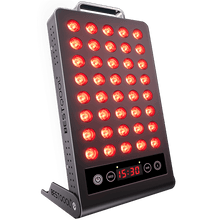
| Panel | Recommended distance, coverage area, session timer | Stand or lie in the position specified by the manual so the painful lower-back area is within the intended treatment zone. |
| Wrap or belt | Whether skin contact is intended, fit, session duration | Position it over the painful region without assuming that longer wear means a better result. |
| Handheld device | Contact versus non-contact instructions, treatment area, timing per area | Treat only the relevant lower-back zone and follow the stated method for each area. |
| Clinical or laser device | Professional instructions and treatment protocol | Do not translate a clinician's probe technique or schedule to a home panel, wrap, or belt. |
Wavelength can also affect the purpose of a device setup. Near-infrared wavelengths are generally used for deeper targets than red wavelengths, but that does not demonstrate that light reaches or treats a particular disc, joint, nerve, or other cause of back pain.
Published studies are difficult to compare because details such as irradiance, treatment area, exposure time, number of sites, and session schedule are not always reported consistently. That is why total joules from a research paper---or from a product specification---should not be used alone to create a home lower-back routine.
Position the Light Over the Painful Lower-Back Zone

Treat the area where you experience discomfort rather than trying to identify or self-treat a specific spinal structure. For direct application, use clean, bare skin when your device instructions allow it, and keep the device at the stated distance or contact position.
Central Lower-Back Discomfort
If discomfort is centered across the low back, position coverage over that painful band rather than aiming at an unrelated area. A wide panel, wrap, or belt may cover the region in one placement; a smaller handheld device may require separate placements according to its instructions.
One-Sided Discomfort
For pain mainly on the left or right, center the treatment area over the painful side of the lower back. Do not automatically double the session time by treating both sides unless the device manual specifically supports that approach.
Discomfort Near the Sacroiliac Area
If the discomfort sits low and off to one side near the top of the buttock, place the device over that painful area rather than limiting treatment to the middle of the lumbar spine. This is a placement choice for comfort management, not a way to diagnose the source of pain.
Discomfort Extending Toward the Buttock
If symptoms extend into the buttock, do not assume the device should cover the entire leg or that the pain has a particular cause. Treat only the relevant painful lower-back or upper-buttock area within the device's intended coverage and instructions. Pain that radiates, especially when accompanied by numbness or weakness, needs clinical assessment.
A clinical study protocol used a stationary contact probe held at a 90-degree angle with slight pressure. That technique applied to specific clinical cluster-probe equipment; it is not a universal instruction for consumer devices. The additional guidance should not be used to override your device manual.
Run a Consistent, Time-Limited Trial

Evidence for photobiomodulation in non-specific low-back pain remains inconsistent. It is more appropriate to view red light therapy as a possible comfort-support tool alongside active care than as a stand-alone solution for chronic back pain.
If your device instructions permit ongoing use and you have no warning signs, keep a conservative routine consistent and reassess over a defined period. Some at-home guidance suggests reviewing a consistent routine after 8--12 weeks, unless irritation, sensitivity, or symptom aggravation occurs sooner. That is a checkpoint for evaluating your experience---not a reason to postpone medical care for ongoing or worsening symptoms.
Track three details after each session:
- Setup: date, device, session length, distance or contact method, and treated zone.
- Symptom response: discomfort during treatment and later that day or the next day.
- Function: one practical measure, such as sitting tolerance, walking comfort, sleep disruption, or ease of a clinician-prescribed exercise.
Continue your usual clinician- or physical-therapist-directed plan. Exercise, rehabilitation, heat, and medication decisions should continue to follow the guidance you have been given and any relevant device instructions.
When to Stop Self-Treatment and Seek Assessment
Red light therapy is not a substitute for evaluating chronic back pain that is severe, persistent, or worsening. Pause self-treatment and seek urgent medical care for:
- New bowel or bladder changes
- Numbness in the saddle area
- New or progressive leg weakness
- Severe trauma
- Fever or systemic illness with back pain
- Rapidly worsening or severe pain
Contact a qualified clinician promptly for persistent back pain, pain that radiates into the leg, unexplained weight loss, or symptoms that interfere substantially with daily function.
Also speak with a healthcare professional before starting if you have a photosensitivity condition, take light-sensitive medication, or have a medical condition that may affect whether light therapy is appropriate. Stop using the device and follow its safety guidance if it causes irritation, unusual sensitivity, or an increase in symptoms.
Lower-Back Routine Checklist
Before your next session:
- [ ] Rule out red-flag symptoms that need urgent assessment.
- [ ] Identify the specific painful lower-back, one-sided, sacroiliac-area, or upper-buttock zone.
- [ ] Follow your exact device manual for distance, contact method, session time, and frequency.
- [ ] Begin conservatively if the manual provides a range.
- [ ] Do not stack longer sessions and more frequent sessions at the same time.
- [ ] Log the setup, treated area, skin response, discomfort, and daily function.
- [ ] Reassess rather than assuming more exposure is better.
For device-specific placement, timing, and safety information, consult the relevant BestQool device instructions and safety resources. If your lower-back pain is persistent, worsening, radiating, or accompanied by neurologic or systemic warning signs, contact a qualified clinician rather than relying on a home routine alone.


 Small
Small

 Moderate

 Moderate

 Moderate

 Full
Full

