


In this article7 sections
Kinesiology tape is a common sight in sport and physiotherapy, even though the evidence on how it works is still inconsistent and researchers have put forward several theories. Some people who wear it also have a red light panel at home, so the question comes up fairly often. Does the light get through the tape at all, and which one should you do first? [1]

Does Kinesiology Tape Block Red and Near-Infrared Light?
No study has tested how much light passes through kinesiology tape, so any exact percentage you see online is a guess. What we do know about the tape, and about cotton fabric in general, still gives a fairly clear answer.
- Light obstruction: Kinesiology tape is woven cotton with a heat-activated acrylic adhesive. The weave is tight, most tapes are dyed, and there is a layer of glue on the underside. Each of these absorbs or scatters some of the light before it gets to the skin. [2]
- What the textile research shows: Research on undyed cotton fabric found that it lets some visible and near-infrared light through. How much gets through changes a lot with how dense the weave is, how thick the fabric is and what colour it is. Kinesiology tape is dense, fairly thick for a fabric, and usually coloured. [3]
- An unknown dose: Even if some light makes it through, you have no idea how much. That makes it impossible to know what the skin under the tape is actually getting.
For practical purposes, assume the skin under the tape is getting very little light.
Should Red Light Therapy Be Used Before or After Taping?
Do the red light session first and put the tape on afterwards. There are three reasons for this.
- Clean skin: Tape only sticks well to skin that is clean and dry, with no oil, lotion or moisturiser on it. Red light therapy is also best done on bare skin.
- Nothing in the way: If the tape is already on, the light has to go through it, and as covered above, there is no telling how much reaches the skin.
- Giving the adhesive time: The glue on kinesiology tape is activated by heat and takes a while to grip properly. Once your session is over, wait until your skin has cooled and is completely dry. Then tape up, leaving enough time before you exercise or shower.
Why Do Tape Material and Coverage Matter for Light Exposure?
Kinesiology tape covers the skin, so both the type of tape and the way it is laid out affect how much of the area ends up in shadow.
Tape material and colour
Most kinesiology tape is woven cotton with elastic fibres running through it. Darker tape absorbs more visible light and warms up at the surface. Lighter tape reflects and scatters more of it. This is relevant because, according to a survey of healthcare professionals, black and beige are the colours practitioners use most. [4]
Tape coverage and layout
An I-strip or a solid block of tape covers the skin completely along its length, so that whole strip is shaded. Stretching the tape as you apply it might open up the weave a little, but you can't rely on that. Fan cuts, web cuts and lymphatic strips work better alongside red light, because they leave bands of bare skin between the tape. Those gaps get the light as normal, and you only miss out on the parts actually under the tape.

How Can You Protect Sensitive Skin When Combining Both Approaches?
If your skin reacts easily, a few small changes help.
Before a session, wash the area properly so there is no oil, sweat or lotion left on it. For reactive skin, keep the first few sessions short, sit a little further from the panel than usual and build up slowly. When you finish, give the skin time to cool and dry before any tape goes on.
Some people react to the adhesive itself, and there are published cases of allergic contact dermatitis caused by medical adhesive tape. If your skin is sensitive, or plasters have irritated it before, try a small piece of tape on your forearm for 24 hours first. A non-stinging barrier film under the tape can help protect the skin when the tape is pulled off, and hypoallergenic, latex-free tapes are a good choice too. [5]
If the skin is red or sore after the tape comes off, skip the session on that area until it has settled.
What If the Tape Must Stay on for Several Days?
Most kinesiology tape is made to be worn for three to five days, so this is usually the case. Few people want to peel it off just for a red light session.
The skin under the tape will not get a useful amount of light. Panels also give off some warmth, and warmth together with sweat or skin oils trapped under tape can cause maceration and irritation of the skin.
There are two sensible options. Use the panel on the untaped skin around the tape and accept that the taped part misses out. Or plan your sessions for when the tape is due to be changed anyway.
Doing longer sessions to try and get through the tape will not help. Session length depends on irradiance and distance, and beyond a certain point more light does not add anything, so you would just be guessing. Taking the tape off and putting fresh tape on every time you want a session is not ideal either, because pulling adhesive off again and again irritates the skin. [6] [7]
Protect Both Light Exposure and Skin Health When Using Tape
Tape and red light therapy do not combine well if the light has to go through the tape. Done one after the other, they are fine. Use the light first on clean, bare skin, and put the tape on once the skin is cool and dry. If the tape has to stay on for a few days, use the light around it.
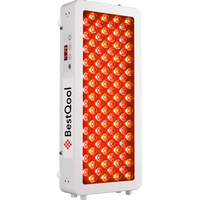
Stick to what the manufacturer says about distance and session length for your particular device. Brands such as BestQool give this guidance for their own panels, and it is more reliable than copying someone else's routine.
Most importantly, keep an eye on the skin. If the skin under the tape is irritated, deal with that first, before worrying about the tape or the light.
Read More
References:
- Cheatham SW, Baker RT, Abdenour TE. Kinesiology Tape: A Descriptive Survey of Healthcare Professionals in the United States. Int J Sports Phys Ther. 2021 Jun 1;16(3):778-796. doi: 10.26603/001c.22136. PMID: 34123530; PMCID: PMC8169012.
- Bocchino G, Grassa D, Bove A, Salvini M, Kaplan R, Di Gialleonardo E, Forconi F, Maccauro G, Vitiello R. The Effects of Kinesio Tape on Acute Ankle Sprain: A Systematic Review. J Clin Med. 2025 Feb 21;14(5):1440. doi: 10.3390/jcm14051440. PMID: 40094902; PMCID: PMC11900455.
- Dubrovski PD, Fakin D, Ojstršek A. Cotton Woven Fabrics as Protective Polymer Materials against Solar Radiation in the Range of 210-1200 nm. Polymers (Basel). 2023 Mar 6;15(5):1310. doi: 10.3390/polym15051310. PMID: 36904551; PMCID: PMC10007099.
- Cheatham SW, Baker RT, Abdenour TE. Kinesiology Tape: A Descriptive Survey of Healthcare Professionals in the United States. Int J Sports Phys Ther. 2021 Jun 1;16(3):778-796. doi: 10.26603/001c.22136. PMID: 34123530; PMCID: PMC8169012.
- Nordhammer ABO, Willner J, Svedman C, Dahlin J, Nilsen TS, Rodal LB, Sinding JUO, Saunes M, Hjelmeland K, Hassel E. Allergic Contact Dermatitis From Medical Adhesive Tape Used for Friction Blister Prevention in the Norwegian Armed Forces: A Case Series. Contact Dermatitis. 2026 Jul;95(1):56-64. doi: 10.1111/cod.70144. Epub 2026 Mar 26. PMID: 41889130.
- Chung H, Dai T, Sharma SK, Huang YY, Carroll JD, Hamblin MR. The nuts and bolts of low-level laser (light) therapy. Ann Biomed Eng. 2012 Feb;40(2):516-33. doi: 10.1007/s10439-011-0454-7. Epub 2011 Nov 2. PMID: 22045511; PMCID: PMC3288797.
- Huang YY, Chen AC, Carroll JD, Hamblin MR. Biphasic dose response in low level light therapy. Dose Response. 2009 Sep 1;7(4):358-83. doi: 10.2203/dose-response.09-027.Hamblin. PMID: 20011653; PMCID: PMC2790317.

This article is for general education and is not medical advice. If you have a medical condition, are pregnant, or take light-sensitizing medication, talk to your healthcare provider before starting red light therapy.


Leave a comment