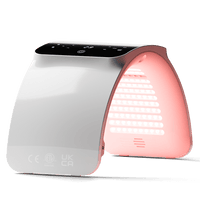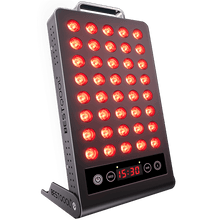
Explains how to safely position a red light therapy panel for lower-back discomfort at home, covering target-area exposure, stable positioning, manual-based distance, and when to seek medical advice instead.
When an FSA or HSA claim for red light therapy is denied, the stated reason, plan rules, and deadlines determine next steps. The article explains how to assess the denial,...
Guidance for safely arranging a red light therapy panel to reach the posterior neck and both shoulder tops simultaneously, including coverage checks, small adjustments, eye precautions, and session-time considerations from...
Choosing between an LED mask and a panel for the neck and décolletage depends on the device's documented treatment area, physical fit, and reproducible setup, not just shape or wavelength....
Knee angle during red light therapy is a comfort and surface-exposure choice rather than a proven protocol, with no universal benefit to bending or straightening. The article explains how to...
The article helps readers choose between red light and near-infrared for facial wrinkles and skin texture. It explains that red light suits fine lines and surface texture, while near-infrared may...
Red light is generally the more direct starting point for primarily superficial goals, while near-infrared is more relevant to investigate for targets beneath the skin. Both may fit genuinely mixed...
Experience alone does not determine your next red light therapy session time. Use your device's instructions as the boundary, keep your setup consistent, and choose one gradual permitted increase, hold...
There is no reliable universal session length for every knee, elbow, or red light therapy device. Start with the conservative time documented for your exact device and target area, keep...
You may be able to reduce red light therapy sessions after results stabilize, but an early improvement alone is not enough. Use your goal, response stability, and device instructions to...
Learn how to keep red-light therapy sessions consistent by reproducing the same device-to-skin distance, mapping larger areas into repeatable sections, and logging your setup. The guide covers handheld, wrap, and...
Helps readers decide whether to reposition a compact BestQool panel per area or choose broader coverage. Covers why each placement needs its own exposure, distance and irradiance tradeoffs, time limits,...
Compare Products
Model
Power Consumption
Weight
Dual Chip LEDs
Price
Dimension
Irradiance
EMF Emission
Coverage
Door System
Mobile Stand Support
Warranty
BQ40
50W
2.4 lbs
40
$109.00 USD
11.3" x 5.6" x 1.3"
70mW/cm² @ 3”
0.0 μT @ 6"
Small
×
×
2 Years
BQ60
105W
4.8lbs
60
$149.00 USD
13.1"x 8.4"x2.1"
95.6mW/cm² @ 3”
0.0 μT @ 6"
Moderate
√
×
2 Years
Pro100
170W
6.6lbs
100
$259.00 USD
19.7"x8.4"x2.6"
109mW/cm² @ 3”
0.0 μT @ 6"
Moderate
√
√
2 Years
Pro200
340W
13.2lbs
200
$470.00 USD
36.8"x8.4"x2.6"
111mW/cm² @3"
0.0 μT @ 6"
Moderate
√
√
2 Years
Pro300
500W
19.1lbs
300
$719.00 USD
36.4"x13.5"x2.6"
106mW/cm² @ 3"
0.0 μT @ 6"
Full
√
√
2 Years
Join Our Newsletter
Get updates on the latest products and clinical studies.
Choosing a selection results in a full page refresh.